Unitree A2 vs DEEP Robotics X30 for outdoor industrial payloads
Updated 2026-11-10 · YUANZHI ROBOTICS engineering team
Short answer: the Unitree A2 is the lighter, more compact robot with the higher rated payload (about 37 kg carrying about 25 kg), while the DEEP Robotics X30 is the heavier, published IP67 machine with autonomous docking (about 56 kg carrying 20 kg continuous). If your payload is heavy or the robot moves between sites in a van, start with the A2. If it must patrol outdoors in rain and dust and recharge itself without staff, start with the X30. The rest of this guide explains how to check that choice against your own payload.
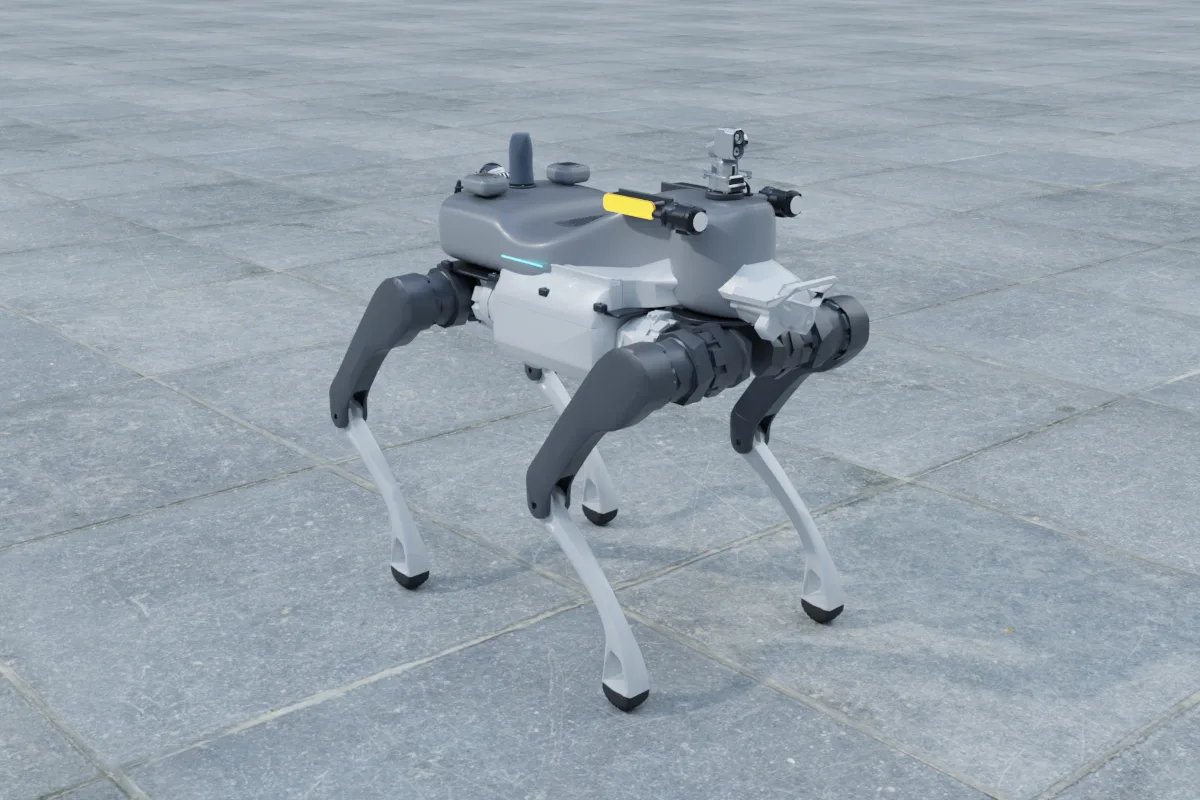
Key figures side by side
The table uses the reference figures in our payload catalog, which come from the manufacturers' public material. Where a figure is not published or not confirmed, the table says so rather than guessing.
| Unitree A2 | DEEP Robotics X30 | |
|---|---|---|
| Robot weight | About 37 kg | About 56 kg |
| Rated payload | About 25 kg | 20 kg continuous |
| Payload as a share of robot weight | About 68% | About 36% |
| Dimensions (L x W x H) | About 820 x 440 x 570 mm | About 1000 x 470 x 585 mm |
| Native perception | Front and rear LiDAR, HD cameras | Front and rear LiDAR, depth and wide-angle cameras |
| Ingress protection | Confirm with Unitree for your version | IP67 |
| Operating temperature | Confirm with Unitree for your version | -20 to 55 degrees C |
| Autonomous docking | Confirm availability with Unitree | Autonomous return and recharge listed |
| Loaded runtime | Check the current Unitree datasheet | About 2.5 h loaded (about 4 h unloaded) |
| Price | Not published; quoted by distributors | Not published; quoted by distributors |
For an older, heavier pairing, see our X30 vs Unitree B2 comparison, which covers the X30's power outputs and SDK in more detail.
Payload margin: what actually goes on the back
Rated payload is only useful once you add up the real payload. Using catalog weights for a common outdoor inspection set:
- Livox Mid-360 3D LiDAR: 265 g, 6.5 W
- Hikvision HM-TD5737T-4/W dual-sensor thermal and visible gimbal: 2.0 kg, 20 W
- Intel RealSense D435i depth camera: 75 g, 2.5 W
- Harxon HX-CH7609A RTK antenna: 30.5 g each, two for dual-antenna heading
- Unicore UM982 dual-antenna RTK module: 1.82 g, 0.6 W
That is about 2.4 kg of sensors, roughly 10% of the A2's rating and 12% of the X30's. A compute box with an NVIDIA Jetson Orin NX 16GB module (up to 40 W in the catalog), a 5G module, brackets, a weatherproof shell and cables often doubles or triples the sensor weight, so a realistic finished payload lands somewhere around 5 to 8 kg. Both robots carry that comfortably.
The difference appears with heavy heads. Swapping to the Hikvision DS-2TD5566T-15/V2 pan-tilt (4.5 kg, 18 W) and adding a gas module, a speaker and light bar, and a second camera can push the finished payload past 12 to 15 kg. On the X30 that is most of the 20 kg rating, which shortens rounds and leaves little room for later additions. On the A2 there is more headroom. If the payload list is still growing, the A2 is the safer base.
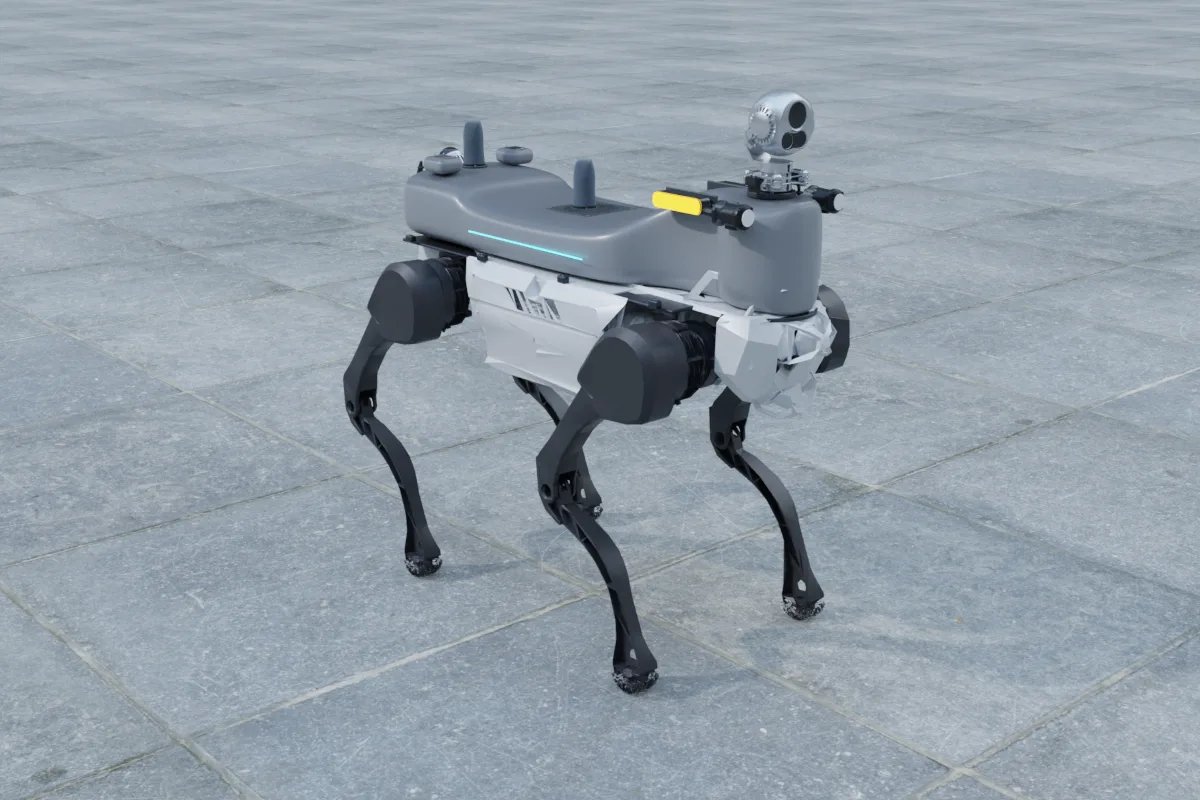
Weather, temperature and unattended operation
The X30's main advantage is what DEEP Robotics publishes about the environment: IP67, -20 to 55 degrees C and autonomous return and recharge. For a substation, tunnel portal or chemical site where the robot runs scheduled rounds without an operator, those published figures make the safety and procurement case easier to write.
For the A2, ask Unitree for the ingress rating, temperature range and docking option that apply to the exact version you are buying, in writing. Also remember that the payload has its own rating. A sealed robot carrying an unsealed computer box or open connectors is only as good as the weakest part; our guide on IP ratings for robot payloads explains how to treat sealing of the assembled payload separately from the robot.
Size, transport and indoor sections
Many outdoor jobs are not purely outdoor. The robot is unloaded from a vehicle, walks through a gate or control building, then patrols a yard. Here the A2's smaller body helps: about 180 mm shorter and 19 kg lighter than the X30. It is easier to lift into a van, takes less space in a transport case and turns in narrower aisles. The X30 is longer and heavier, which is fine for a robot that lives on site in its dock but more work for a robot that is moved every day.
Whichever you choose, check that the payload does not block the native front and rear LiDARs. On both robots the built-in sensors sit at the ends of the body, so tall masts and wide gimbals are best placed mid-back, with the field of view of each native sensor checked in a 3D model before any part is made.
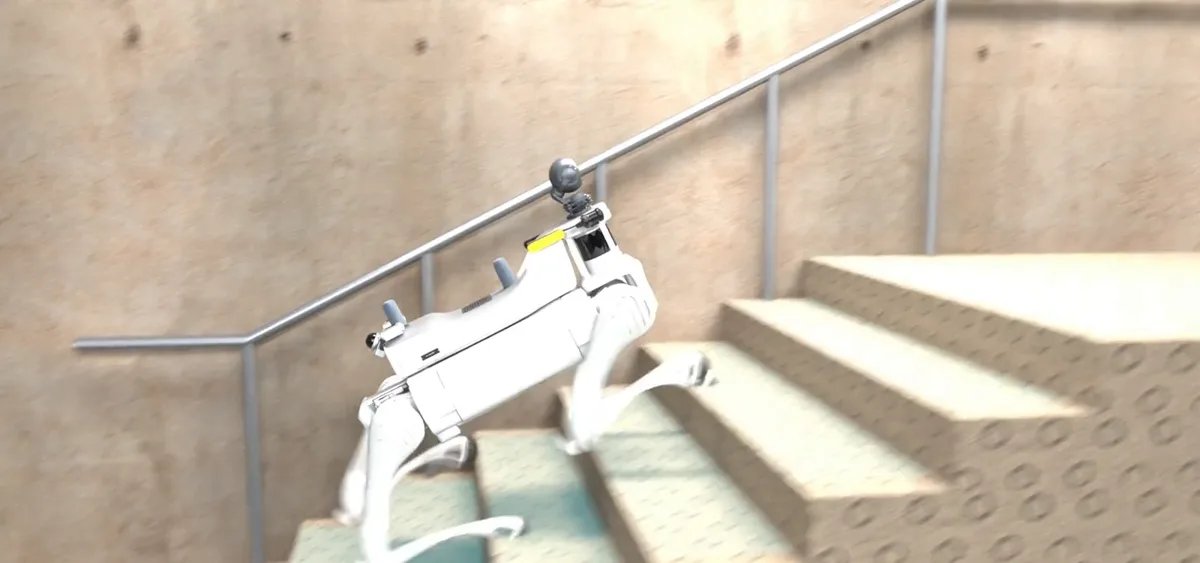
Power and data for the payload
Neither robot's public material gives a current limit per payload output, so plan the payload power stage as if you will need one. A typical approach is a payload power board that takes the robot's supply, converts it to the 12 V and 24 V rails the gimbal, LiDAR and computer need, and adds fusing and a soft start. With the example set above, the gimbal, LiDAR, depth camera and RTK draw about 30 W combined, and an Orin NX computer adds up to 40 W, so the payload alone can reach about 70 W peak before radios and lights. That load comes out of the same battery that moves the robot, which is why loaded runtime always needs testing with the real payload. Our payload power distribution guide covers the board design in more detail.
Software and integration effort
Both robots expose motion and state through manufacturer SDKs, but the stacks differ, so software written for one does not run unchanged on the other. DEEP Robotics publishes x30_motion_sdk on GitHub. For the A2, confirm which Unitree SDK release supports it before scoping the work. In practice the larger effort sits above the SDK: LiDAR mapping and relocalization, route and inspection-point logic, stair handling, recognition models and the operator console. Our team has worked on A2 payload integration, LiDAR mapping, localization and stair navigation, and the same structure applies to the X30 with a different robot adapter.
Which one to choose
- Choose the Unitree A2 if the finished payload may exceed about 12 kg, the robot is transported between sites, or the route includes tight indoor sections.
- Choose the DEEP Robotics X30 if the robot must run unattended outdoors in rain, dust and cold with published IP67, a published temperature range and autonomous docking.
- Either works for a standard LiDAR, gimbal, depth camera, RTK and 5G inspection set of about 5 to 8 kg finished weight; then decide on availability, local support and software access.
Next steps
You can build either configuration in the payload configurator, which totals weight and power as you add parts, and compare platform details on the Unitree A2 and DEEP Robotics X30 pages. YUANZHI ROBOTICS designs the structure, harness and power board through our robot payload service, and develops mapping, navigation and inspection software through robot autonomy and quadruped development. For complete inspection systems, see inspection robots.
FAQ
Is the Unitree A2 or the DEEP Robotics X30 better for outdoor inspection?
It depends on the site. The X30 publishes IP67, a -20 to 55 degrees C operating range and autonomous docking, which suits unattended outdoor rounds in bad weather. The A2 is about 19 kg lighter, smaller and has a higher rated payload (about 25 kg vs 20 kg), which suits heavier payloads and sites where the robot is carried or driven between locations. Confirm the A2's current ingress rating with Unitree before planning rain operation.
How much payload can the Unitree A2 and DEEP Robotics X30 carry?
Manufacturer reference figures are about 25 kg rated payload for the A2 and 20 kg continuous payload for the X30. A typical inspection set of a 3D LiDAR, a dual-sensor thermal and visible gimbal, a depth camera, a dual-antenna RTK antenna and a 5G module weighs about 2.4 kg in sensors alone, before brackets, compute box and cables.
Which robot dog is easier to transport, the A2 or the X30?
The A2. It weighs about 37 kg and measures about 820 x 440 x 570 mm, against about 56 kg and 1000 x 470 x 585 mm for the X30. Both are two-person lifts, but the A2 fits in smaller vehicles and cases more easily.
Can the same payload be moved between an A2 and an X30?
The sensors and payload computer can be reused, but the mounting plate, harness and power stage usually cannot. The two robots have different back interfaces, supply voltages and connector layouts, so plan a platform-specific adapter plate and power board.
Who can integrate a payload and software on a Unitree A2 or DEEP Robotics X30?
YUANZHI ROBOTICS designs payload structures, harnesses and power boards for both robots and develops mapping, navigation, recognition and console software. You can sketch a configuration in the online payload configurator and request a quote.