IP ratings for robot payloads: component ratings vs the assembled payload
Updated 2026-11-03 · YUANZHI ROBOTICS engineering team
Payload datasheets love IP ratings: the LiDAR is IP67, the thermal camera is IP66, the gimbal is IP66, the 5G module is in a sealed housing. Buyers reasonably conclude that the payload is weatherproof. Sometimes it is; often the rating of the assembled payload was never established at all. This guide explains what an IP rating actually covers, why the assembled payload is a different product from its parts, what design details decide the result, and what to ask a supplier.
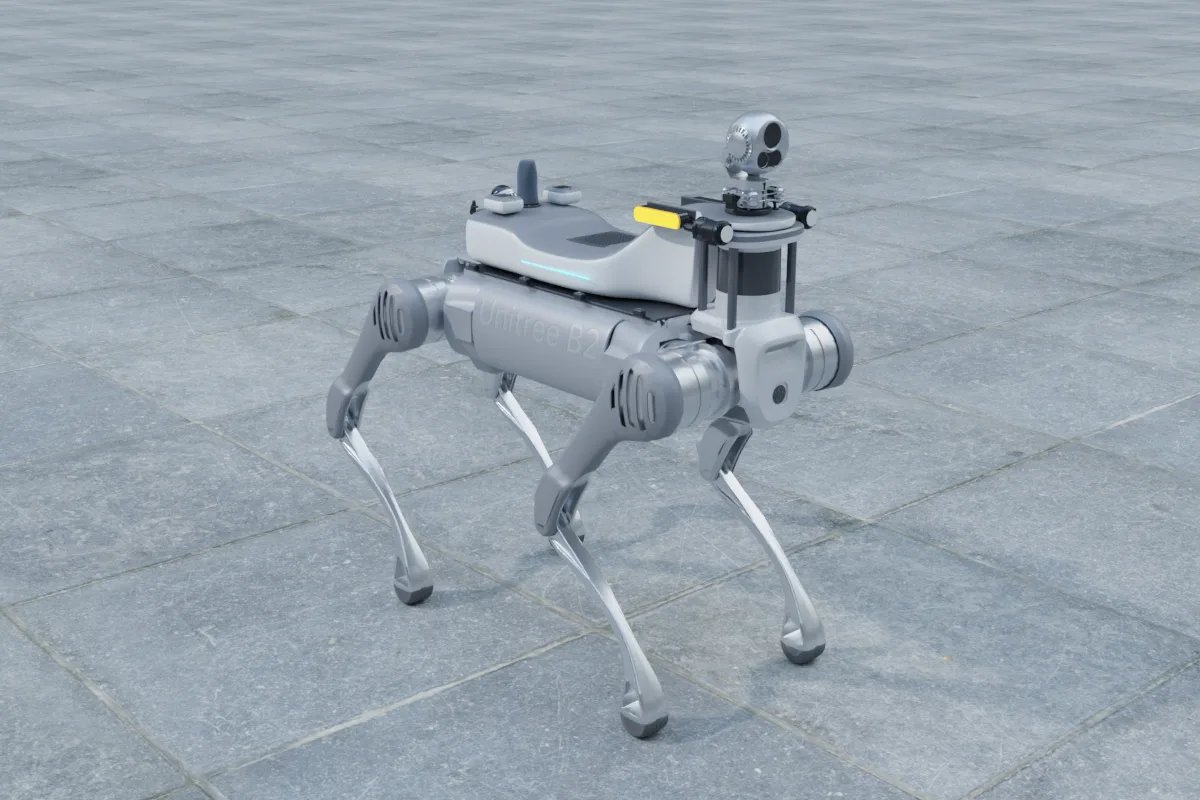
What an IP rating is
An IP code from IEC 60529 has two digits. The first is protection against solid objects and dust: 5 means dust-protected (some dust may enter but not enough to interfere), 6 means dust-tight. The second is protection against water: 4 is splashing from any direction, 5 is a water jet from a nozzle, 6 is a powerful jet, 7 is temporary immersion to one metre for 30 minutes, 8 is continuous immersion under conditions the manufacturer states. The rating is awarded to a specific product in a specific configuration, tested with its covers fitted and its cables connected, and it says nothing about anything attached to it afterwards.
Why the payload is a different product
A payload is an assembly: sensors, a compute module, a power distribution board, a switch, batteries, a pan-tilt unit, antennas, cables and a structure that holds it all on the robot. Each sensor's rating covers that sensor's own housing and its connector when mated with the matching plug. The assembly adds new paths for water and dust that no sensor datasheet accounts for:
- the enclosure around the compute, power and switch, which has a lid, a gasket and several cable entries;
- every cable gland and every connector between modules, including the ones a technician opens for service;
- the pan-tilt unit's slip ring or the service loop where cables enter the moving head;
- the gas sampling inlet, the microphone holes of an acoustic imager and any vent for pressure equalization;
- the mounting plate and the cable into the robot's payload port.
So a payload built entirely from IP67 parts can be IP65, IP54 or effectively unrated, depending on how those paths were handled. This is not a flaw in the sensors; it is simply that the rating has to be earned again for the assembly.
What rating a payload actually needs
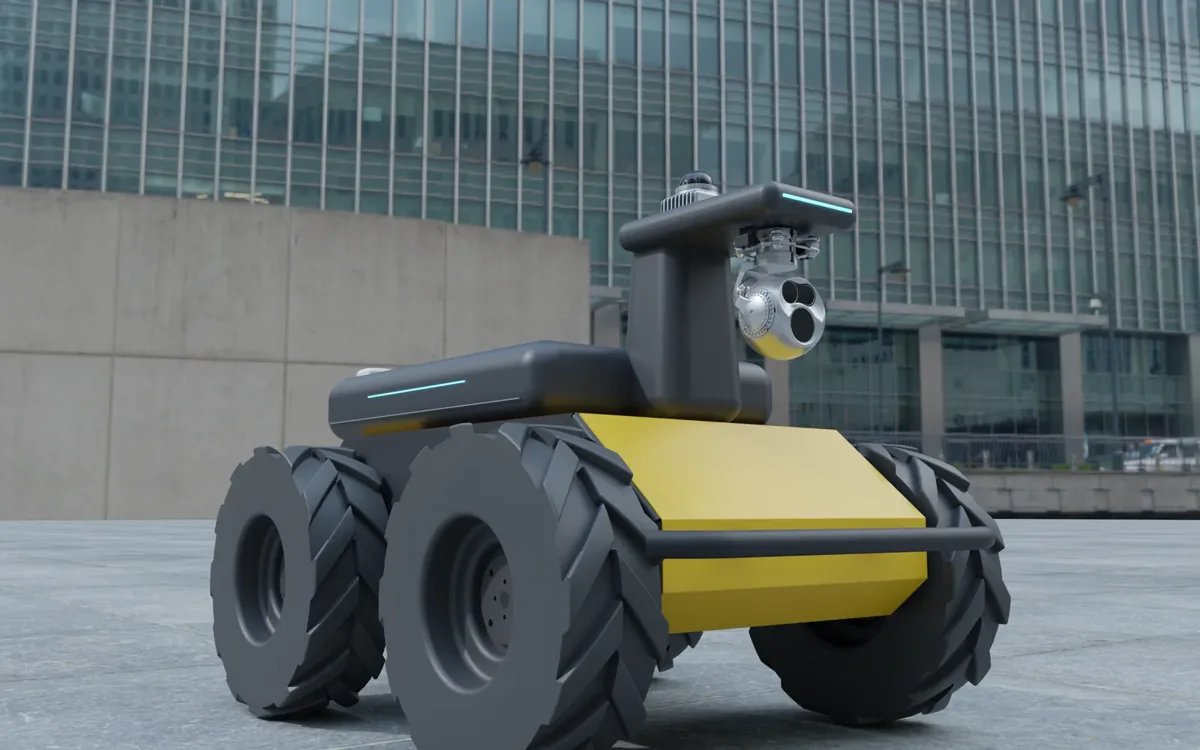
For inspection and patrol work on quadrupeds and UGVs, IP65 or IP66 is the practical target: dust-tight, and protected against water jets, which covers rain, wash-down spray at a plant, mud thrown by the robot's own legs or wheels, and dust in a cement works or mine. IP67 matters only where the payload may be submerged, which on a quadruped means a fall into water and on a UGV means fording. Payloads with a pan-tilt head, a gas inlet or an acoustic array cannot reasonably reach IP67, and a buyer who asks for it is usually asking for a number rather than a requirement. Indoor payloads are often better at IP54 with a vented, fan-cooled enclosure, because sealed boxes make cooling harder.
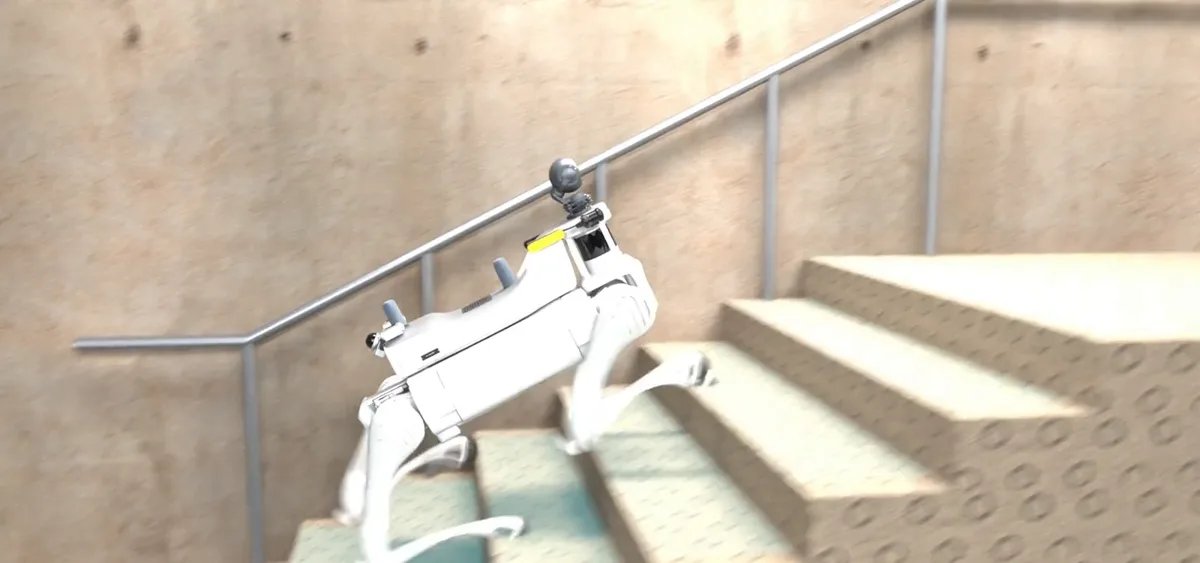
Design details that decide the result
- Enclosure: a machined aluminium or sheet-metal box with a continuous gasket in a groove, lid screws at close enough spacing to keep the gasket compressed, and no sharp corners in the sealing path. Printed plastic enclosures can be sealed, but need a bonded or gasketed lid and thicker walls.
- Cable entries: IP68 glands sized to the cable diameter, or sealed bulkhead connectors (M12, M8, circular military-style) with caps for unused ports. Every entry is on the underside or a side wall, never the top.
- Sensors with their own housings mount through the enclosure wall with an O-ring, so that the sensor's own rating is preserved and the enclosure is not opened by the mounting.
- Pan-tilt head: the head's own IP rating covers its cameras; the cable route into the head is either a sealed slip ring or a service loop of jacketed cable entering through glands at both ends.
- Gas inlet: a hydrophobic filter and a water trap ahead of the pump, so that rain on the inlet does not reach the sensors.
- Acoustic array: the microphone holes stay open (a sealed window blocks ultrasound), so the array has its own drained housing and the payload rating excludes it, which is stated in the specification.
- Pressure equalization: a membrane vent so that temperature changes do not pump moist air past the gasket.
- Heat: a sealed box has no airflow, so the compute module is bolted through a thermal pad to the shell and the shell carries the heat out through fins or a large shaded surface.
How we test
Every payload we ship gets a spray test with all cables connected and the head cycled, followed by an inspection of the inside for moisture; this is part of the factory acceptance test. Payloads specified to IP65 or IP66 are built from a design that has passed the IEC 60529 dust and water tests on a sample unit, and we send units to a third-party laboratory when a customer's specification requires a certificate. The rating we quote is for the assembled payload in its delivered configuration; if the customer later changes a connector or adds a sensor, the rating no longer applies until it is rechecked.
What to ask a payload supplier
- What is the IP rating of the assembled payload, as delivered, with all cables connected?
- How was it established: design to the standard, in-house test, or third-party certificate?
- Which parts are excluded from the rating (for example an acoustic array or a gas inlet), and how are they protected?
- How is the payload cooled, and at what ambient temperature was that checked?
- What does a technician have to do after opening the enclosure for service to restore the rating?
A supplier who can answer these in a sentence each has built the payload as a product. A supplier who answers with the list of sensor ratings has not yet thought about the assembly, and the first rainy inspection round will find that out.
If you are writing a specification for a payload and want to know which rating to ask for, send us the site and the sensor list; we will tell you what we would build and what we would commit to.
FAQ
If every sensor on the payload is IP67, is the payload IP67?
No. The rating belongs to the assembled product as tested. The enclosure around the compute, power and switch, the cable glands, the connectors between modules, the gimbal slip ring and the gas inlet each add a path for water and dust. A payload is only IP67 if the whole assembly was designed and tested to IP67.
What IP rating does a robot payload need?
IP65 or IP66 covers almost all inspection and patrol work: rain, spray from wash-down, dust and mud. IP67 matters only where the payload can be submerged, for example on a UGV that fords water. Indoor payloads often use IP54 vented enclosures for better cooling.
Does the robot's own IP rating cover the payload?
No. A Unitree B2 or DEEP Robotics X30 has its own rating for its own body; whatever you bolt on top needs its own enclosure and rating. The connection between the two (the payload's cable into the robot's port) also has to be sealed.
How is a payload's IP rating tested?
By the dust and water tests in IEC 60529 for the chosen digits: a dust chamber for the first digit and water jets or immersion for the second, on a complete payload with all cables connected, followed by a check that no water or dust reached the inside. We do a spray test on every payload before shipping and send sample units for third-party testing when a customer's specification requires a certificate.
Why do sealed payloads have thermal problems?
A sealed box has no airflow, so the compute module's heat has to be conducted out through the shell. This is solved by bolting the module to the aluminium enclosure through a thermal pad and giving the shell fins or a large flat area; vented enclosures are easier to cool but cannot reach IP65.