DEEP Robotics X30 vs Unitree B2 for industrial inspection payloads
Updated 2026-11-08 · YUANZHI ROBOTICS engineering team
The DEEP Robotics X30 and the Unitree B2 are two industrial quadrupeds often compared as the base for a heavy inspection payload: a pan-tilt with thermal and zoom cameras, a gas detector, an extra LiDAR and a payload computer. On paper they look similar. Both weigh about 60 kg, both are IP67 and both are rated from -20 to 55 degrees C. The differences that matter to an integrator are payload margin, runtime with load, the power and data ports on the back, and how much of the robot you can reach from your own software. This guide puts the manufacturers' public figures side by side and says plainly where a figure is not published.
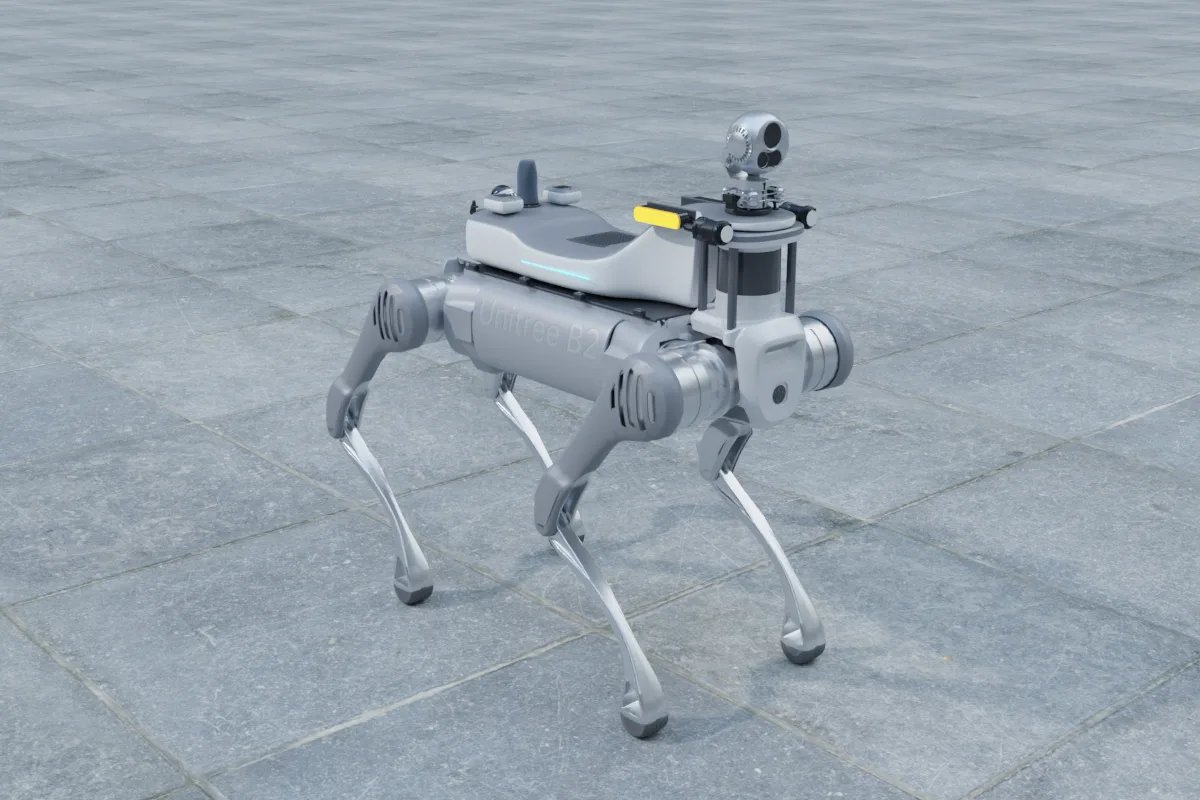
Specifications side by side
| DEEP Robotics X30 / X30 Pro | Unitree B2 | |
|---|---|---|
| Weight with battery | About 56 kg (X30), about 59 kg (X30 Pro) | About 60 kg |
| Standing size | About 1000 x 470 x 695 mm (X30), 1000 x 470 x 715 mm (X30 Pro) | About 1098 x 450 x 645 mm |
| Payload | 20 kg continuous; separate maximum not published | More than 40 kg walking, 120 kg or more standing |
| Runtime | About 4 h unloaded, about 2.5 h loaded | Over 5 h / 20 km unloaded, over 4 h / 15 km with 20 kg |
| Battery | Capacity not published; field swap; about 1.5 h charge | 58 V, 45 Ah (2250 Wh), quick battery change |
| Docking and recharge | Autonomous return and recharge listed | Autonomous charging listed as optional |
| Ingress protection | IP67 | IP67 |
| Operating temperature | -20 to 55 degrees C | -20 to 55 degrees C |
| Stairs and steps | Max step 20 cm in the spec table; stairs up to 45 degrees and open-grate industrial stairs in the feature text | Continuous 20 to 25 cm steps; 40 cm step forward; obstacles up to 40 cm |
| Slope | 30 degrees in the spec table | Above 45 degrees |
| Speed | 2.5 m/s maximum operating speed (4.5 m/s top tested speed) | Over 6 m/s in special configurations, speed limited in normal use |
| Power to payloads | X30: 72 V external interface. X30 Pro: 24 V, 12 V, 5 V (USB) | 4 x 12 V, 4 x 24 V, 1 x 5 V, 1 x battery output |
| Data to payloads | X30: Ethernet. X30 Pro: Ethernet, USB 2.0, USB 3.0 | 4 x gigabit Ethernet, 4 x USB 3.0 |
| Onboard computing | Two (X30) or three (X30 Pro) octa-core industrial processors | Intel Core i5 for the platform, Core i7 for user development; Orin NX and others optional |
| Built-in sensors | 4 LiDARs, 1 wide-angle camera | 1 3D LiDAR, 2 depth cameras, 2 optical cameras (configuration dependent) |
| Software access | x30_motion_sdk (C++, Python) on GitHub; official ROS package not found | unitree_sdk2 (CycloneDDS based, with B2 examples) and unitree_ros2 (lists B2) |
| Price | Not published; quoted by distributors | Not published; quoted by distributors |
All figures are from the manufacturers' public product pages and repositories. Real performance depends on configuration, payload and site conditions. Neither publishes current or wattage limits per payload output.
Payload weight and runtime
Add up the full payload before choosing: pan-tilt head, thermal and zoom cameras, gas module, back-mounted LiDAR, computer, brackets, cabling and any weather cover. If that total is, for example, 15 kg, on the X30 it uses most of the published 20 kg, and the published loaded runtime of about 2.5 hours sets the length of a round. On the B2 the same payload sits well under the 40 kg walking figure, and Unitree publishes over 4 hours with 20 kg on board. If the payload will grow over the project, for example by adding a manipulator or a second camera head, the B2 leaves more room.
The X30 compensates with autonomous docking and recharging as a listed feature and a charge time of about 1.5 hours. For a fixed route that runs several short rounds a day without staff, a shorter round plus reliable docking can be worth more than a longer battery.
Power and data on the back
For the payload builder, the B2's published list is the more convenient one: regulated 12 V and 24 V outputs in quantity, four gigabit Ethernet ports and four USB 3.0 ports. A pan-tilt head, LiDAR, computer and gas module can each take a separate rail and port without an extra power board.
On the X30 family, pick the version carefully. The base X30 lists only a 72 V external interface and Ethernet, so the payload needs its own DC-DC stage and switch. The X30 Pro lists 24 V, 12 V and 5 V outputs plus USB 2.0 and USB 3.0, which is closer to what most payloads expect. In both cases ask the manufacturer for the current limit on each output, because it is not on the public page.
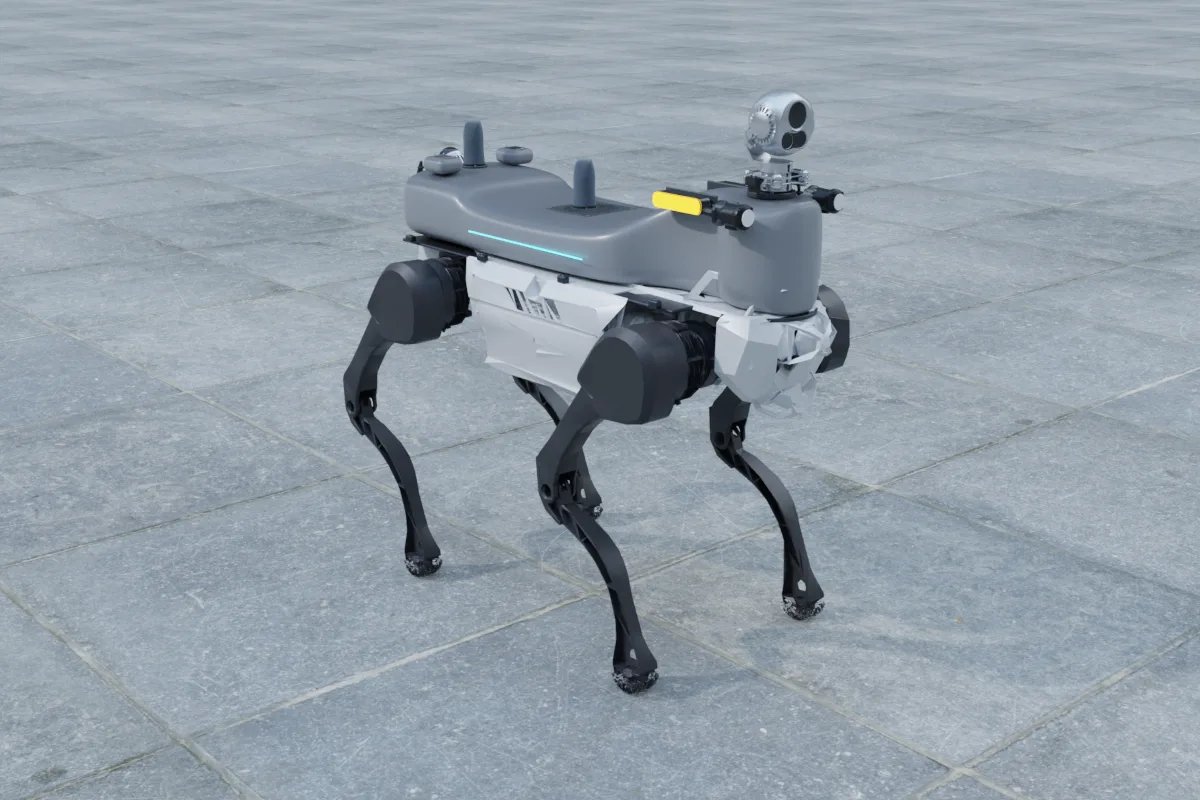
Terrain, stairs and weather
Both robots are IP67 and rated from -20 to 55 degrees C, so rain, dust and normal outdoor temperatures are not the deciding factor. Your payload usually is: a pan-tilt head, gas sensor or connector rated lower than IP67 sets the real limit for the whole system.
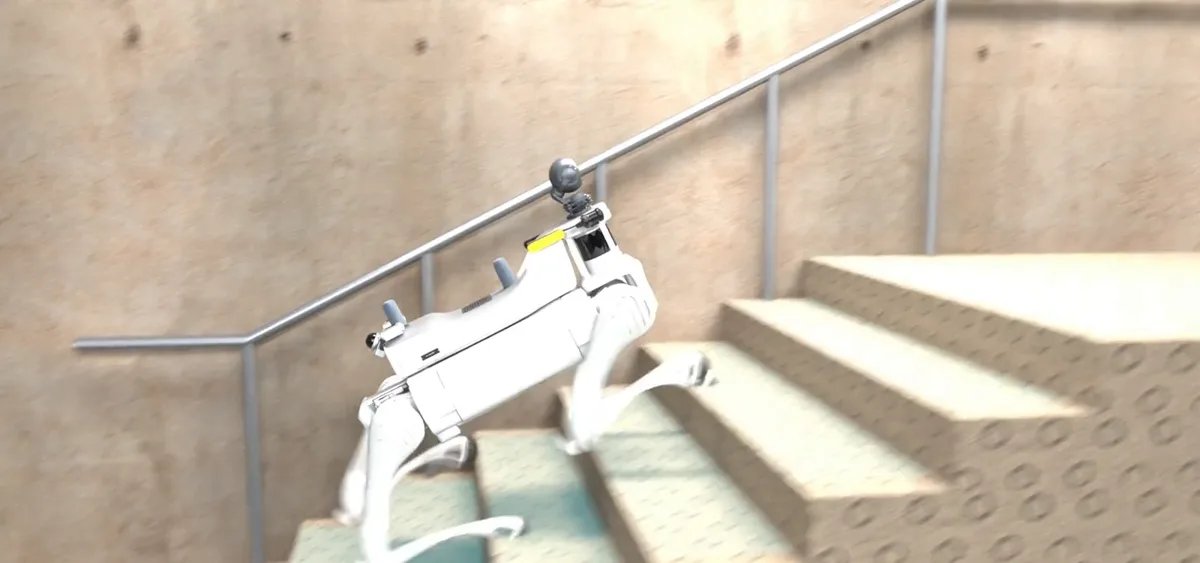
For stairs, DEEP Robotics highlights open-grate industrial stairs and stairs up to 45 degrees in its feature text, while its spec table lists a 20 cm step and a 30 degree slope. Unitree lists continuous 20 to 25 cm steps, 40 cm single steps and slopes above 45 degrees. Plants with steep metal stairs and grating should test both robots on their own stairs with the payload fitted, since a high payload moves the centre of mass.
Software and secondary development
Unitree documents unitree_sdk2, a CycloneDDS-based SDK with B2 examples in the repository, and unitree_ros2, which lists Go2 and B2 with low-level control and state examples. The B2 also carries a user-development computer. That makes it straightforward to run your own navigation, inspection tasks and data upload.
DEEP Robotics publishes x30_motion_sdk on GitHub, a motion-control SDK with C++ and a Python version, and offers mapping, navigation and docking in its own software on the X30 Pro. We did not find an official X30 ROS package, so a ROS 2 based payload usually needs a small bridge on the payload computer. If your project depends on the manufacturer's navigation and docking stack rather than your own, that is less of an issue.
Price and availability
Neither manufacturer lists a price on its product page. Both robots are sold through international distributors and quoted per configuration, and the price changes with sensors, docking station and software options. Request quotes for the exact configuration, including the X30 Pro rather than the base X30 if you need low-voltage payload outputs.
Decision table by site type
| Site | Suggested base | Reason |
|---|---|---|
| Substation | Either; X30 Pro for docked unattended rounds, B2 for heavy pan-tilt and long rounds | Flat yards, fixed routes, gauge and thermal reading; docking and runtime decide |
| Tunnel or utility corridor | B2 | Long linear routes favour runtime and payload margin for lighting, LiDAR and gas sensing |
| Chemical plant | Test both on site; X30 Pro if grated stairs dominate | Metal stairs and grating; note that neither public page lists an explosion-proof rating |
| Outdoor yard or storage area | B2 | Slopes, kerbs and longer distances; payload room for RTK and weather protection |
For either robot we supply the payload side: brackets, power conversion, sensors, the payload computer (Jetson Orin NX 16 GB at US$2,290) and the inspection software. An entry mapping kit starts from US$2,000 and a complete inspection kit from US$8,690. Send us the robot model, the inspection task, the site type and the delivery country, and we will tell you which base fits and what the payload will weigh before you order.
FAQ
Which robot carries more payload?
On the manufacturers' public pages, the Unitree B2 lists more than 40 kg walking payload and 120 kg or more standing; the DEEP Robotics X30 and X30 Pro list 20 kg continuous payload. DEEP Robotics does not publish a separate maximum walking payload on its product page.
How long do they run with a payload?
Unitree states over 5 hours and over 20 km unloaded, and over 4 hours and over 15 km with a 20 kg load, from a 58 V, 2250 Wh battery. DEEP Robotics states about 4 hours unloaded and about 2.5 hours loaded, with about 1.5 hours to charge; it does not publish battery capacity on the product page.
What power can a payload draw from each robot?
The B2 page lists 4 x 12 V, 4 x 24 V, 1 x 5 V and one battery output. The X30 lists a 72 V external power interface; the X30 Pro lists 24 V, 12 V and 5 V (USB). Neither page publishes current or wattage limits per output, so ask the manufacturer before sizing a payload.
Can I write my own software on either robot?
Unitree publishes unitree_sdk2 (CycloneDDS based, with B2 examples) and unitree_ros2 (which lists B2), plus a user-development computer in the robot. DEEP Robotics publishes x30_motion_sdk on GitHub (C++ and Python) for motion control; we did not find an official X30 ROS package, so plan a bridge on the payload computer.
What do they cost?
Neither manufacturer lists a price on its product page. Both are sold through distributors and quoted per configuration, so ask for a quote with the exact sensor and docking options you need. Our own public prices are the payload side: an entry mapping kit from US$2,000 and a complete inspection kit from US$8,690.