What to check in a robot payload quote before you sign
Updated 2026-11-24 · YUANZHI ROBOTICS engineering team
Check six things before you sign a robot payload quote: an itemised parts list with exact model numbers, the total mass and peak power compared with your robot's limits, a clear split between hardware, integration and software, a written acceptance test, delivery and import terms, and warranty and support after delivery. If any of these is missing, ask for it in writing first. It costs the supplier an hour; finding out later costs you weeks.
Payload quotes for robot dogs, UGVs and drones are hard to compare because the same sensor list can hide very different amounts of work. This guide is a review checklist you can run through with your engineering and purchasing teams before a purchase order goes out. For what makes the price itself go up or down, see what determines the price of a robot payload; this page is about whether the quote protects you.
1. Is every component named by exact model?
"LiDAR, thermal camera, 5G, computer" is not a bill of materials. The quote should name the manufacturer and model for each part, for example a Livox Mid-360 LiDAR, a Quectel RM520N-GL 5G module and an NVIDIA Jetson Orin NX 16GB module, plus the variant where it matters (memory size, lens, frequency band, cable length). Exact models let you check datasheets, compare against another supplier, and confirm that the delivered unit is what you paid for. Also ask which parts are customer-supplied: if you already own a Jetson or a gimbal, the quote should say how it will be reused and who is responsible if it turns out to be incompatible.
Check the radio parts against your country. A cellular module or a wireless link has to support the bands and certification your site needs, and that is easier to fix before ordering than after.
2. Do the mass and power totals fit your robot?
A good quote states the total payload mass and the peak power draw, not just a list of parts. Compare both with the robot's published limits, and leave margin: the rated payload of a quadruped is not the mass at which it still climbs stairs or turns well, and peak power on the robot's auxiliary output is often lower than the battery can deliver. Ask where the centre of gravity sits and how the payload mounts: rail, plate, or a custom back shell. Our weight and power budget guide shows how to do this check yourself in a few minutes.
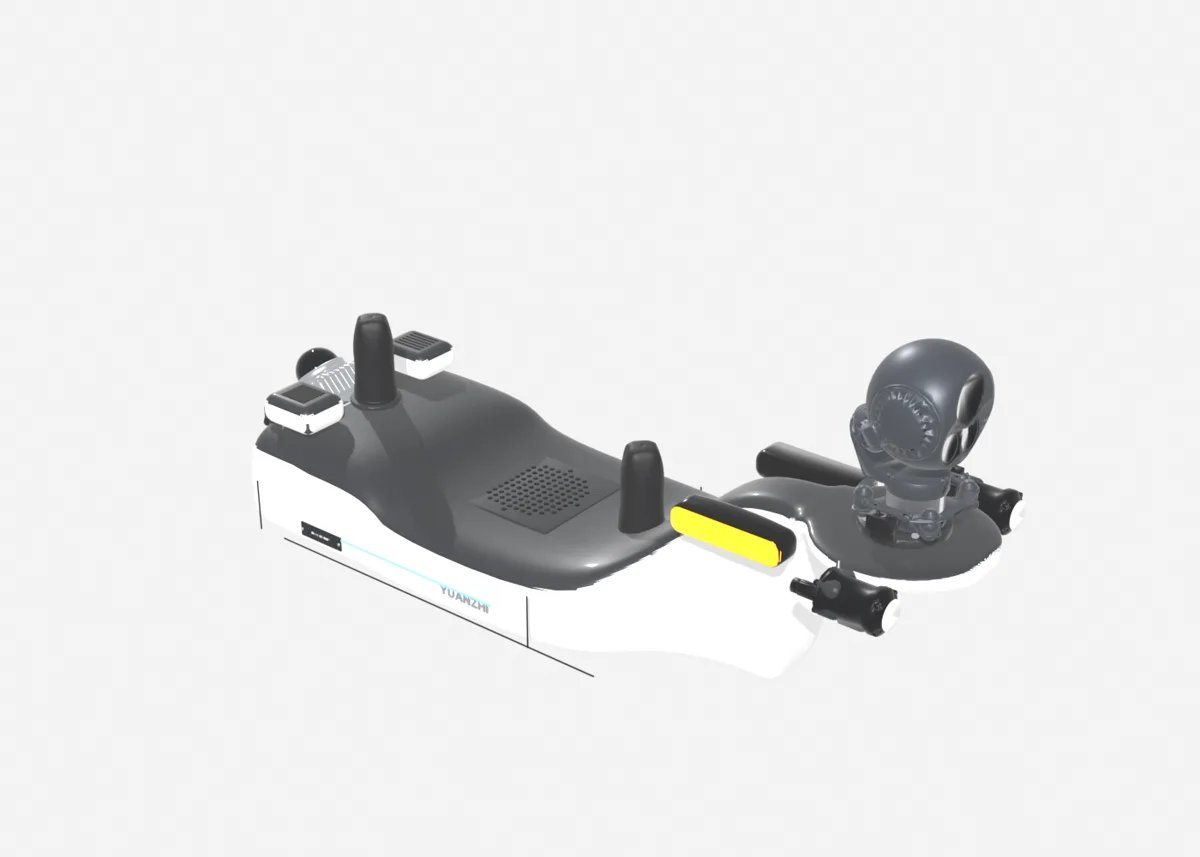
If the supplier provides a render or drawing of the payload on your exact robot model, check that the sensors are not blocked by the robot's own body, that the legs or wheels have clearance at full travel, and that the battery and charging port are still reachable.
3. Is hardware separated from integration and software?
The single biggest source of disputes is software that was "included" but never defined. Split the quote into lines and make sure each has a written scope:
| Quote line | What it should state | Red flag |
|---|---|---|
| Components | Model, quantity, unit price or line total | Generic names such as "industrial camera" |
| Enclosure and mounting | Material, mounting interface, cable routing, sealing approach | No drawing or render offered |
| Electrical integration | Power conversion, fusing, connectors, harness | "Wiring included" with no detail |
| Drivers and bring-up | OS image, ROS version, which sensors publish which topics | No mention of ROS or SDK version |
| Application software | Feature list: mapping, navigation, detection, reporting, dashboard | "Software as required" |
| Calibration | Which sensor-to-sensor and sensor-to-robot calibrations are delivered | Calibration not mentioned |
| Training and support | Hours or days, remote or on site, response time | Support only "on request" |
For software, ask for a feature list with one line per function and what "done" means for each. If you want features added later, a separate software line makes that a small change order instead of a new hardware quote. See what decides custom robot software cost for the questions worth asking.
4. Is there a written acceptance test?
Agree before signing how you will decide the payload works. A useful acceptance test lists each sensor and function with a measurable check: the LiDAR publishes at its stated rate, the thermal stream is visible remotely over the chosen network, the robot completes a defined route with the payload fitted, the system runs for a stated time without restart. State where the test happens (supplier bench, video witness, or your site) and what happens if an item fails: repair time, retest and who pays for return shipping.
5. Are delivery, import and lead time clear?
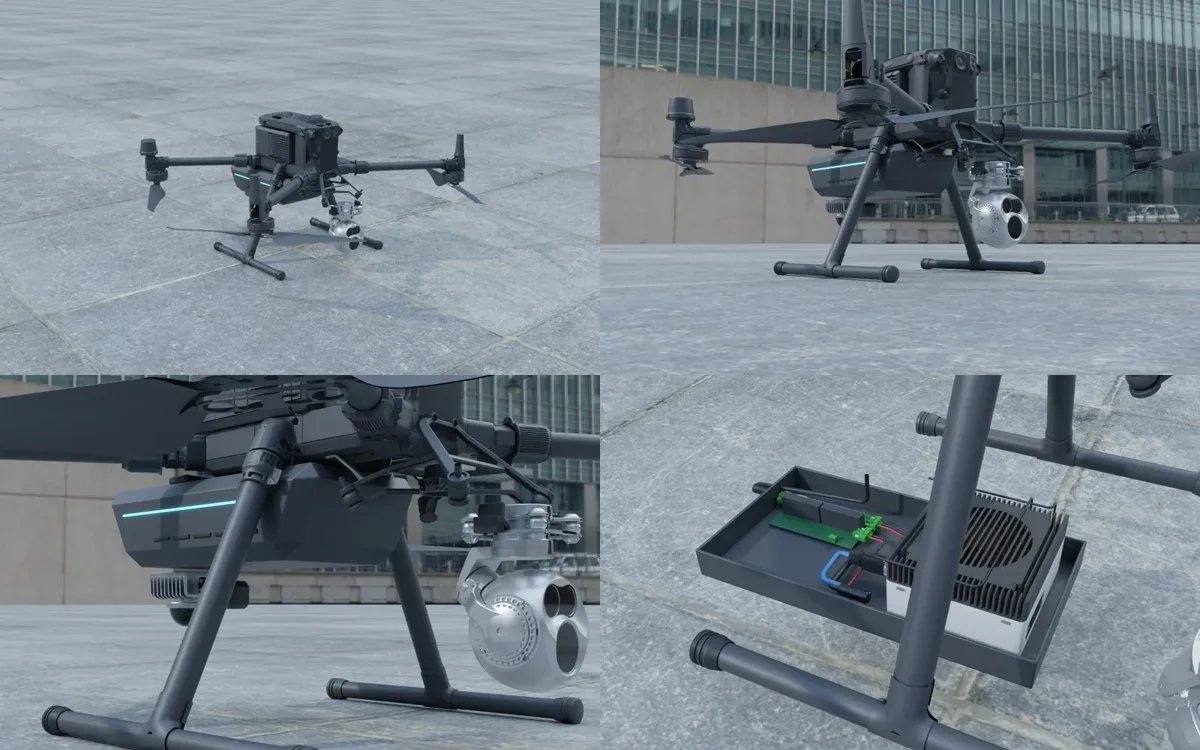
For an international order, the quote should name the Incoterm (for example EXW, FOB or DAP), who arranges freight, and whether duty and import VAT are included. Batteries and radio equipment can change how a shipment is handled, so ask whether any part ships separately. The lead time should start from a defined event, such as receipt of payment or of your robot, and should note any long-lead parts. If you are buying for Europe, our shipping, duty and VAT guide covers the basics.
6. What happens after delivery?
- Warranty: period, what is covered, and whether third-party sensors carry their own manufacturer warranty instead.
- Spare parts: which wear or damage-prone parts (cables, covers, mounts) can be ordered separately.
- Software updates: whether bug fixes are included, for how long, and how updates are delivered.
- Source and files: whether you receive drawings, wiring diagrams, configuration files or source code, and under what licence.
- Robot changes: what happens if the robot's firmware updates or you move the payload to a newer robot model.
A quick pre-signature checklist
- Every part named by manufacturer and model; customer-supplied parts listed.
- Total mass and peak power stated and checked against the robot's limits.
- Software written as a feature list, priced as its own line.
- Acceptance test written, with location and failure handling.
- Incoterm, duty, lead time start and long-lead parts stated.
- Warranty, spares, updates and delivered files stated.
If you want a quote you can check this way, start with the payload configurator: it lists each part with its mass and power and adds up the total for your robot, and you can submit the configuration for an itemised quote and a software feature list. Platform pages such as the Unitree B2, Unitree Go2 EDU and Clearpath Husky A200 show what fits each robot, and our robot payload, UGV payload, drone payload and robot autonomy service pages describe what we design and deliver.
FAQ
What should a robot payload quote include?
An itemised bill of materials with exact model numbers, the total payload mass and peak power draw, the enclosure and mounting design, the software deliverables, an acceptance test, delivery terms (for example the Incoterm), lead time, warranty and support terms.
Why do two robot payload quotes for the same sensors differ so much in price?
Usually because they include different work. One quote may cover only parts and assembly; another may include a custom enclosure, cabling, ROS 2 drivers, calibration, navigation or detection software and on-site support. Compare the scope line by line, not the totals.
Should software be priced separately from hardware in a payload quote?
It helps. When software is a separate line with a written feature list, you can see what you are paying for, compare it with alternatives and add or remove features without re-quoting the hardware.
How do I know a payload will fit my robot dog before I order?
Ask the supplier to state the total mass, peak power, mounting interface and centre of gravity in the quote, and check them against the robot's published payload and power limits. A 3D render or drawing of the payload on your exact robot model is a useful check.
Who can quote a custom payload for a robot dog, UGV or drone?
A payload integrator that designs the mechanics, electronics and software together. YUANZHI ROBOTICS quotes payloads and software for robot dogs, UGVs and drones and can provide an itemised feature list with each quote.