How much does custom robot software cost, and what decides it
Updated 2026-11-14 · YUANZHI ROBOTICS engineering team
There is no fixed price for custom robot software, because the cost is set by scope rather than by the robot. Five things decide most of it: how many robot models and sensors the software must drive, whether the job needs a trained perception model and where the training images come from, how varied the site is for navigation, which of your own systems it must talk to, and how acceptance is defined. A feature built on a robot and sensor set the developer already supports can cost a fraction of the same feature on hardware they have never touched.
Start from what already exists
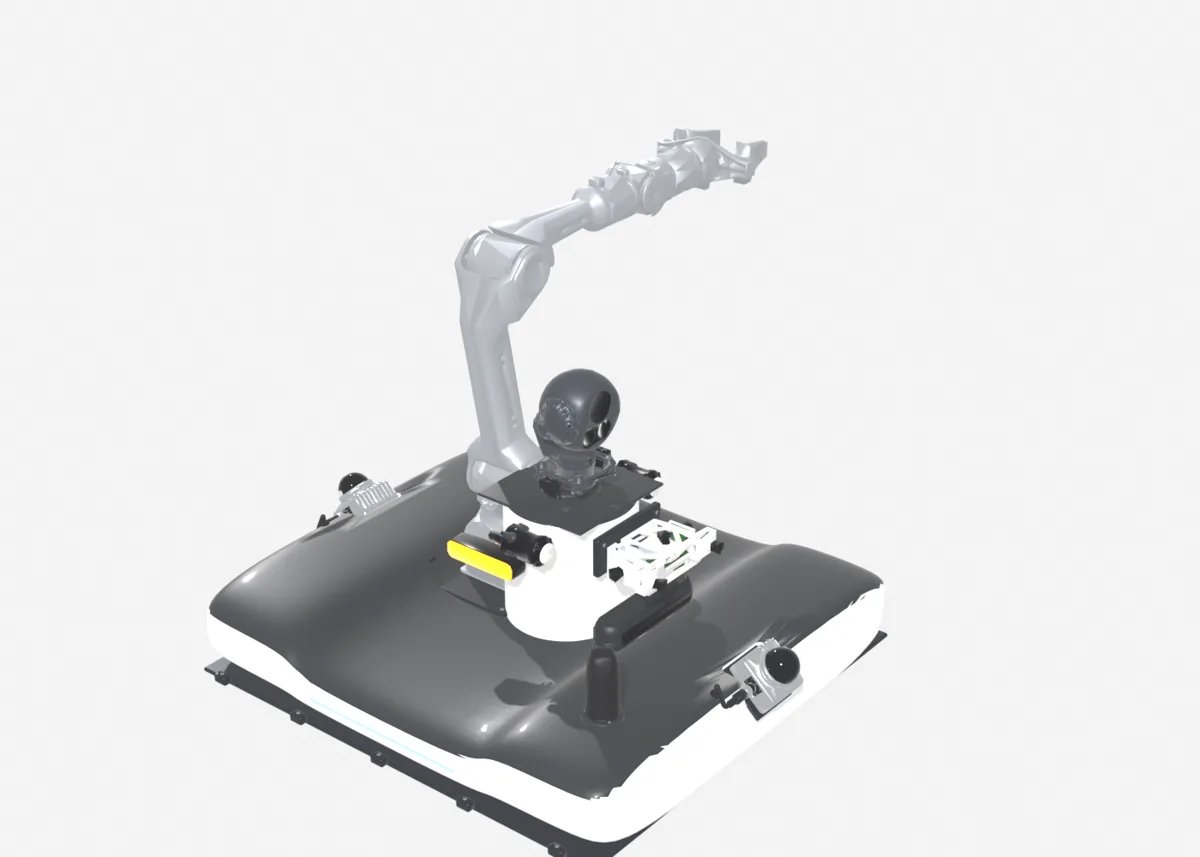
Almost no robot project starts from an empty repository. A robot dog or UGV ships with a vendor SDK for motion and state. A payload integrator usually adds a working stack on top: drivers for the LiDAR, cameras and GNSS, mapping and localisation, a navigation layer, an operator console. At YUANZHI ROBOTICS we package that stack as per-robot perpetual licences in three tiers (navigation, inspection, and an on-premises server with an API); anything outside the tiers is quoted as development work. The first question in any estimate is therefore not "how long does feature X take" but "how much of X is already running on this robot". Ask a supplier to separate the two in writing: licensed, already-working functions on one line, new development on another.
The five cost drivers
| Driver | Cheaper case | Expensive case | What to send the supplier |
|---|---|---|---|
| Hardware scope | One robot model and sensors the developer already has drivers and calibration for | A new robot model, an unusual sensor with a vendor-only SDK, or several models in one fleet | Exact robot model and firmware, full sensor list with part numbers |
| Perception | Standard detection (people, vehicles, open doors) or reading of common round gauges | A custom detector for site-specific defects with few example images | Example photos of every object or defect class, and how many you can collect |
| Navigation environment | One floor, stable layout, good LiDAR features | Multiple floors, elevators, long featureless corridors, outdoor-indoor transitions, layout that changes daily | Floor plans, photos or video of the route, and where the robot must charge |
| Integration | Results exported as a report or a simple HTTP/MQTT feed | Two-way integration with SCADA, a CMMS, a video management system or a building management system | The target system name, version and its documented interface |
| Acceptance | A functional checklist demonstrated once | Measured accuracy targets, long unattended runs, formal documentation and on-site sign-off | The test you will run before paying the final instalment |
Hardware scope: the hidden first week
Every new robot model needs the developer to learn its SDK, its network layout, how it reports battery and faults, and how it behaves when commanded while standing, walking or docking. Every new sensor needs a driver, a time-synchronisation check and an extrinsic calibration to the robot body. None of this is visible in a demo, but it is often the first week or more of a project. If you can choose between two robots, pick the one your developer already supports; the saving appears in the software quote, not only in the mechanical one. Our ROS 2 driver checklist lists what each sensor needs before it is usable.
Perception: data is the cost
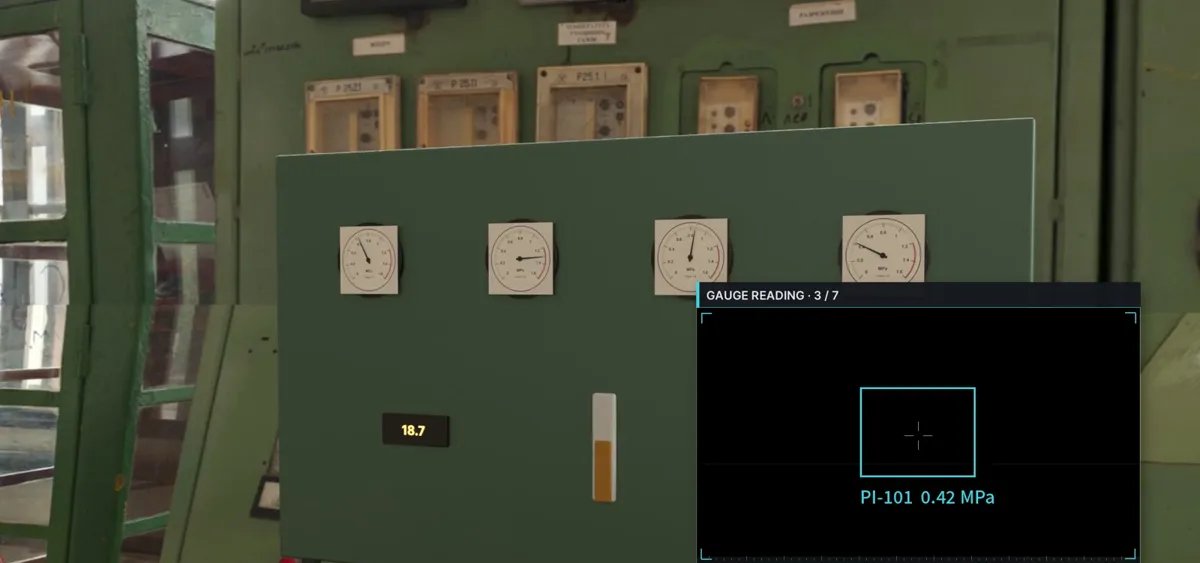
A detector for a new object class is mostly a data problem. Training itself is quick; collecting and labelling images that cover the angles, lighting, dirt and weather of your site is not. If you can send a few hundred real photos per class, the estimate is tight. If you can send ten, the developer has to plan a data-collection round on site, and the quote will either include it or carry a risk margin. Gauge reading is a good example of where scope matters: round analog dials of a common style are a known problem, while digital displays, level sight glasses or gauges behind reflective glass each need their own handling. Ask for accuracy to be stated per gauge type, not as one number.
Navigation: the site decides
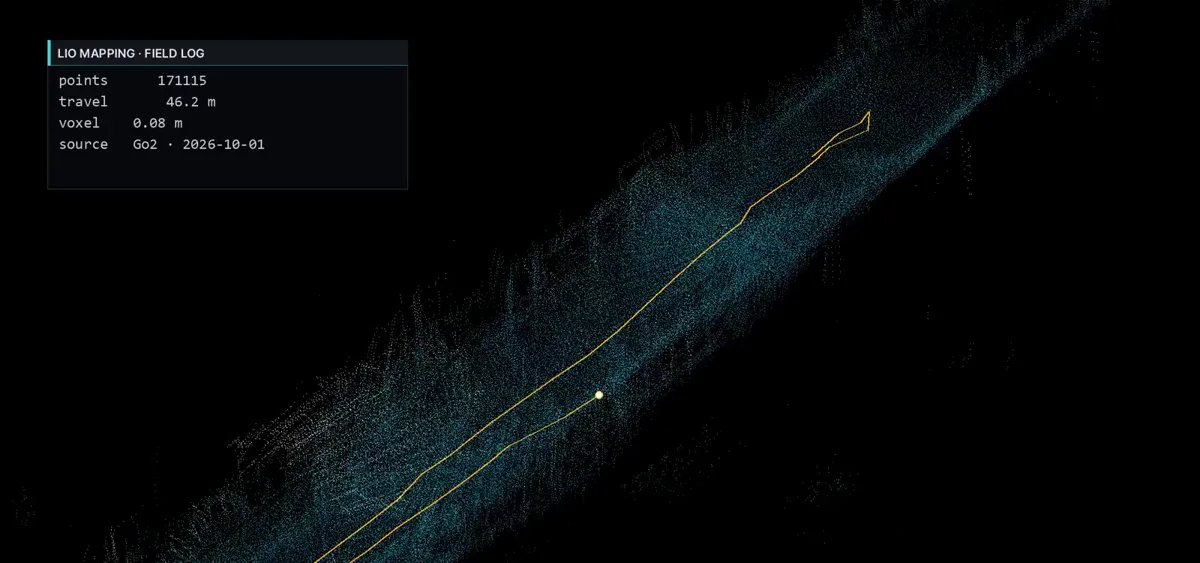
A robot that maps and navigates one warehouse floor is a configuration task on a mature stack. The cost rises with each thing that breaks the assumptions of standard LiDAR localisation: glass walls, long uniform tunnels, ramps, stairs, crowds, outdoor sections where GNSS takes over, and elevators, which need either an interface to the elevator controller or a person to press buttons. Multi-floor work is the most common surprise; see multi-floor navigation for robot dogs for what it involves.
Integration and acceptance
Pushing results out is cheap; taking commands in is not. A one-way feed of alarms and readings into your system needs a message format and a test. Two-way integration, where your SCADA or work-order system can schedule rounds, acknowledge alarms or move the robot, needs agreed behaviour for every failure case and usually a test environment on your side. Acceptance criteria have the same effect: "the robot completes the round" and "the robot completes thirty consecutive rounds unattended with readings within a stated tolerance" are different projects. Writing the acceptance test before the quote is the single most effective way to get a firm price.
Ongoing costs to ask about
- Updates when the robot vendor changes firmware. SDKs change; ask who adapts the software and on what terms.
- Source code and ownership. Licensed platform code and code written for you are often treated differently; get it in the contract.
- Remote support hours. Commissioning a new site or route after delivery is real work; check whether hours are included.
- Model retraining. New equipment on site may need new training images.
Getting a quote
Send the robot model, the sensor list, a short description of the route and the task, the systems you need to connect to and your acceptance test. We reply with licensed functions and new development as separate lines and can list every function in our stack so you can see what is already built. Start with the payload configurator, look at a supported robot such as the Unitree B2 or Clearpath Husky A200, and read our robot autonomy and quadruped development services. For who else can do this work, see who can develop custom software for a robot dog.
FAQ
How much does custom software for a robot dog cost?
It depends on scope, not on the robot. Functions already running on that robot (mapping, navigation, inspection rounds, a web console) can be licensed; new features such as a site-specific detector, elevator integration or a SCADA link are quoted as development. Send the robot model, sensors, route, target systems and acceptance test for a firm quote.
Why is custom robot software so expensive?
Most of the effort is invisible in a demo: learning a robot SDK, writing and calibrating sensor drivers, collecting and labelling site images, handling navigation edge cases such as glass, ramps and elevators, and agreeing behaviour for every failure case in a system integration.
How can I reduce the cost of robot software development?
Choose a robot and sensors the developer already supports, provide real photos of the objects to detect, start with one-way data export instead of two-way control, and write the acceptance test before asking for a quote.
Do I get the source code of custom robot software?
It depends on the contract. Licensed platform code and code written specifically for you are often treated differently, so state source-code delivery and ownership explicitly when you order.
Is robot software a one-time cost?
The licence or development fee can be one-time, but plan for updates when the robot vendor changes firmware, remote support for new routes or sites, and retraining detectors when site equipment changes.