Unitree A2 vs Go2 EDU for outdoor inspection payloads
Updated 2026-11-19 · YUANZHI ROBOTICS engineering team
For outdoor inspection rounds with a dual-spectrum gimbal, RTK GNSS, a mapping LiDAR and 5G, the Unitree A2 is the safer choice: its rated payload of about 25 kg leaves a wide margin, and its front and rear LiDAR keep terrain perception working on both ends of the body. The Go2 EDU (rated payload 8 kg) can carry a light outdoor kit and is far easier to transport, but it suits short, dry-weather routes and pilots better than daily outdoor duty. The rest of this guide shows where that line falls.
The platform numbers that matter outdoors
These are the figures we use when sizing payloads in our configurator. Robot values are manufacturer ratings; check the current datasheet for environmental ratings and endurance before you commit, because they can change between production batches and firmware versions.
| Unitree Go2 EDU | Unitree A2 | |
|---|---|---|
| Body size (L × W × H) | 700 × 310 × 400 mm | 820 × 440 × 570 mm |
| Robot weight | about 15 kg | about 37 kg |
| Rated payload | 8 kg | about 25 kg |
| Built-in perception | L1 4D LiDAR in the head | front and rear LiDAR plus HD cameras |
| Transport | one person, car boot | two people or a cart |
| Best outdoor fit | short routes, pilots, paved campus paths | daily rounds on plant roads, yards, mixed terrain |
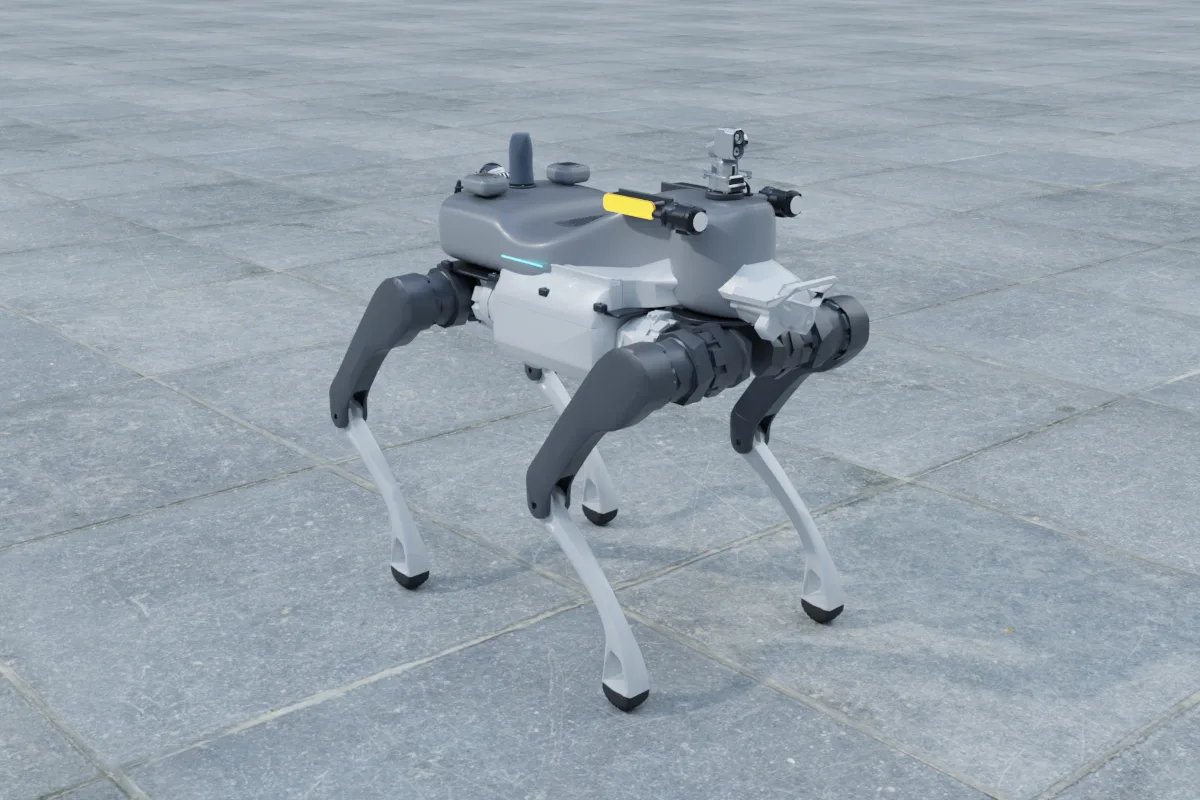
A typical outdoor inspection kit, and how it fits each robot
Outdoor inspection payloads tend to converge on the same core: a thermal plus visible gimbal for equipment checks, a 360° LiDAR for localisation where GNSS is weak, a pair of RTK antennas for position and heading in the open, onboard compute and a cellular link. Using catalogue values:
| Component | Example | Mass | Power |
|---|---|---|---|
| Dual-spectrum mini gimbal | Hikvision HM-TD5737T-4/W | 2.0 kg | 20 W |
| 3D LiDAR | Livox Mid-360 | 265 g | 6.5 W |
| RTK antennas (pair) | Harxon HX-CH7609A | 2 × 30.5 g | fed by the receiver |
| Compute | NVIDIA Jetson Orin NX 16GB | module plus carrier board | up to 40 W |
| Cellular | Quectel RM520N-GL 5G | M.2 module | see module datasheet |
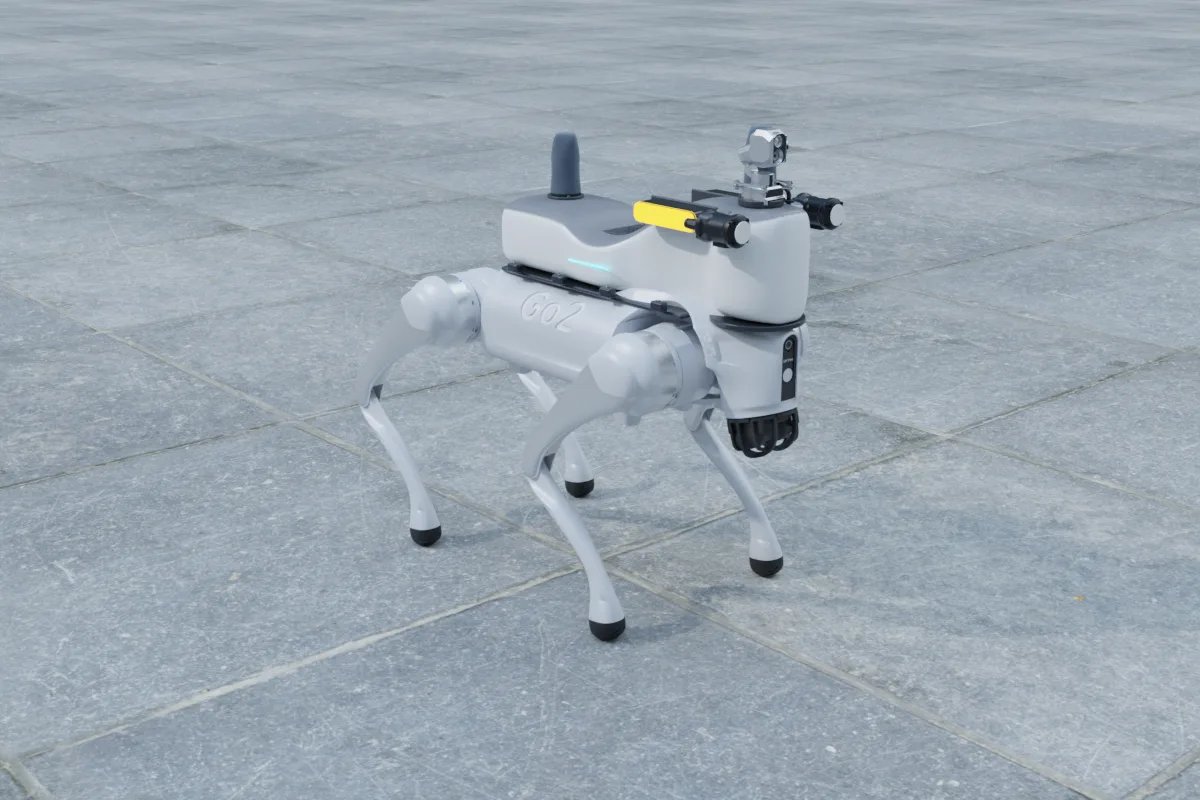
The sensors alone are around 2.3 kg. Add a shell or rail plate, carrier board, GNSS receiver, DC-DC converters, cabling and fasteners, and a complete kit of this type lands roughly in the 4–5 kg range. On an A2 that is well under a quarter of the rated payload. On a Go2 EDU it is more than half of the 8 kg rating, which still works, but leaves little room for a spare battery, a speaker, lights or a gas sensor later.
Weight is not the only budget. A kit like this can peak at roughly 70 W, mostly compute and the gimbal. That draw comes straight out of the robot's walking endurance, and a smaller battery feels it more. Our weight and power budget guide walks through the arithmetic.
Where outdoor conditions change the answer
Rain, dust and heat
Outdoor work means water on connectors, fine dust in fans and direct sun on dark enclosures. A payload does not become weatherproof because individual parts carry ratings; the assembled payload needs sealed cable glands, drip edges and a thermal path for the compute. The Go2 EDU is not marketed as an all-weather robot, so plan its outdoor use around dry days. For the A2, confirm the current environmental rating with the manufacturer and design the payload to at least match it. See IP ratings for robot payloads for why component ratings do not add up to a system rating.
Terrain and stability
Gravel, kerbs, wet grass and drain covers are where body size and mass help. A heavier, longer robot is less disturbed by a 2 kg gimbal slewing at full speed, and its balance changes less when the payload sits high. On a Go2 EDU, keep the gimbal low and close to the body centre and avoid tall antenna masts. On an A2, the main constraint is keeping the front and rear LiDAR fields of view clear in every gimbal pose.
GNSS antennas and localisation
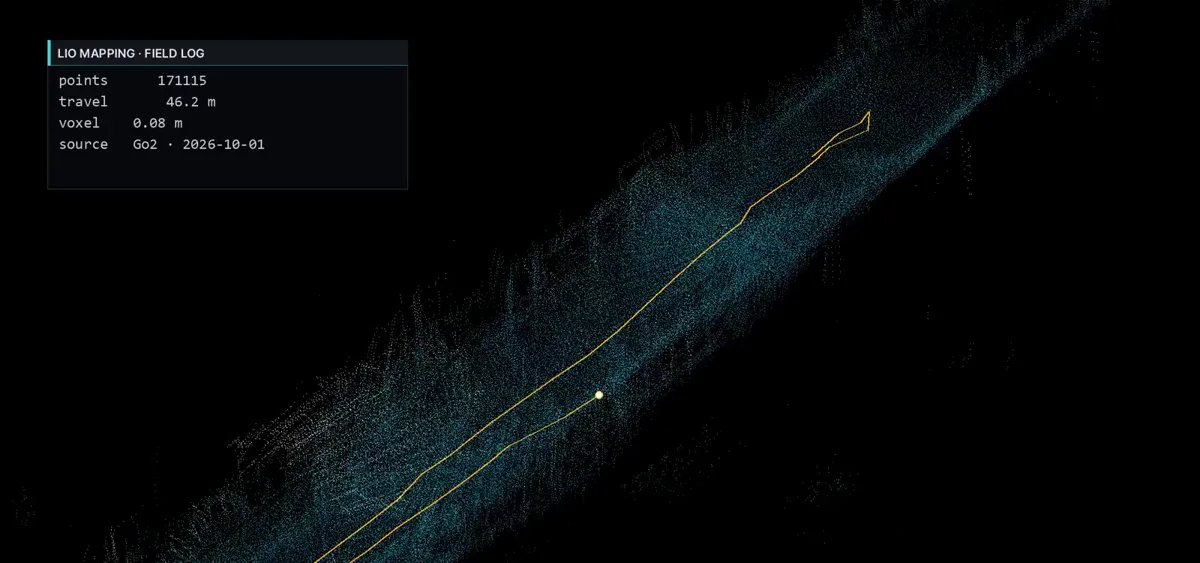
Dual RTK antennas need distance between them for a stable heading. On the A2's 820 mm body they can sit far apart on the shell corners. The Go2 EDU's shorter, narrower back limits that baseline and puts the antennas closer to the gimbal and the 5G antennas, so plan placement in 3D before drilling. On both robots, the LiDAR map carries localisation where buildings or pipe racks block the sky, so do not drop the LiDAR just because you have RTK.
Choosing by job, not by spec sheet
- Choose the Go2 EDU for a six-week outdoor pilot, a campus or paved route in good weather, research groups that need to carry the robot to site, or a light payload of LiDAR, compact camera and compute.
- Choose the A2 for scheduled daily rounds at a plant, substation or yard, for payloads with a full dual-spectrum gimbal plus RTK and 5G, for routes with rough ground, or when you expect to add sensors later.
- Use both in sequence when you want to prove the inspection software on a cheaper platform first: the same ROS 2 stack, gimbal and LiDAR can move from a Go2 EDU pilot to an A2 production robot if the mounting interface and power input are designed with that move in mind.
Questions to settle before you buy
- How long is one round, and how many rounds per day? This decides whether the payload power budget is acceptable.
- Will the robot work in rain, or only be parked during it?
- Is open sky available along most of the route, or will LiDAR localisation do most of the work?
- Which readings are required: thermal hot spots, gauges, acoustic leaks, gas? Each adds a sensor and its weight.
Next steps
You can lay out either robot with real components and see the weight and power totals in our payload configurator, or read the platform pages for the Unitree A2 and Unitree Go2 EDU. For build and integration work, see our robot payload integration, inspection robot and autonomy software services. The Unitree A2 payload guide covers mounting bases in more detail.
FAQ
Can a Unitree Go2 EDU carry a thermal gimbal outdoors?
Yes. A compact dual-spectrum gimbal of about 2 kg fits within the Go2 EDU's 8 kg rated payload, but a full kit with LiDAR, RTK, compute and 5G reaches roughly 4–5 kg, leaving little margin. Keep the gimbal low and plan outdoor use around dry weather.
Is the Unitree A2 better than the Go2 for outdoor inspection?
For daily outdoor rounds, usually yes: the A2 has about 25 kg rated payload, a larger body that is steadier on rough ground, front and rear LiDAR, and more room to space RTK antennas. The Go2 EDU is better for pilots, research and short routes.
How much does an outdoor inspection payload for a robot dog weigh?
A typical kit with a 2 kg dual-spectrum gimbal, a Livox Mid-360 LiDAR, dual RTK antennas, Jetson Orin NX compute and a 5G module comes to roughly 4–5 kg including the shell, carrier board and cabling, and can peak around 70 W.
Can I start on a Go2 EDU and move the payload to an A2 later?
Yes, if the payload and software are designed for it. The ROS 2 stack, LiDAR and gimbal can be moved over; mainly the mounting base, power interface and robot driver change.