Robot dog or drone for construction and plant site inspection: how to decide
Updated 2026-11-13 · YUANZHI ROBOTICS engineering team
Short answer: use a drone when the job is to see a large area, a roof, a facade or a stockpile from above, quickly and often. Use a robot dog when the job is inside or underneath things: plant rooms, cable trenches, corridors, stairs, and any check that needs a sensor held close to an asset for a fixed time, such as reading a gauge, measuring a hot joint or sniffing for gas. Many sites end up with both, because the two machines answer different questions. The sections below turn that rule into a checklist you can apply to your own site.
Start from the question, not the machine
Write down what an inspection round must produce. "Has the excavation moved since last week?" is an aerial question: it needs coverage, a consistent viewpoint and a georeferenced output. "Is pump 3 running hotter than yesterday?" or "Is the pressure on gauge PI-204 inside its band?" is a ground question: it needs the same close viewpoint every time, often under a roof, and a sensor that can dwell on the target. If most items on your list look like the second type, a drone will struggle no matter how good its camera is.
Side-by-side comparison
| Factor | Inspection drone | Robot dog |
|---|---|---|
| Best viewpoint | From above and from a distance | At human eye level, close to the asset |
| Indoors and under structures | Limited: GNSS and line of sight are lost, flying near people and equipment is restricted | Native use case: corridors, plant rooms, trenches, mezzanines |
| Stairs and gratings | Not relevant | Climbs stairs; check the specific platform's limits |
| Area covered per hour | Very high | Walking pace, route-based |
| Dwell time on one target | Short; hovering consumes the battery | Long; standing still costs little energy |
| Payload headroom (examples) | Matrice 4T about 0.2 kg; Matrice 30T about 0.3 kg; Matrice 350 RTK about 2.7 kg | Unitree Go2 EDU about 8 kg; Unitree B2 about 40 kg |
| Endurance (listed) | Matrice 4TD up to 54 min; Matrice 350 RTK 55 min without payload | Unitree B2 listed at 4 to 6 hours |
| Typical outputs | Orthophotos, 3D models, roof and facade thermal surveys, stockpile volume | Gauge readings, close thermal readings, gas readings, 3D LiDAR maps of interiors, anomaly photos per checkpoint |
| Main regulatory work | Airspace and flight permissions, operator licensing | Site safety rules for a moving machine among people |
Platform figures are the manufacturers' listed values and change with configuration; payload numbers are what the airframe or body can carry, not what is left after mounts, cables and computers.
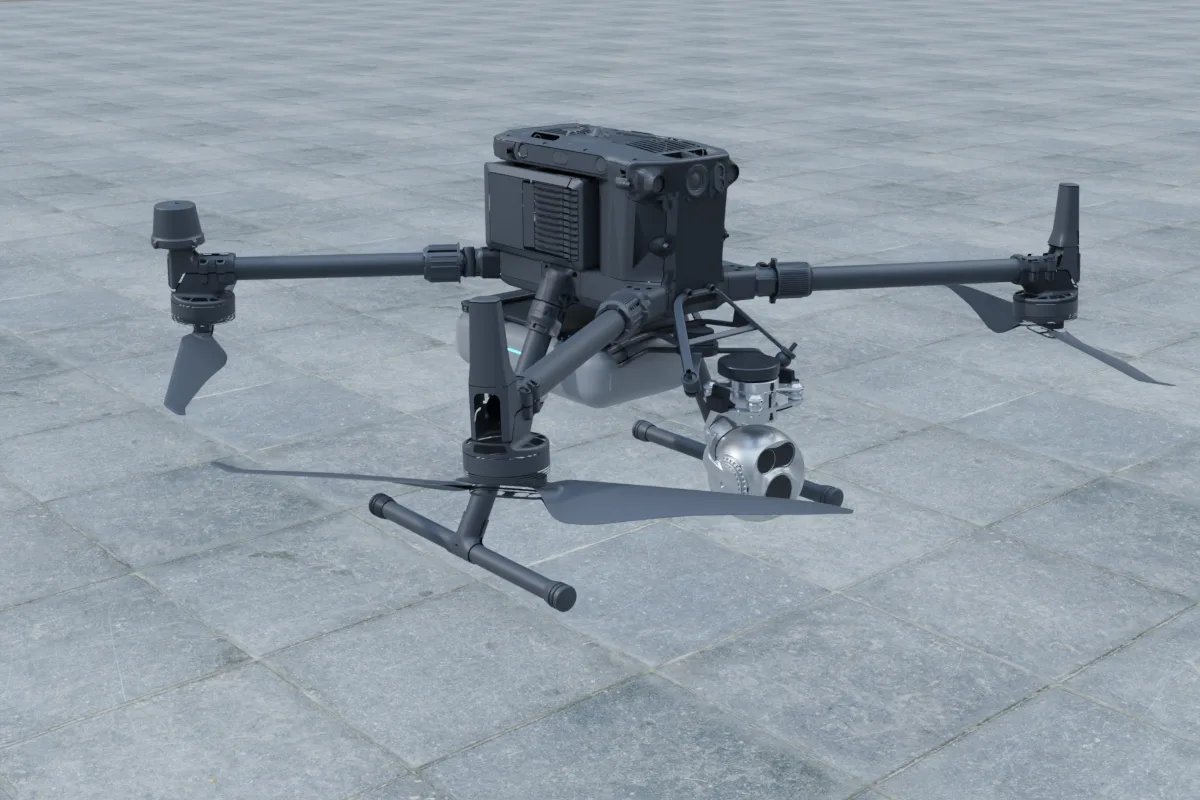
When a drone is the better tool
- Construction progress and earthworks. Repeated aerial surveys give comparable models and volumes. A ground robot cannot see the top of a stockpile or a roof slab.
- Roofs, facades, tall structures and long linear assets. Solar arrays on roofs, pipe racks seen from above, perimeter fences and access roads are covered in minutes from the air.
- Automated daily flights from a dock. Docked aircraft such as the Matrice 4TD (listed at about 1.85 kg, IP55, up to 54 minutes) can fly a fixed route without a pilot walking out. The trade-off is that you mostly keep DJI's integrated sensors; the small aircraft leave little room for a third-party payload.
- Heavier custom sensors outdoors. A Matrice 350 RTK can carry a gimbal such as the Zenmuse H30T (about 920 g) plus a light extra pod. For more detail see Matrice 4T vs a custom payload drone.
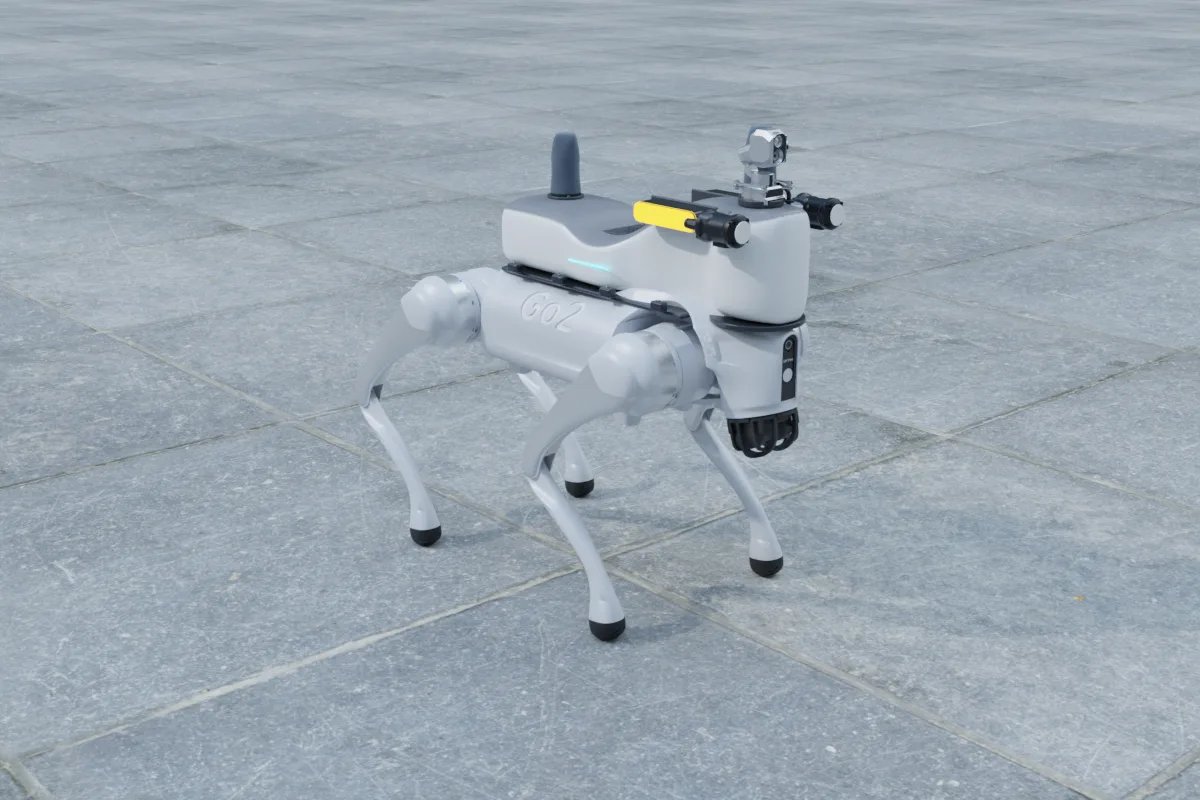
When a robot dog is the better tool
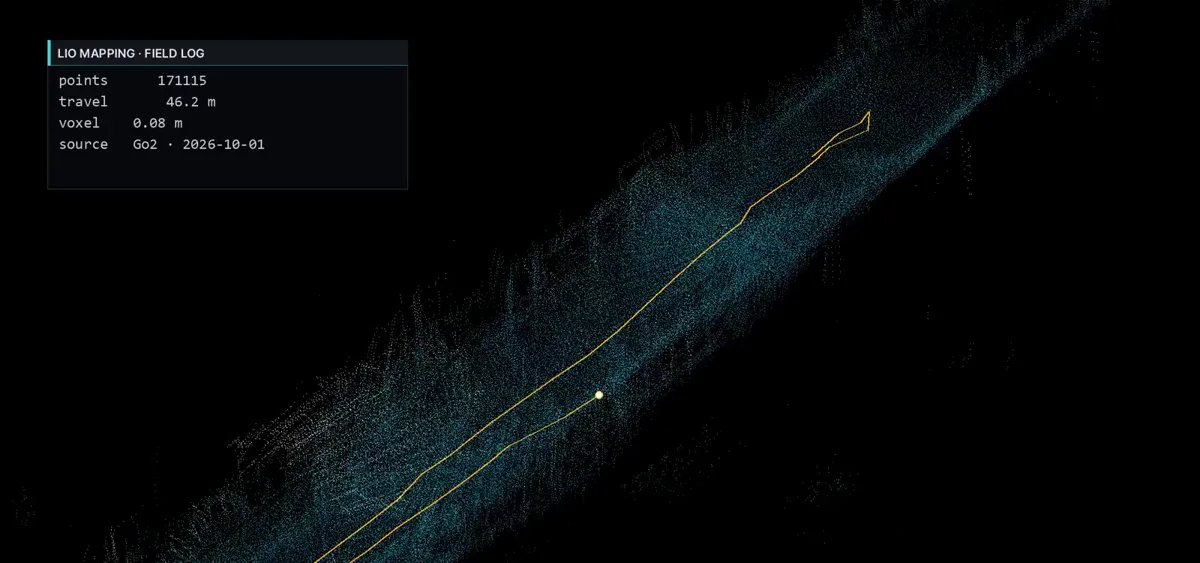
- Indoor and covered areas. Substations, pump houses, boiler rooms, cable tunnels and basements. There is no GNSS, so the robot localizes against a LiDAR map recorded on the first walk.
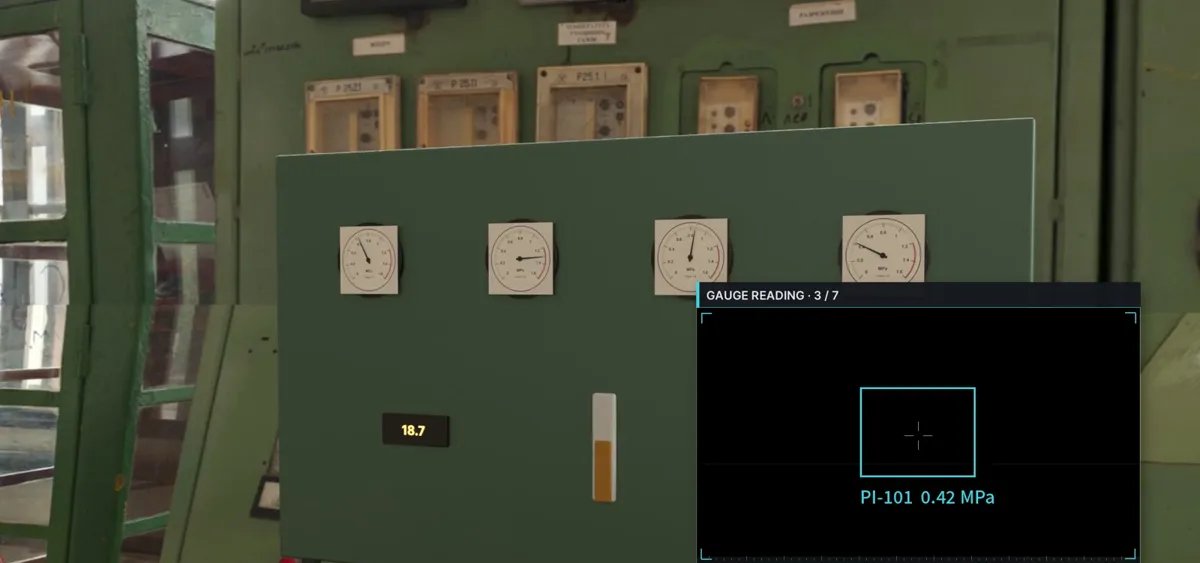
- Repeated close-range readings. A pan-tilt camera on a legged robot can stop at the same checkpoint, at the same angle, every round, which is what automatic gauge reading and trend-based thermal alarms need.
- Multi-level plants. Legged robots handle stairs, kerbs and grating floors that stop wheeled robots, and they do not need a clear flight path.
- Heavier or power-hungry sensor stacks. Even a mid-size robot dog has more payload margin than a compact drone. A Livox Mid-360 LiDAR (265 g, about 6.5 W), a RealSense D435i depth camera (75 g, about 2.5 W) and a four-gas module (about 50 g) together weigh well under 1 kg before the computer and mount.
Questions that decide it on a real site
- What share of checkpoints are under a roof? If more than about half, start with a ground robot.
- Do you need numbers or pictures? Numbers from a fixed asset (pressure, temperature trend, gas concentration) favour the robot dog. Area pictures and models favour the drone.
- Who is around during rounds? Flying over workers usually needs extra permissions; a walking robot needs a speed limit and stop zones agreed with site safety.
- How often, and with how much staff? A docked drone or a robot dog with a charging station can run unattended rounds. Without either, someone has to deploy the machine every time.
- Does the sensor exist for the platform? A compact drone's sensor set is mostly fixed. A robot dog or a larger drone can take a custom payload, which matters for gas detection, acoustic imaging or a specific LiDAR.
Using both
A common split on larger sites: the drone does a scheduled outdoor sweep and the perimeter, the robot dog does the indoor route and the close readings, and both feed the same dashboard with alarms tied to asset IDs. The integration work is mostly software: one asset list, one alarm format, and maps that share a site coordinate frame. Plan that early, because retrofitting a common data model after two separate deployments is slower than building it once. The same reasoning applies when comparing legged and wheeled ground robots; see UGV vs robot dog for inspection.
Next step
If you already have a platform in mind, build a sensor stack and check its weight and power in the payload configurator. Platform pages with dimensions and payload notes: Unitree Go2 EDU, Unitree B2, DJI Matrice 350 RTK and DJI Matrice 4TD. YUANZHI ROBOTICS designs and integrates payloads and software for both kinds of machine: see inspection robots, robot dog payloads, drone payloads and autonomy software.
FAQ
Is a robot dog or a drone better for construction site inspection?
For progress tracking, earthworks, roofs and facades a drone is better because it sees large areas from above quickly. For enclosed floors, plant rooms, stairs and close checks of installed equipment a robot dog is better because it works without GNSS and can stop at the same checkpoint every round.
Can a drone inspect indoors instead of a robot dog?
Only in limited cases. Indoors a drone loses GNSS, has to fly close to people and equipment, and cannot hover for long at one target. Repeated indoor rounds with fixed checkpoints are usually done by a ground robot.
How much payload can a robot dog carry compared with an inspection drone?
Listed figures: Unitree Go2 EDU about 8 kg and Unitree B2 about 40 kg, against about 0.2 kg for a DJI Matrice 4T, 0.3 kg for a Matrice 30T and 2.7 kg for a Matrice 350 RTK. Mounts, cables and computers come out of that budget.
Can a robot dog and a drone share the same inspection software?
Yes, if the integration is planned: one asset list, one alarm format and maps in a shared site coordinate frame. The robots run their own navigation, and a common dashboard collects readings and alarms from both.
Who can integrate sensors on both a robot dog and a drone?
A payload integrator that works across platforms. YUANZHI ROBOTICS designs payloads and software for robot dogs, UGVs and drones, including mounts, power, onboard computing and inspection software.