DJI Matrice 4T or a custom payload drone for inspection: how to choose
Updated 2026-11-04 · YUANZHI ROBOTICS engineering team
The short answer: buy the Matrice 4T when its built-in wide, tele, thermal and rangefinder cameras already answer your inspection question, step up to a Matrice 350 RTK or Matrice 400 when you need to change or add payloads, and build on an open airframe only when the sensors, the flight software or the data path must be entirely yours. The rest of this guide gives the numbers behind that split and the questions that usually decide it.
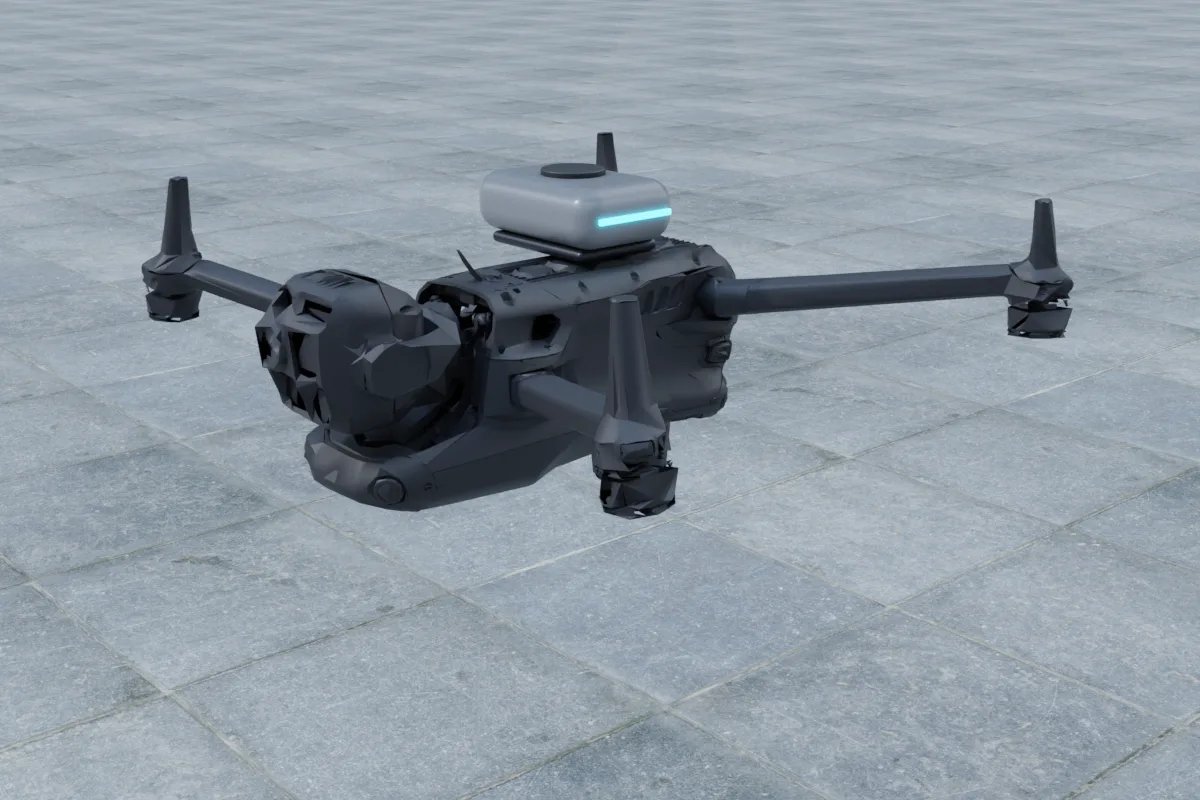
What the Matrice 4T actually is
The Matrice 4T is a compact enterprise drone of about 1.22 kg with a folded size around 307 x 388 x 150 mm. Its camera block combines a wide camera, a medium-tele camera, a thermal camera and a laser rangefinder, all on one fixed gimbal. Expansion is limited to the E-Port on top, which takes small accessories; our platform data lists roughly 0.2 kg of accessory capacity. In practice that means a beacon, a small speaker or light, or a lightweight custom module, not a second camera system or a LiDAR.
That is not a weakness for many jobs. A pilot can carry it in a backpack, launch in minutes and cover visual and thermal checks of roofs, solar arrays, pipelines and line corridors. The integrated camera is calibrated, the thermal data is radiometric through DJI's tools, and the rangefinder gives target distance and position. If those outputs are what your report needs, adding custom hardware only adds cost and failure points.
Where the 4T stops
- Fixed sensors. You cannot swap the thermal core, change lens focal lengths or add a gas sensor, multispectral camera or mapping LiDAR.
- No room for onboard compute. A Jetson-class computer with bracket and cabling does not fit the accessory budget, so custom detection runs on the remote controller, a ground server or in post-processing.
- Unattended operation needs the dock version. For flights from a fixed station the Matrice 4TD (about 1.85 kg, IP55, about 54 minutes listed flight time) with DJI Dock 3 is the relevant model, not the 4T.
- Data path. Imagery normally flows through DJI apps and cloud or on-premises DJI software. If your organization requires that raw data never passes through vendor software, plan for an alternative.
Three ways to get an inspection drone
| Integrated drone (Matrice 4T / 4TD) | Payload drone (Matrice 350 RTK / 400) | Open airframe (PX4 or ArduPilot) | |
|---|---|---|---|
| Airframe weight | about 1.22 kg (4T), 1.85 kg (4TD) | about 6.47 kg (350 RTK), 9.74 kg (400) | depends on the build |
| Payload capacity | about 0.2 kg accessories on E-Port | about 2.7 kg (350 RTK), about 6 kg (400) | set by motors, props and battery |
| Listed flight time | 54 min for 4TD; see DJI specs for 4T | 55 min (350 RTK), 59 min (400) | falls quickly with payload mass |
| Sensors | fixed wide, tele, thermal, rangefinder | swappable DJI and third-party payloads | anything you can mount and power |
| Onboard compute | not practical | possible through DJI Payload SDK | full control, ROS 2 friendly |
| Integration effort | lowest | moderate: brackets, power, SDK software | highest: airframe, tuning, safety cases |
What the heavier DJI platforms let you carry
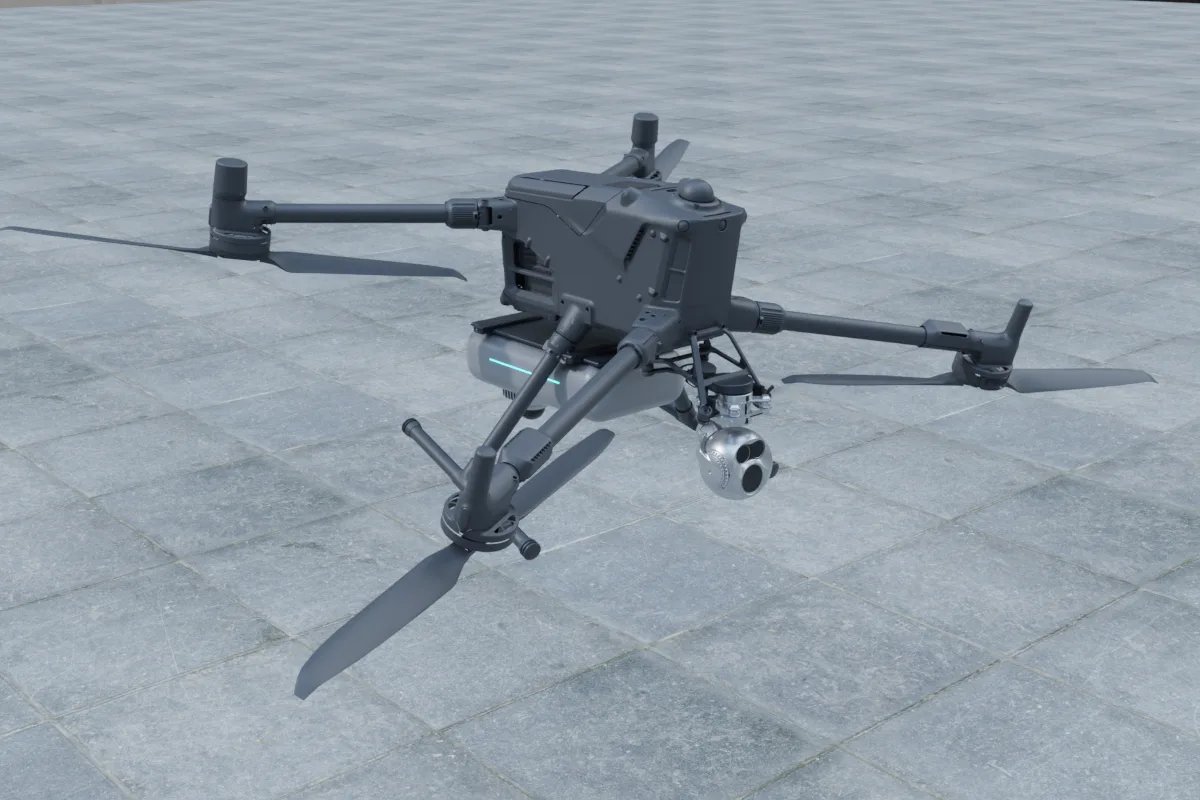
The step from the 4T to a Matrice 350 RTK or Matrice 400 is mostly about payload mass and power. Typical payloads and their published weights and power draw from our component catalog:
- Zenmuse H30T multi-sensor gimbal: about 920 g, 28 W
- Zenmuse L2 LiDAR: about 905 g, 28 W
- Zenmuse P1 full-frame mapping camera: about 800 g, 20 W
- Zenmuse V1 speaker: about 690 g, 25 W; Zenmuse S1 spotlight: about 760 g, 68 W
- Livox Mid-360 LiDAR for custom SLAM: about 265 g, 6.5 W, plus the computer that runs it
On a Matrice 350 RTK, one heavy gimbal plus an onboard computer is a realistic combination. The Matrice 400 has headroom for a gimbal, a LiDAR and a computer together, or for a speaker and spotlight on security missions. Every bracket, cable and connector counts against the limit, and flight time drops as payload mass rises, so do the sums before buying. Our weight and power budget guide walks through the method.
When an open airframe is the right answer
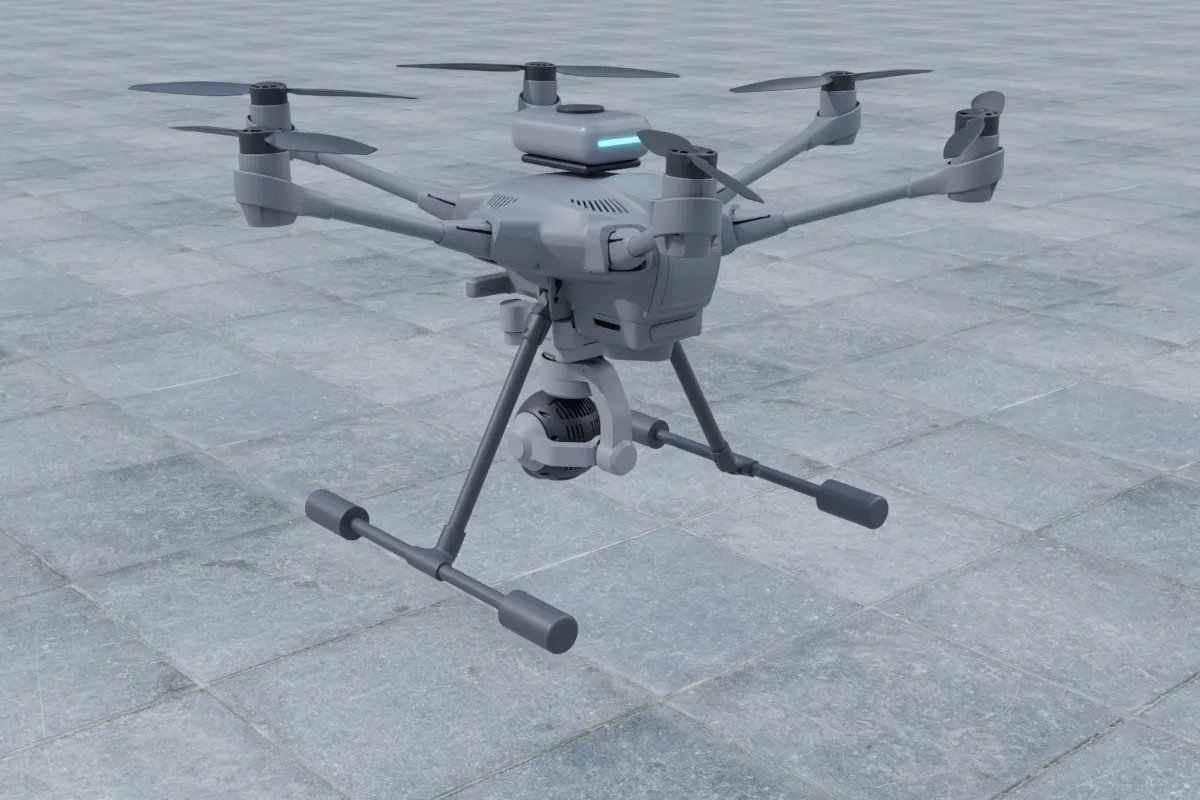
A custom drone on PX4 or ArduPilot makes sense when the sensor list is unusual (gas detection, a specific LiDAR, a hyperspectral camera), when algorithms must run onboard with raw sensor access and ROS 2, when the data must stay entirely on your own systems, or when the drone is a research platform. The cost is engineering time: frame selection, motor and propeller sizing, vibration isolation for the sensors, tuning, and your own safety testing. It is rarely the cheapest route for standard visual inspection.
Questions that decide it
- Does the built-in 4T camera already produce the images and measurements your report needs? If yes, stop there.
- Do you need LiDAR maps, a different thermal core or gas data? Then you need payload capacity.
- Must detection run on the drone in real time? Then you need room and power for a computer.
- Will it fly from a dock without a pilot? Look at the 4TD and dock-compatible platforms.
- Are there rules about where data goes? That can rule out vendor software paths.
For thermal camera choices across drones, dogs and UGVs, see how to choose a thermal or dual-spectrum gimbal.
Getting a payload designed
YUANZHI ROBOTICS designs brackets, enclosures and harnesses for DJI enterprise drones and open airframes, integrates compute and 5G or mesh links, and writes the onboard and ground-station software, including mapping, recognition and custom features on request. You can sketch a configuration in the payload configurator, check the platform pages for the Matrice 4T, Matrice 4TD, Matrice 350 RTK and Matrice 400, or read about our drone payload and inspection robot services.
FAQ
Can I add a LiDAR to a DJI Matrice 4T?
Not in a useful way. The Matrice 4T weighs about 1.22 kg and its E-Port is meant for small accessories of roughly 0.2 kg. A mapping LiDAR such as the Zenmuse L2 weighs about 905 g and needs a Matrice 350 RTK or Matrice 400 class drone. Even a small Livox Mid-360 at about 265 g plus a computer to run it exceeds what the 4T is designed to carry.
Is the Matrice 4T good enough for thermal inspection of solar farms and power lines?
For many visual and thermal patrols, yes: it carries wide, medium-tele and thermal cameras and a laser rangefinder in one gimbal, and it is light and quick to deploy. The limits are that the sensors are fixed, you cannot add a second thermal core or a different lens, and any onboard AI has to run on what DJI provides or on the ground.
What is the difference between the Matrice 4T and the Matrice 4TD?
The 4TD is the dock version used with DJI Dock 3 for unattended flights. It is heavier at about 1.85 kg, rated IP55, lists about 54 minutes of flight time and adds a second tele camera. Choose it when the drone should take off and land from a fixed station without a pilot on site.
When does it make sense to build a custom payload drone instead of buying DJI?
When you need a sensor DJI does not offer as a payload (gas sensors, a specific LiDAR or multispectral camera), when your own algorithms must run onboard with full access to raw data, when the data must not pass through vendor apps, or when you need ROS 2 and PX4 or ArduPilot for research and integration.
Can an onboard computer be added to a Matrice 350 RTK or 400?
Yes. A compute module such as a Jetson Orin can be mounted with its own bracket, powered from the drone and connected through DJI's Payload SDK, so it can read flight data, control the gimbal and process images onboard. The weight of the computer, bracket and cables counts against the drone's payload limit.