Unitree Go2 EDU vs DEEP Robotics Lite3 for university research payloads
Updated 2026-11-17 · YUANZHI ROBOTICS engineering team
If your lab has to pick one small quadruped for a research payload, the Unitree Go2 EDU is usually the safer default: it has twice the rated payload of the Lite3 in our catalog (8 kg vs 4 kg), ships with a 4D LiDAR, and has the larger pool of open-source ROS 2 and locomotion code to start from. The DEEP Robotics Lite3 wins when size and weight matter most, when the lab already uses DEEP Robotics robots, or when the project is meant to scale up to an M20 or X30 later. The rest of this guide explains how we make that call for a specific research question.
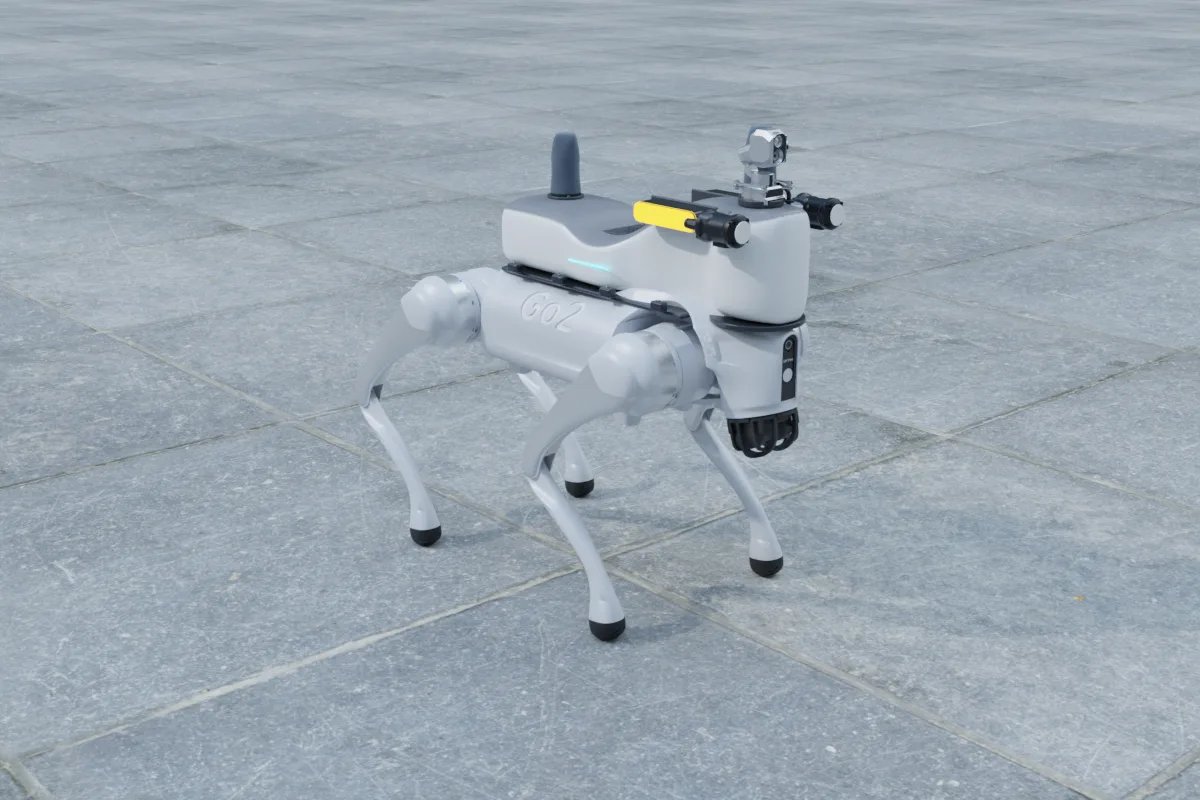
Start from the research question, not the robot
Research projects on small quadrupeds fall into three groups, and each stresses a different part of the robot:
- Locomotion and control. Gait, learned policies, contact estimation. What matters is joint-level access, a reliable low-level control loop, hardware that survives many falls, and existing policy deployment examples. The payload is small or absent.
- Perception, mapping and navigation. SLAM, semantic mapping, Nav2, exploration. What matters is a time-synchronised sensor set, enough onboard compute, clean ROS 2 interfaces and payload headroom for a LiDAR, cameras and a compute module.
- Applied field studies. Inspection, agriculture, search and rescue. What matters is runtime with a full payload, weather tolerance and how quickly the robot can be repaired when it breaks in the middle of a data campaign.
Both robots handle the first two groups. The differences are in headroom, software ecosystem and how far each one can grow.
Key figures side by side
| Item | Unitree Go2 EDU | DEEP Robotics Lite3 |
|---|---|---|
| Robot mass (our catalog) | about 15 kg | about 12.9 kg |
| Body size L × W × H (our catalog) | 700 × 310 × 400 mm | 610 × 370 × 450 mm |
| Rated payload (our catalog) | 8 kg | 4 kg |
| Sensor payload we plan while walking | 2 to 3 kg | 1.5 to 2.5 kg |
| Built-in 3D sensing | Unitree L1 4D LiDAR in the head | Depends on the variant; check which sensors your configuration includes |
| Main software interface | DDS, with unitree_sdk2 (C++) and unitree_ros2 | Motion SDK to the motion controller, plus ROS packages on the perception computer |
| Joint-level control | Available on the EDU version | Available through the motion SDK |
| Larger robot on the same stack | B2, B2-W, AS2 | M20, X30 |
Do not plan around the rated payload. A small quadruped walks, climbs and recovers from slips well only with a fraction of that figure on its back, so we design research payloads to the planned figures in the table and keep the mass low and close to the hips.
Software access: what you can actually change
On the Go2 EDU, the robot's state and commands are published over DDS. With CycloneDDS bound to the robot-facing Ethernet port, a payload computer sees the topics directly in ROS 2, and the EDU version accepts low-level motor commands as well as high-level velocity commands. Unitree also publishes a reinforcement-learning training and deployment repository that includes the Go2, which is one reason many recent locomotion papers start from this robot. Our Nav2 on Go2 guide covers the navigation side in detail.
On the Lite3, high-level and joint-level commands go to the motion controller through DEEP Robotics' motion SDK, and the perception computer runs the ROS side. DEEP Robotics publishes SDK and learned-policy deployment examples for the Lite3 on GitHub. The community is smaller than Unitree's, so expect to read more source code and find fewer forum answers. Before you buy, check the current repositories against the ROS 2 distribution and Ubuntu version your lab standardises on.
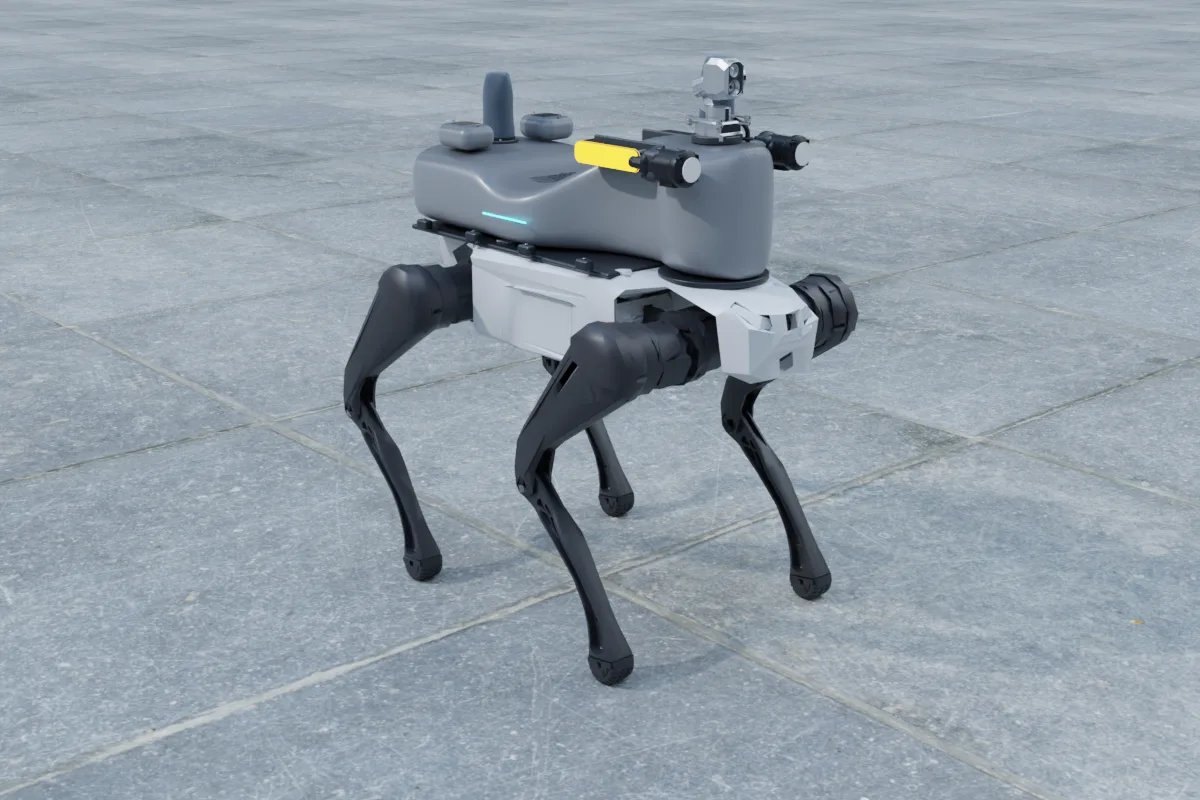
Payload headroom for a typical research sensor set
A common mapping and navigation set uses parts we integrate regularly: a Livox Mid-360 LiDAR (265 g, about 6.5 W), an Intel RealSense D435i depth camera (75 g, about 2.5 W) or a Stereolabs ZED X (239 g, about 1.5 W), and a Jetson Orin NX 16GB module rated up to 40 W in its highest power mode. On a quick-release plate (about 0.65 kg) or a carbon-fibre shell (about 0.95 kg), the sensors and plate come to around 1 kg before the compute carrier, enclosure and cabling are added.
That set fits both robots. What changes is the margin:
- On a Go2 EDU you can usually add a second camera, a small thermal core or a 5G modem and still stay within the 2 to 3 kg we plan for.
- On a Lite3, the same base set uses most of the 1.5 to 2.5 kg budget. Extra sensors mean removing something or accepting shorter runtime and less reliable stair climbing.
Power follows the same pattern. Up to about 50 W of extra electrical load, mostly the compute module, shortens runtime noticeably on both robots, so for long data runs we set the Jetson to a lower power mode and record only the topics the experiment needs. For the full calculation, see our weight and power budget guide.
Lab logistics that decide the outcome
- Repairs and spare parts. Research robots fall a lot. Ask each vendor or local distributor how long a leg motor or battery takes to reach your country and whether your lab can replace it.
- Teaching fleets. If students will share several units, a common payload plate and one software image across all robots matter more than small differences between platforms.
- Growth path. If the project might move outdoors with heavier sensors, decide which larger robot it would move to. Code written against Unitree's DDS interface carries over to a B2 more easily than to an X30, and the reverse is true for code written on the Lite3.
- Data handling. Decide early whether data is recorded on the robot or streamed. Recording on board needs NVMe storage and a time-sync plan for the LiDAR and cameras.
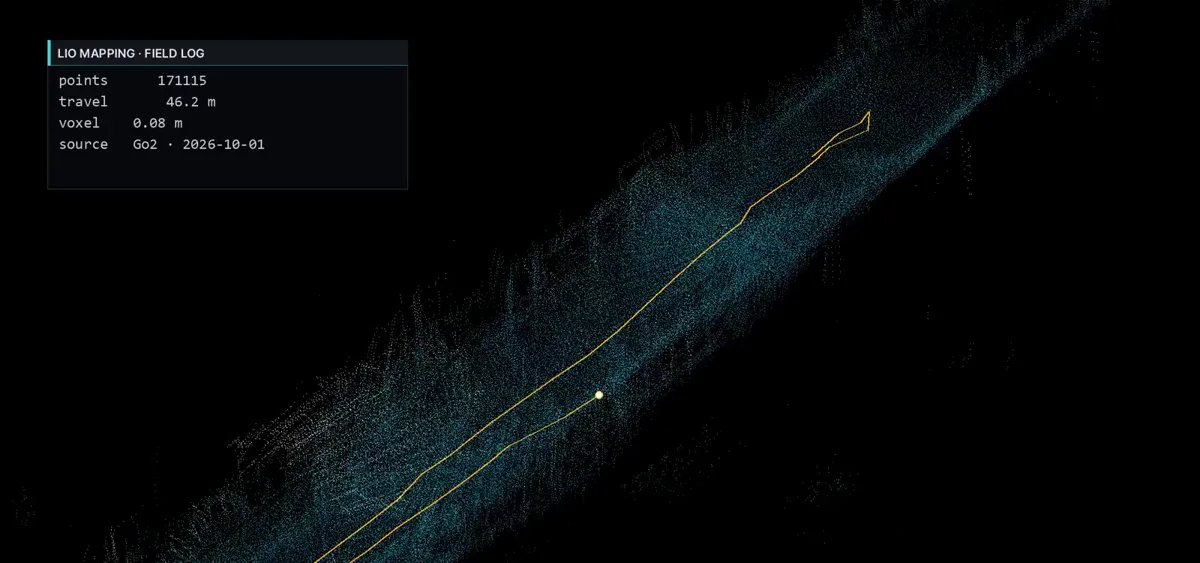
Our recommendation
Choose the Go2 EDU for perception, mapping and navigation research, for labs that want the largest base of open-source examples, and for payloads that may grow. Choose the Lite3 for compact locomotion or teaching projects with light sensors, or when the lab is committed to the DEEP Robotics line. For more detail on the Lite3 on its own, see our Lite3 payload guide.
We build research payloads for both robots: mounting, wiring, a time-synchronised sensor set, a ROS 2 image and driver configuration. You can sketch a set in the payload configurator, compare the Unitree Go2 EDU and DEEP Robotics Lite3 platform pages, or read about our quadruped development, robot autonomy and robot payload services.
FAQ
Is the Unitree Go2 EDU or the DEEP Robotics Lite3 better for a university lab?
For most labs the Go2 EDU is the safer default, because it has more payload headroom (8 kg rated vs 4 kg for the Lite3 in our catalog), a built-in L1 LiDAR and a larger open-source community. The Lite3 suits compact locomotion or teaching projects, and labs that plan to move up to DEEP Robotics' M20 or X30.
Can I do low-level joint control on a Go2 EDU and a Lite3?
Yes on both. The Go2 EDU accepts low-level motor commands through unitree_sdk2 over DDS. The Lite3 offers joint-level control through DEEP Robotics' motion SDK. Check the current SDK versions against your ROS 2 and Ubuntu versions before you buy.
How much sensor payload can each robot carry for research?
We plan 2 to 3 kg of sensors on a Go2 EDU and 1.5 to 2.5 kg on a Lite3, well below the rated figures, so that walking, stair climbing and recovery from slips stay reliable. A LiDAR, a depth camera, a Jetson Orin NX and a mounting plate fit both, with more spare margin on the Go2.
Which robot has better ROS 2 support?
Both can be used with ROS 2. The Go2 publishes its state over DDS, so ROS 2 sees it almost directly through unitree_ros2, and there are many public examples. The Lite3 uses a motion SDK plus ROS packages on its perception computer and has a smaller community, so expect to read more source code.