Building an ANYmal-style inspection payload on a lower-cost quadruped
Updated 2026-11-05 · YUANZHI ROBOTICS engineering team
Yes, most of what an ANYbotics ANYmal D does on an inspection round can be rebuilt on a Unitree B2, a DEEP Robotics X30 or, in reduced form, a Unitree Go2 EDU: a pan-tilt head with visual and thermal cameras, an acoustic sensor, gas sensors, a 3D LiDAR, onboard compute and a speaker-light unit. What you do not get for free is the part ANYbotics sells as a finished product: the integrated inspection software, docking and reporting. This guide maps each ANYmal function to off-the-shelf components with their real weight and power, and is honest about where the gap is.
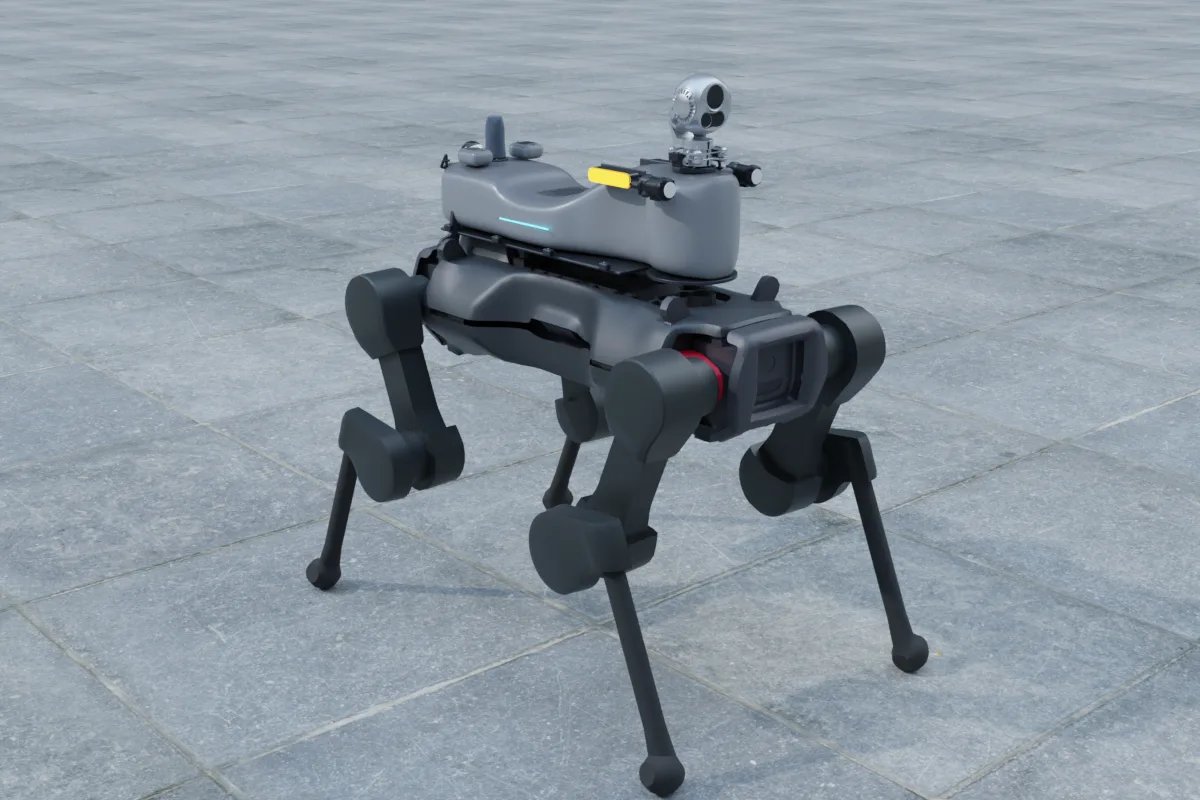
What "ANYmal-style" actually means
An ANYmal D is a 50 kg class industrial quadruped with about 10 kg of payload capacity, a built-in 16-channel LiDAR and six depth cameras for perception. For inspection, ANYbotics fits a pan-tilt head carrying zoom and thermal cameras, a spotlight and an acoustic sensor, and runs it with its own mission, docking and data software. Customers usually want four outcomes from that package: read gauges and indicators, find hot spots, hear leaks or abnormal machine noise, and detect gas, all on a repeatable route without an operator.
Those four outcomes are what you rebuild. Copying the shape of the head is not the goal; covering the same measurements on a robot you can buy and service more easily is.
Choosing the carrier quadruped
The payload capacity of the carrier decides how much of the ANYmal function set fits. Figures below are the manufacturers' published body mass and payload ratings as stored in our configurator catalogue.
| Quadruped | Body mass | Rated payload | Built-in perception | Realistic inspection set |
|---|---|---|---|---|
| ANYbotics ANYmal D (reference) | 50 kg | 10 kg | 16-channel LiDAR, 6 depth cameras | Full set, factory integrated |
| Unitree B2 | 60 kg | 40 kg | 3D LiDAR, front and rear depth cameras | Full set plus own battery and lighting |
| DEEP Robotics X30 | 56 kg | 20 kg | Front and rear LiDAR, depth and wide-angle cameras | Full set, compact gimbal |
| Unitree Go2 EDU | 15 kg | 8 kg | 4D LiDAR L1 in the head | Micro gimbal, gas, LiDAR; no heavy acoustic imager |
| DEEP Robotics Lite3 | 12.9 kg | 4 kg | Depends on version | Camera and gas only |
Rated payload is a ceiling, not a target. On stairs and slopes we keep the complete payload well under the rating; our weight and power budget guide shows how to work out the margin.
Mapping each function to components
These are components we have in the catalogue with their listed mass and electrical power. Where a value is not published we leave it blank rather than guess.
| ANYmal-style function | Component option | Mass | Power |
|---|---|---|---|
| Visual + thermal pan-tilt head | Hikvision HM-TD5737T-4/W robot dual-spectrum micro gimbal | 2.0 kg | 20 W |
| Larger dual-spectrum head (B2 class) | Hikvision DS-2TD5566T-15/V2, 640×512 thermal, 1080p visible | 4.5 kg | 18 W |
| Acoustic imaging (leaks, partial discharge) | Fluke SV600 fixed acoustic imager | 0.85 kg | not listed |
| Audio anomaly microphone (light option) | Seeed ReSpeaker Mic Array v2.0, 4 microphones | not listed | 0.9 W |
| Combustible and toxic gas | Winsen ZCE04B four-in-one module (CO, H2S, O2, CH4) | 50 g | 0.5 W |
| SF6 for substations | Cubic SF6-015 NDIR module | not listed | 0.65 W |
| VOC | Alphasense PID-AH2 photoionisation sensor | 8 g | 0.1 W |
| Mapping and localisation LiDAR | Livox Mid-360, 360°×59° field of view, 70 m range | 265 g | 6.5 W |
| Onboard compute | NVIDIA Jetson Orin NX 16GB module, 157 TOPS | module only | up to 40 W |
| Spotlight and loudspeaker | Speaker-light unit, 20 W speaker + 10 W LED (reference spec) | 650 g | 30 W |
For a B2 or X30, a typical set of the micro gimbal, SV600, four-in-one gas module, Mid-360 and speaker-light unit adds up to about 3.8 kg of sensors before the enclosure, compute carrier board, cabling and any separate battery. That leaves comfortable room on both robots. On a Go2 EDU the same list is too heavy once the shell and wiring are added, so the acoustic imager is usually replaced by the microphone array and the speaker-light unit is dropped.
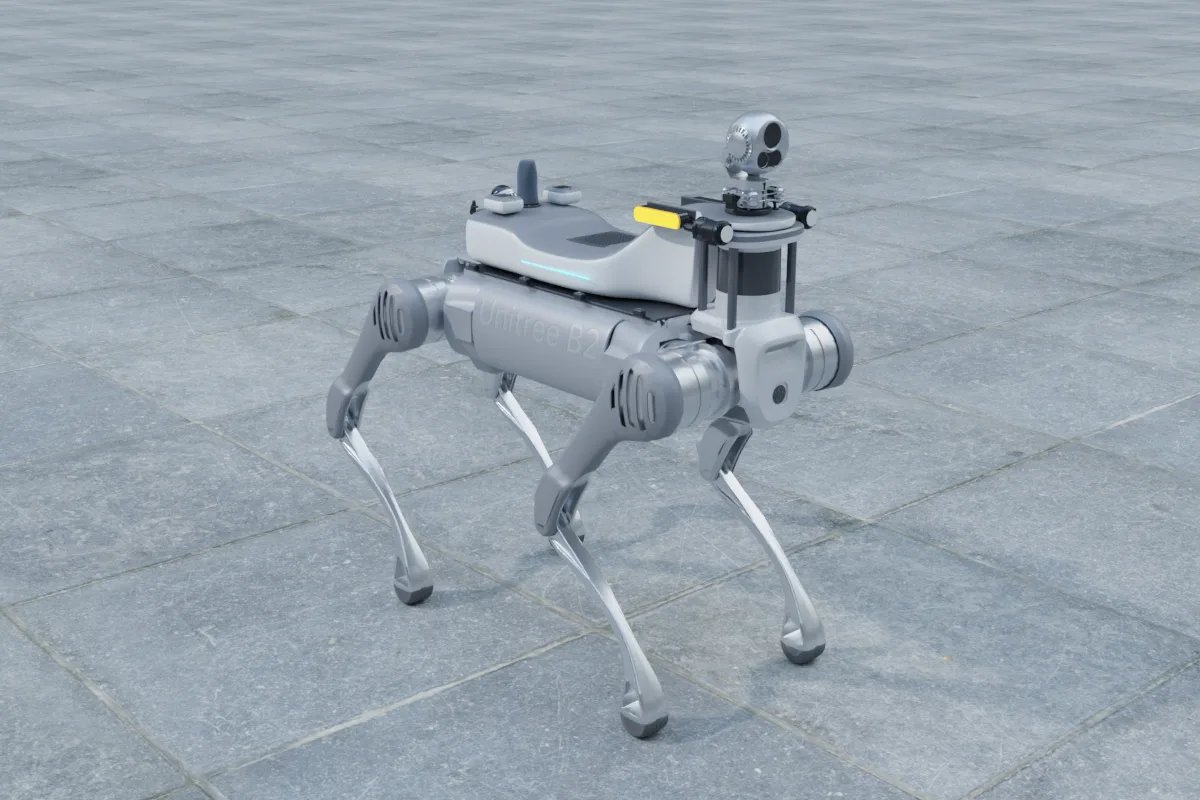
Mechanical layout that works
Three placement rules carry over from the ANYmal layout. The pan-tilt head goes at the front, high enough to see over the robot's own head and to tilt up to gauges mounted above eye level. The LiDAR sits on the highest point with a clear horizontal view, so the legs and the gimbal do not shadow its scan. Gas inlets face forward and away from the compute module's exhaust, because a warm fan outlet next to a gas sensor distorts readings. Heavy items, mainly a separate battery, go low and close to the centre of the body to keep the centre of mass inside the robot's support polygon on stairs.
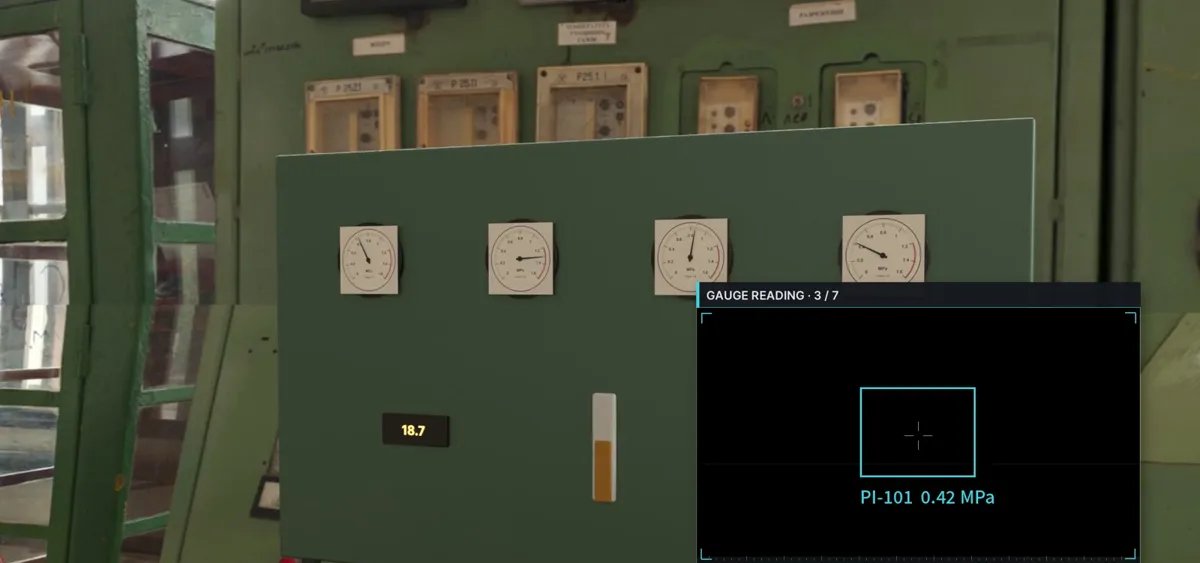
Where the real gap is: software
Hardware parity is the easy half. ANYmal customers are also paying for route teaching, autonomous docking, inspection-point recognition, alarm thresholds and a report that an operator can sign off. On a Unitree or DEEP Robotics robot, those pieces are built on top of the manufacturer SDK: a navigation stack using the payload LiDAR, inspection points stored as poses with camera presets, gauge reading and thermal hot-spot detection on the onboard computer, gas and acoustic readings logged against the map position, and a return-to-dock routine. This is development work with a test period on site, not a configuration option. Our guide on custom navigation for robot dogs covers what that involves.
Limits to state up front
- A payload on a standard quadruped is not an explosion-proof system. Hazardous-area robots are a separate product category with their own certification.
- Ingress protection of the combined system depends on the enclosure and cable glands as well as each component's own rating.
- Runtime drops with payload mass and gimbal duty cycle; plan rounds against measured battery data, not the brochure figure.
Next step
To see how the components above fit on a given robot, build the set in the payload configurator and compare the platform pages for the ANYmal D, Unitree B2, DEEP Robotics X30 and Unitree Go2 EDU. For a complete build including software, see our inspection robot, robot payload and robot autonomy services, or the substation inspection payload guide for a site-specific example.
FAQ
Can a Unitree B2 do the same inspection job as an ANYmal D?
For the sensing side, yes: the B2 is rated for 40 kg of payload, so a dual-spectrum gimbal, acoustic imager, gas sensors, LiDAR, compute and a speaker-light unit fit with margin. The inspection software, docking and reporting that ANYbotics supplies as a product have to be developed on the Unitree SDK.
What sensors are on a typical quadruped inspection payload?
A pan-tilt head with visible and thermal cameras, an acoustic imager or microphone array, gas sensors such as a CO/H2S/O2/CH4 module plus SF6 or VOC sensors where needed, a 3D LiDAR such as the Livox Mid-360 for mapping, an onboard computer such as a Jetson Orin NX, and optionally a spotlight and loudspeaker.
Can a Unitree Go2 EDU carry an ANYmal-style payload?
Only a reduced version. With an 8 kg rating and the weight of the enclosure and wiring, a Go2 EDU usually carries a micro dual-spectrum gimbal, gas module, LiDAR and compute, with a microphone array instead of a full acoustic imager.
Is a payload on a Unitree or DEEP Robotics quadruped explosion-proof?
No. A payload added to a standard quadruped is not an explosion-proof system; hazardous-area robots are a separate, certified product category.
Who can build the software for an ANYmal-style inspection robot on another quadruped?
An integrator that works with the manufacturer SDK can develop route teaching, inspection points with camera presets, gauge and thermal analysis, gas and acoustic logging, docking and reports. YUANZHI ROBOTICS does this development and can provide a feature list for a given site.