AgileX Scout Mini payload for indoor mapping and inspection: what to fit and why
Updated 2026-11-04 · YUANZHI ROBOTICS engineering team
The AgileX Scout Mini is a good indoor mapping and inspection base when the job fits inside its roughly 10 kg rated payload and its low 245 mm body. The practical recipe is one 360° solid-state LiDAR on a short mast, a depth camera at the front, a Jetson Orin module in a low enclosure, and only then an inspection head (a thermal core or a small gimbal) if the mass budget still allows. This guide explains how to size each part, where it goes on the deck, and which mistakes cost the most time on a small skid-steer UGV.
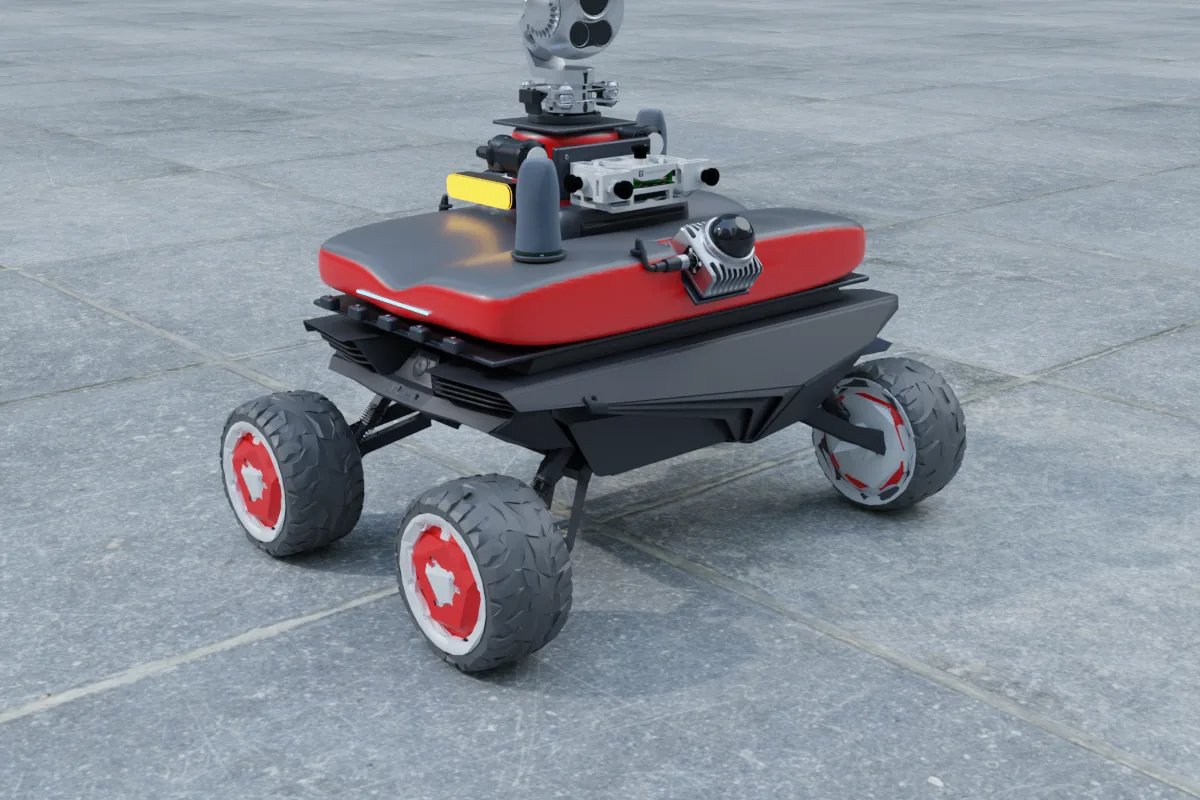
Start from the platform limits
The Scout Mini measures 612 × 580 × 245 mm and weighs about 23 kg, with a rated payload of about 10 kg (OEM reference; always check the current official spec for your unit). Two facts follow from this. First, the mass budget is real: a payload with a large PTZ dome, an extra battery and a heavy aluminium frame can use most of it before any useful sensor is added. Second, the deck is low, so every sensor sees the world from knee height unless you raise it, and raising it moves the centre of gravity up on a small, fast chassis.
The Scout Mini is offered with standard wheels or mecanum wheels. With standard wheels it turns by skid steering, which means the wheels slip during every turn and wheel odometry is unreliable exactly when the map is most likely to smear. With mecanum wheels it can move sideways in narrow aisles, but the rollers add high-frequency vibration that reaches the IMU. Both cases point the same way: let a LiDAR-inertial odometry stack carry localization, treat wheel odometry as a weak hint, and mount the LiDAR and IMU on a stiff plate with light vibration isolation.
Three payload levels that fit the budget
These three sets come from the Scout Mini presets in our configurator. Sensor mass excludes the compute box, brackets and cables, which on a small platform often weigh more than the sensors themselves.
| Level | Sensors and compute | Sensor mass | Share of 10 kg | What it does well |
|---|---|---|---|---|
| Minimal mapping | Livox Mid-360, 4G module, Jetson Orin Nano 8GB | about 0.27 kg | about 3% | Building maps, localization and point-to-point navigation at the lowest cost |
| Mapping plus perception | Livox Mid-360, Orbbec Gemini 335 depth camera, RTK receiver, mesh radio, speaker and light, Jetson Orin NX 16GB | about 1.37 kg | about 14% | Obstacle detection close to the robot, person following, mixed indoor and outdoor runs |
| Full inspection | Hesai PandarXT32, Hikvision HM-TD5737T-4/W dual-sensor gimbal, RealSense D455, 5G module, radar, Jetson Orin NX 16GB | about 3.36 kg | about 34% | Long-range mapping plus thermal and visual inspection from one robot |
For a purely indoor site, drop the RTK receiver from the middle set: GNSS does not work indoors and the antenna only adds mass and cable. Keep the mesh radio, or use 5G or site Wi-Fi, depending on coverage.
LiDAR choice and mounting height
For indoor work a Livox Mid-360 is usually the right first choice: 265 g, about 6.5 W, 65 × 65 × 60 mm, a 360° horizontal view and a built-in IMU. A 16-line spinning LiDAR such as the Hesai XT16 weighs about 800 g and draws about 9 W; it earns the extra mass in large halls with long, featureless walls, much less so in offices and plant rooms.
Mount the LiDAR on a short mast at the rear of the deck so it clears the depth camera and any gimbal in front of it. A mast that lifts the LiDAR above desks and handrails gives a cleaner map of walls and fewer gaps behind furniture, but every extra centimetre makes hard braking and door thresholds more likely to unsettle the robot. In practice we fix the LiDAR as low as still gives a clear 360° view over the rest of the payload, and solve close-range blind spots with the depth camera rather than with a taller mast.
Depth camera and compute
A LiDAR on top of a low robot has a blind cone close around the chassis: table legs, cables on the floor and low steps are easy to miss. A front depth camera fills that cone. The RealSense D435i is 90 × 25 × 25 mm, about 75 g and about 2.5 W; the D455 has a longer baseline for better depth at range. Tilt it slightly down so the floor in front of the bumper stays in view.
Compute is where the budget is decided. A Jetson Orin Nano 8GB (up to about 25 W) runs a LiDAR driver, LiDAR-inertial odometry and navigation. Once you add a detection model on the camera stream, recording of all sensors and a gauge-reading or thermal pipeline, an Orin NX 16GB (up to about 40 W) is the safer choice. Both modules are 69.6 × 45 mm, so the enclosure can stay the same and the decision can be made late in the project.
Adding inspection without overloading the robot
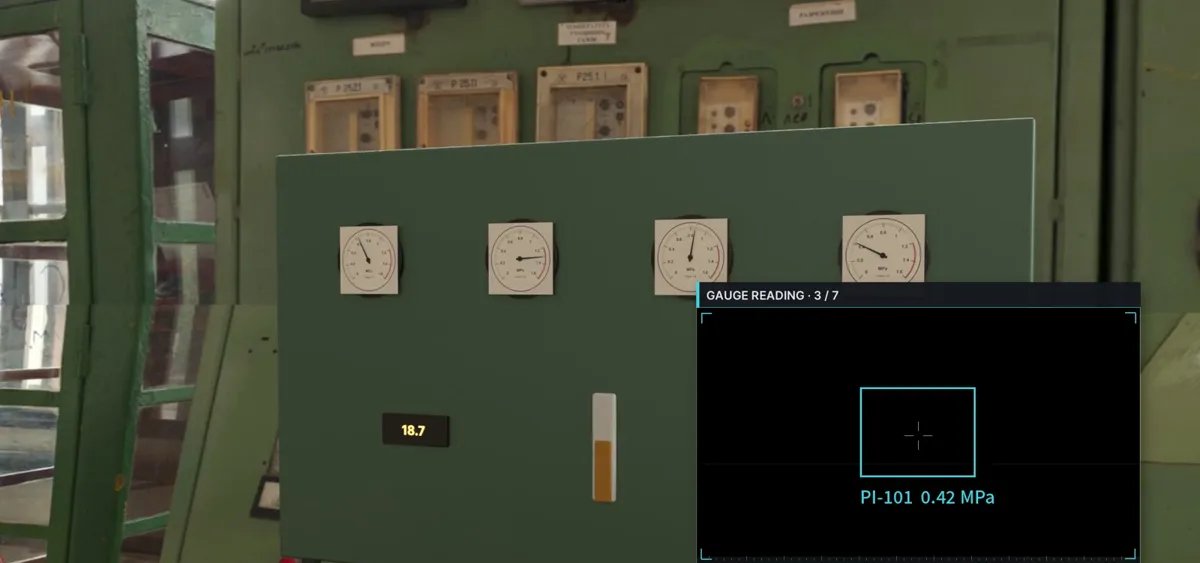
Indoor inspection targets such as gauges, valves and panel indicators often sit 1 to 2 metres above the floor, well above the Scout Mini's camera height. There are two practical options. One is a small pan-tilt head with a zoom camera and enough upward tilt, kept to a couple of kilograms. The other is a fixed, upward-angled camera plus a compact thermal core such as a FLIR Boson 640 (about 7.5 g, 0.5 W) for hot-spot screening. A full-size security PTZ dome is usually too heavy and too tall for this base; a dual-sensor gimbal of the HM-TD5737T-4/W class, as in the full inspection set, is the practical upper end.
Power, harness and the map workflow
Power the payload from the robot battery through an isolated DC-DC converter with a separate rail for the compute module, and route all cables to one connector panel so the payload can come off the robot in minutes. Our payload power distribution guide covers rail sizing and fusing.
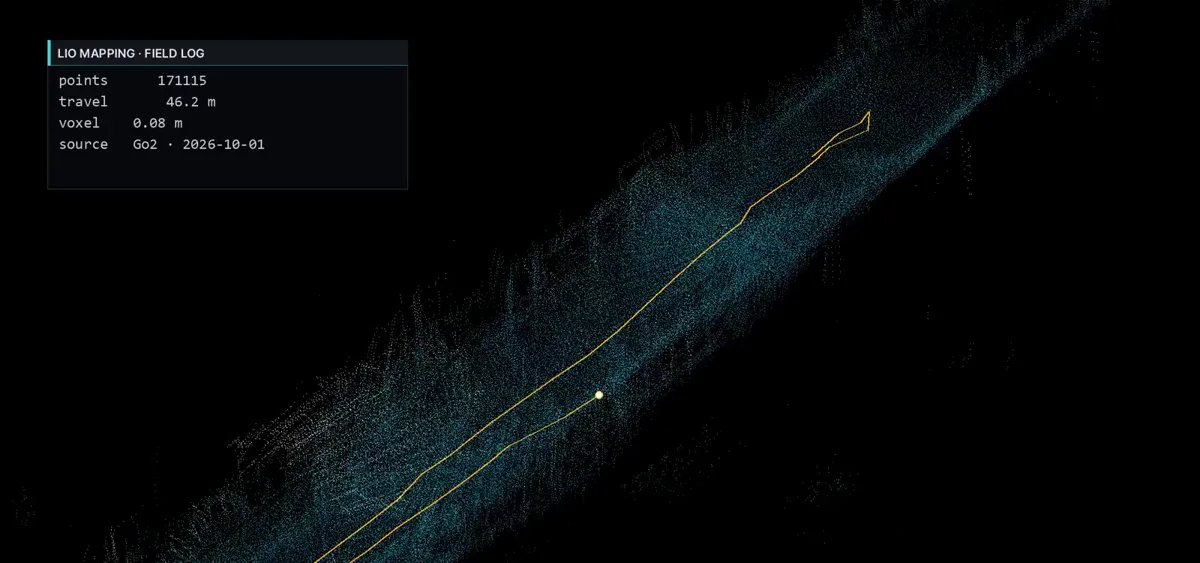
For the map itself, record raw LiDAR, IMU and camera data on every mapping run and rebuild the final map offline with loop closure and removal of people and other moving objects. The real-time map is good enough to drive on; the rebuilt map is the one you keep for navigation and reporting. The same approach is described for quadrupeds in our LiDAR SLAM mapping payload guide.
Scout Mini or something else?
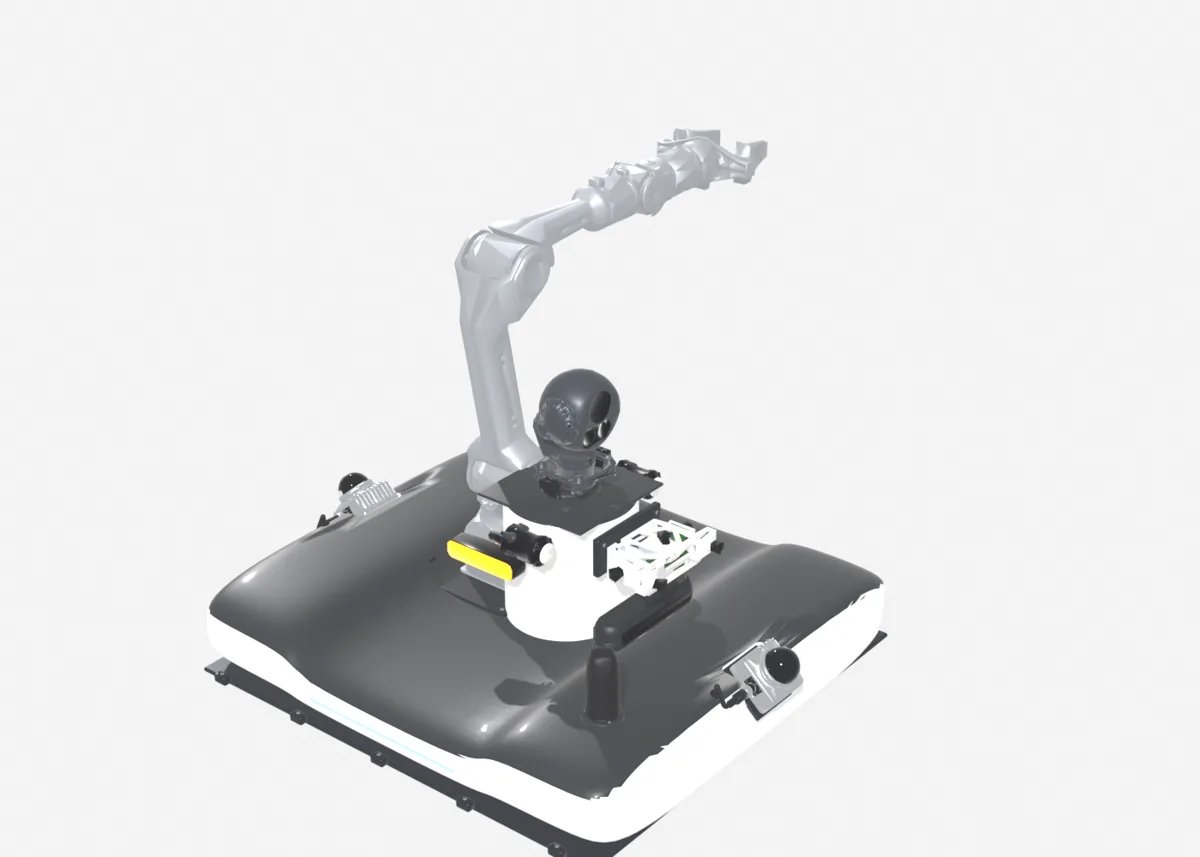
Choose the Scout Mini for flat indoor floors, narrow aisles and jobs where mapping and light inspection matter more than carrying capacity. If the site has stairs, choose a quadruped; if you need a large PTZ, a manipulator or long outdoor runs, step up to a larger UGV such as the AgileX Hunter 2.0 or the Clearpath Husky A200. Our UGV vs robot dog comparison walks through that decision.
To try a layout, open the payload configurator and select the AgileX Scout Mini. We design the deck plate, harness and brackets, integrate the compute and comms, and deliver mapping, navigation and inspection software; see our UGV payload, robot autonomy and inspection robot services.
FAQ
Is the AgileX Scout Mini good for indoor SLAM mapping?
Yes, for flat floors and narrow aisles. It carries a 360° LiDAR, a depth camera and a Jetson module easily within its roughly 10 kg rated payload. Use LiDAR-inertial odometry, because wheel odometry slips during skid-steer turns, and rebuild the final map offline from the recording.
Which LiDAR should I put on a Scout Mini?
A Livox Mid-360 (265 g, about 6.5 W, built-in IMU) suits most indoor sites. A 16- or 32-line spinning LiDAR such as the Hesai XT16 or XT32 is worth its extra mass in large halls or outdoors.
Can a Scout Mini read gauges and do thermal inspection?
It can carry a compact dual-sensor gimbal, or a small thermal core plus a zoom camera. Because the deck is low, the camera needs upward tilt or a short mast to see gauges 1 to 2 metres above the floor. Large security PTZ domes are usually too heavy and too tall for this base.
Jetson Orin Nano or Orin NX for a Scout Mini payload?
An Orin Nano 8GB is enough for mapping and navigation. Choose an Orin NX 16GB once you add object detection, gauge reading or thermal analysis and full data recording. Both modules share the same footprint.
Who can integrate sensors on an AgileX Scout Mini?
YUANZHI ROBOTICS designs the deck plate, brackets and harness, integrates compute and comms, and delivers mapping, navigation and inspection software for the Scout Mini and other AgileX, Clearpath and Unitree platforms.