AgileX Hunter SE vs Hunter 2.0 for outdoor sensor payloads
Updated 2026-11-25 · YUANZHI ROBOTICS engineering team
Pick the Hunter SE when your payload is light and the job rewards speed: LiDAR mapping of roads and campuses, survey runs, or a compact camera gimbal. Pick the Hunter 2.0 when the payload is heavy, tall or mixed with cargo: industrial pan-tilt heads, a robot arm, extra batteries or delivery boxes. Both are Ackermann-steered outdoor bases from AgileX, so the choice is mostly about payload mass, deck area and how fast you need to move.
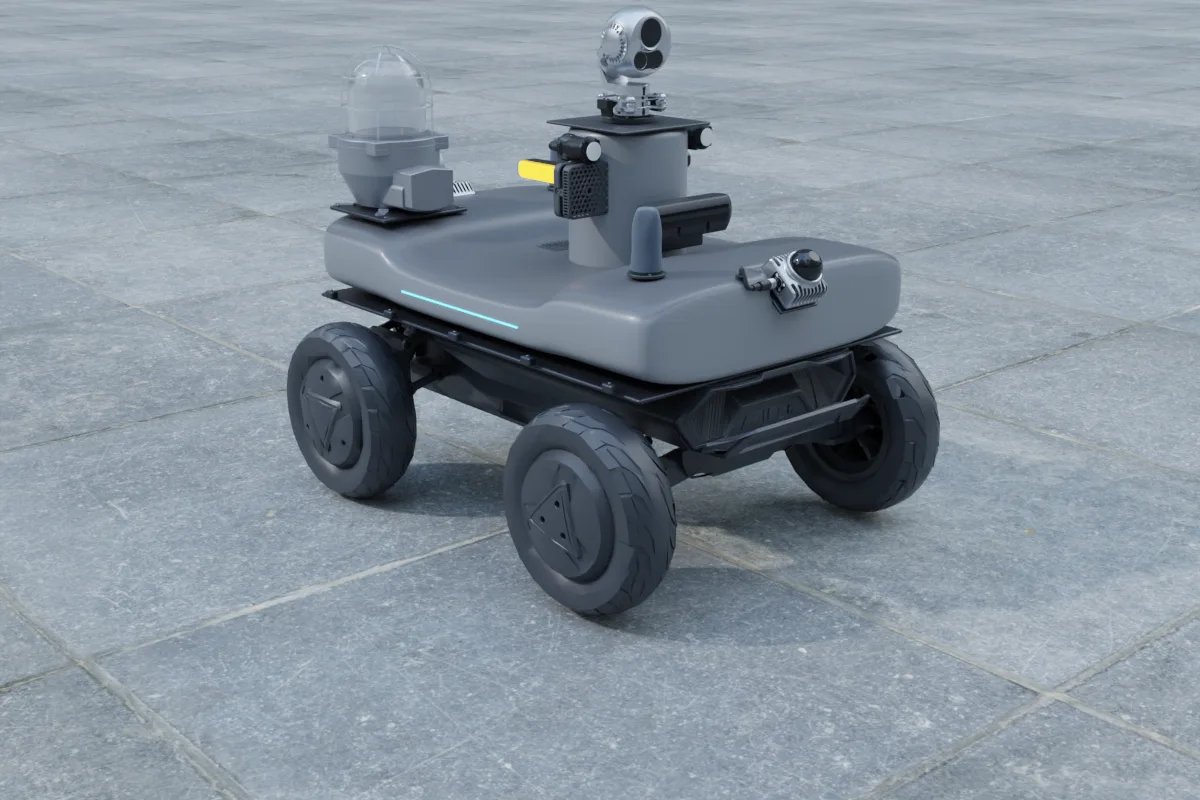
The two bases side by side
The numbers below are the reference values we use in our payload configurator. Check the current AgileX datasheet for your exact production batch before you finalise a design.
| Item | Hunter SE | Hunter 2.0 |
|---|---|---|
| Size (L × W × H) | about 820 × 640 × 310 mm | about 980 × 745 × 380 mm |
| Robot weight | about 42 kg | about 65 kg |
| Rated payload | about 50 kg | about 150 kg |
| Steering | Ackermann | Ackermann |
| Positioning | Light, fast base, up to about 4.8 m/s | Campus logistics and patrol, heavy loads |
| Typical payload | LiDAR + cameras + compute, compact gimbal | Heavy PTZ, robot arm, cargo + sensors |
The payload ratio is the key difference. The Hunter SE carries a little more than its own weight; the Hunter 2.0 carries more than twice its own weight. In practice almost no sensor payload comes near 50 kg, so the SE is rarely weight-limited. It becomes limited by deck area, mounting height and center of gravity once you add a big pan-tilt head or an arm.
What a sensor payload actually weighs
A useful sanity check is to add up a realistic outdoor perception stack from catalog values:
- Livox Mid-360 LiDAR: about 265 g, about 6.5 W
- Intel RealSense D435i depth camera: about 75 g, about 2.5 W
- NVIDIA Jetson Orin NX 16GB module: up to about 40 W at its highest power mode
- Unicore UM982 dual-antenna RTK board: under 2 g and about 0.6 W (antennas and mounts add more)
- Quectel RM520N-GL 5G module for remote video
Even with an aluminium enclosure, carrier board, DC-DC converters and cabling, this kind of stack stays at a few kilograms. That is why both Hunters can carry a full mapping payload; the decision moves to what else you want on the deck. For the full method of adding up mass and peak power, see our weight and power budget guide.
When the Hunter SE is the better choice
- Road and campus mapping. The higher top speed lets one robot cover long access roads and car parks between survey areas, then slow down for data capture.
- Lower mounting height. At about 310 mm the SE body is lower, which keeps a mast-mounted LiDAR or camera closer to the ground and the center of gravity lower for the same sensor height.
- Easier handling. About 42 kg is still a two-person lift, but it is noticeably easier to load into a van and move between sites than the Hunter 2.0.
- Light gimbals. A compact dual-spectrum gimbal such as the Hikvision HM-TD5737T-4/W (about 2 kg, about 20 W) fits comfortably.
The trade-off is vibration. Running fast on rough asphalt shakes the payload, so LiDAR mounts, camera brackets and connectors need proper isolation and strain relief. Our vibration isolation guide covers what to put on rubber and what to keep rigid next to the IMU.
When the Hunter 2.0 is the better choice
- Heavy pan-tilt heads. A heavy-duty thermal plus visible pan-tilt such as the Dahua DH-TPC-PT8X20 (about 18 kg, about 70 W) needs a stiff, wide deck and real payload margin.
- Robot arms. A lightweight arm such as the AgileX PiPER (about 4.2 kg) plus its base plate, gripper, camera and the reaction loads of moving the arm are easier to handle on the larger base.
- Mixed cargo and inspection. If the robot must carry tools, samples or delivery boxes as well as sensors, the 150 kg rating leaves room for both.
- Extra batteries. High-power payloads drain the robot battery faster. The Hunter 2.0 has the mass margin for an auxiliary battery pack to extend mission time.
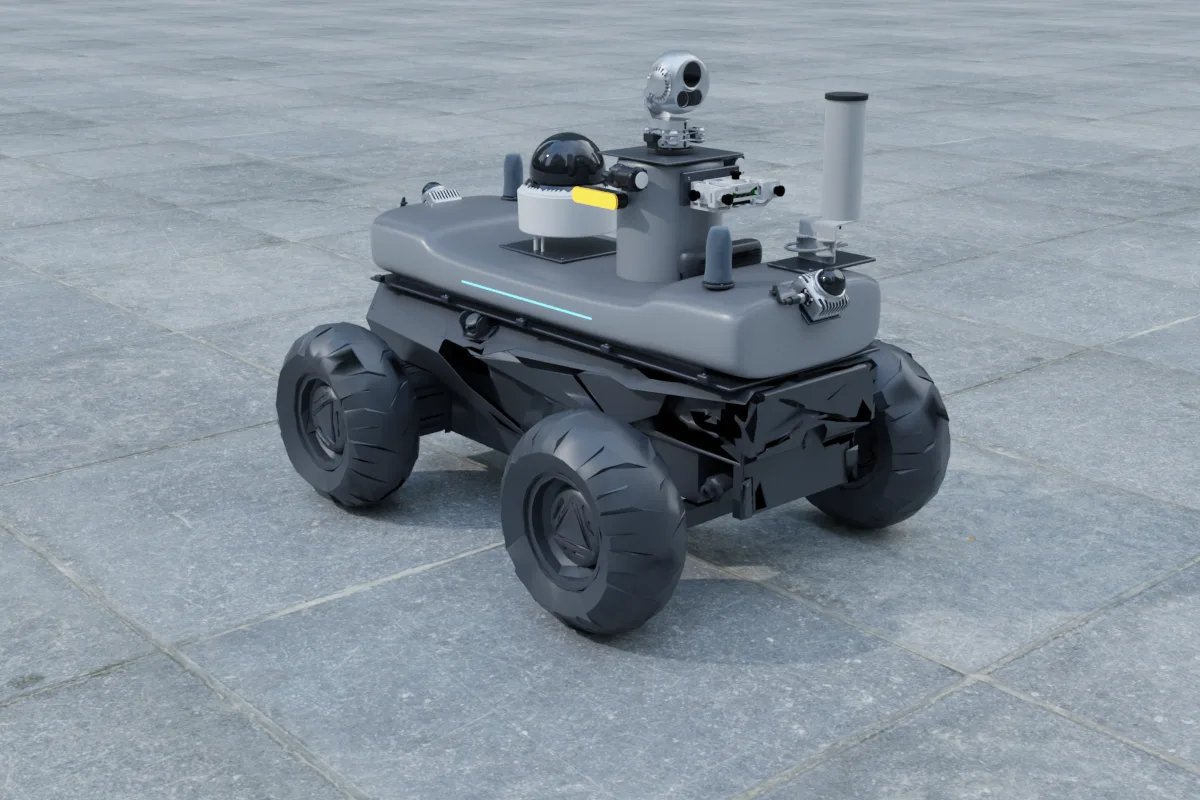
What stays the same on both
Because both bases are Ackermann-steered, the navigation side of the project is similar. The planner must respect a minimum turning radius, so routes with tight corners, narrow gates or dead ends need checking early; a skid-steer UGV can turn on the spot where a Hunter cannot. Localization usually combines a 360° LiDAR with RTK GNSS outdoors, and both bases are commonly driven from ROS 2 through AgileX's open-source drivers. Payload power comes from the robot battery through DC-DC conversion, with fusing and a separate rail for the compute so motor transients do not reset the Jetson.
For patrol-specific design (PTZ class, speaker and light, 5G video) on the larger base, see our Hunter 2.0 security patrol payload guide.
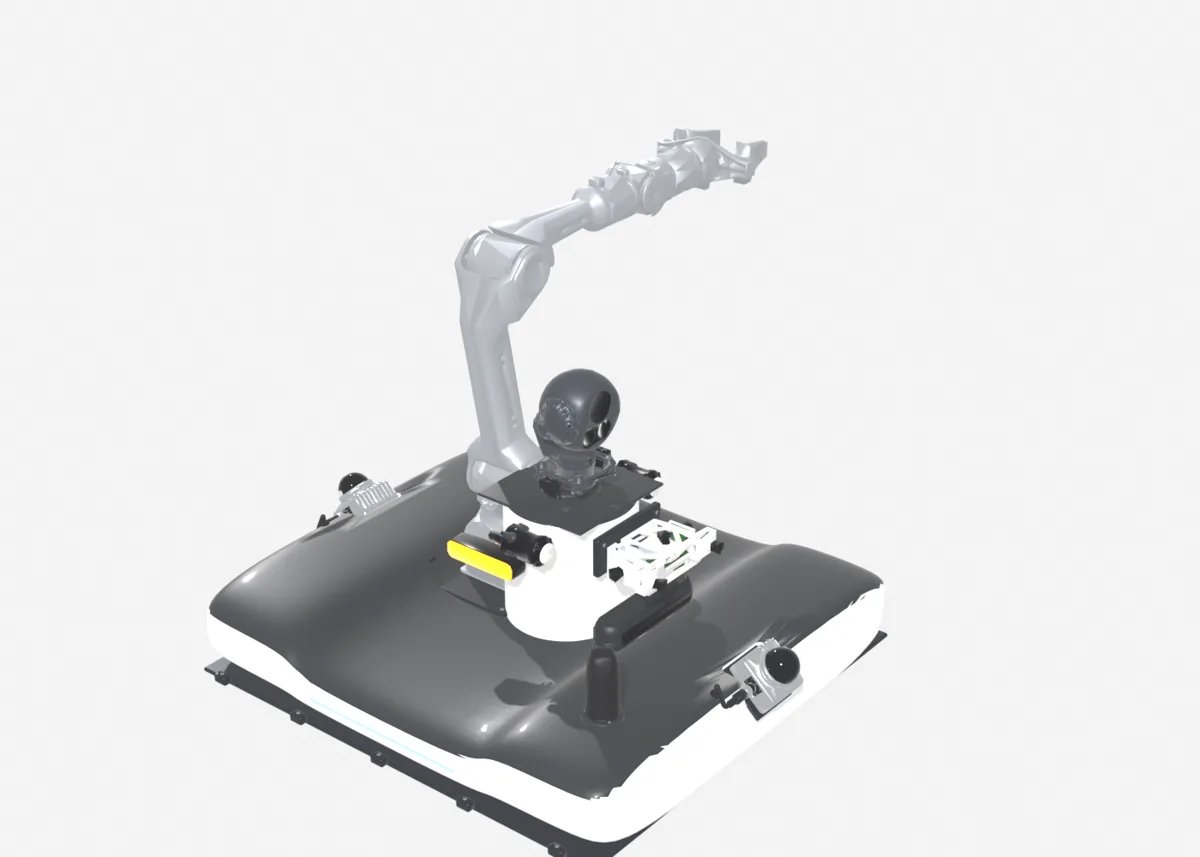
A quick decision rule
- Add up payload mass and peak power, including enclosure, mounts and any arm or cargo.
- If the total is under about 10 kg and the sensors sit low, start with the Hunter SE.
- If you need a heavy pan-tilt head, an arm, cargo space or an extra battery, choose the Hunter 2.0.
- If your routes have tight turns or indoor sections, compare both with a skid-steer UGV before ordering.
Build it with us
You can try both bases with real sensor, compute and gimbal models in our online payload configurator, which adds up weight and peak power as you build. Platform details are on the Hunter SE and Hunter 2.0 pages. YUANZHI ROBOTICS designs and builds UGV payloads, and develops navigation and autonomy software and custom software features for inspection projects; see also our inspection robot service.
FAQ
What is the difference between AgileX Hunter SE and Hunter 2.0?
Both are Ackermann-steered (car-like) outdoor UGVs from AgileX. The Hunter SE is smaller and lighter (about 820 x 640 x 310 mm, about 42 kg, about 50 kg rated payload) and is built for speed, up to about 4.8 m/s. The Hunter 2.0 is larger (about 980 x 745 x 380 mm, about 65 kg) and is rated for about 150 kg, so it suits heavy payloads and logistics-style use.
Can a Hunter SE carry a LiDAR, cameras and a Jetson?
Yes. A typical mapping payload with a Livox Mid-360 (about 265 g, about 6.5 W), a RealSense D435i (about 75 g), a Jetson Orin NX 16GB and a 5G module weighs only a few kilograms including the enclosure, well inside the Hunter SE rating. The limits are mounting area, vibration at high speed and battery runtime, not weight.
Which Hunter is better for an industrial PTZ camera?
For compact dual-spectrum gimbals around 2 to 4.5 kg either base works. For heavy-duty thermal pan-tilt heads such as an 18 kg, 70 W unit, use the Hunter 2.0: it has the payload margin and a larger, more stable deck for a raised mount.
Is the Hunter SE good for mapping at 4.8 m/s?
The top speed helps cover long roads quickly, but LiDAR-inertial mapping and image capture usually run at lower speeds for map quality and motion blur. Plan the payload for vibration and plan missions at the speed your sensors and software actually need.
Who can integrate a custom payload on an AgileX Hunter?
YUANZHI ROBOTICS designs and builds payloads for the Hunter SE and Hunter 2.0, including mounting structure, power conversion from the robot battery, ROS 2 drivers, navigation and custom software features. You can configure a payload online and request a quote.