Vibration isolation for robot payloads: what to mount on rubber and what not to
Updated 2026-11-20 · YUANZHI ROBOTICS engineering team
Mount the sensors that measure motion rigidly, and put the parts that only suffer from shaking on soft mounts. On a walking robot dog or a tracked UGV this one rule decides whether your map stays clean: a LiDAR with a built-in IMU or a separate IMU must move exactly with the robot body, while a camera gimbal, a spinning-disk drive or a fragile connector often benefits from isolation. This guide explains how to sort a payload into those two groups and what mistakes to avoid.
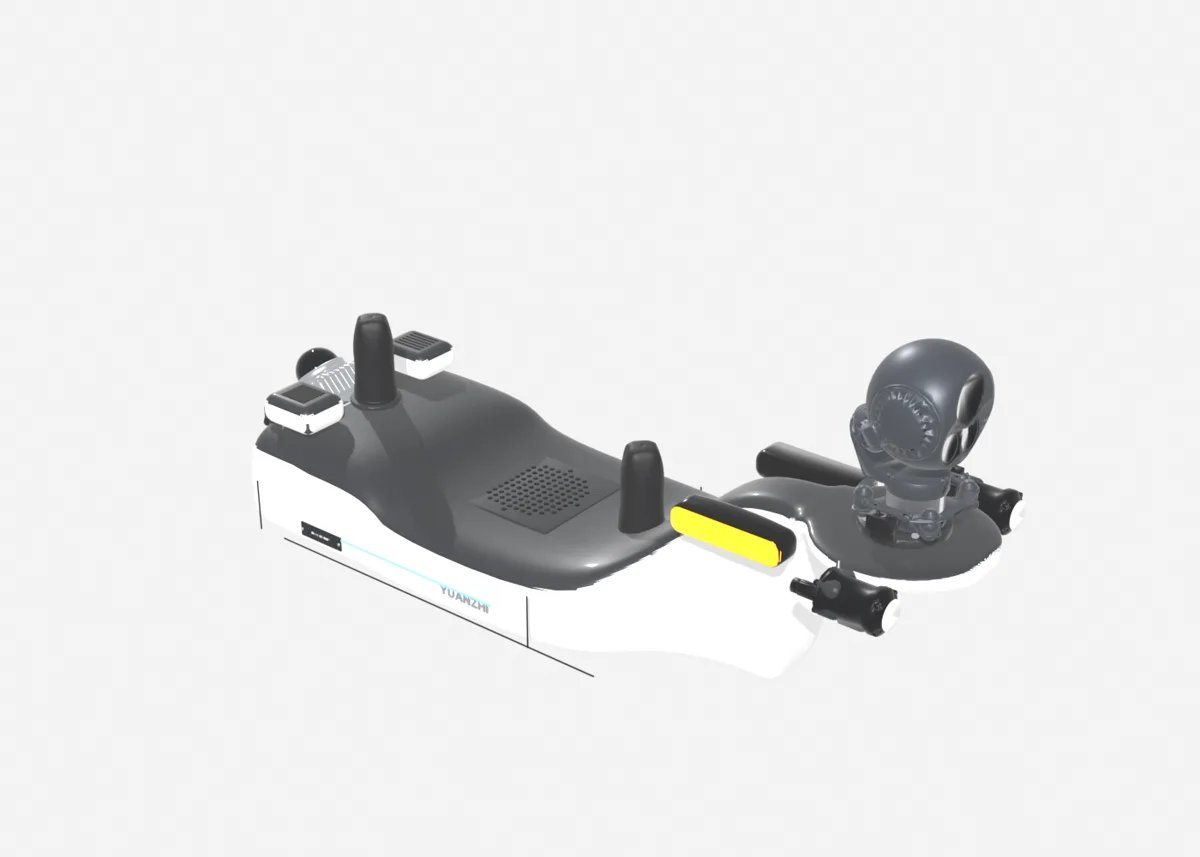
Why the answer is different for each part
A legged robot shakes at every footstep. The shock is not a smooth sine wave: it is a repeating impact with energy at the stepping frequency and much higher frequencies. Two things go wrong when that shock reaches a payload. Sensors that estimate motion see noise they cannot separate from real movement, and parts with moving or loose elements wear out or lose connection.
Soft mounts help the second problem and hurt the first. A rubber mount lets the part move relative to the robot, so an IMU on a soft mount reports motion that the robot body did not have. LiDAR-inertial SLAM such as FAST-LIO2 or Point-LIO assumes a fixed transform between the LiDAR and the IMU, so anything that lets one move relative to the other breaks that assumption.
Sort the payload into three groups
| Group | Examples | Mounting approach |
|---|---|---|
| Motion sensors | LiDAR with built-in IMU (for example Livox Mid-360, about 265 g and 6.5 W), separate IMU, RTK antenna on a short mast | Rigid, on one stiff bracket tied to the robot frame |
| Optical sensors that need a steady picture | Camera gimbal, thermal camera | Use the gimbal's own stabilisation; isolate only if the vendor allows it |
| Fragile or heavy electronics | Compute board in an enclosure, spinning storage, battery pack, connectors on long cables | Soft mounts, strain relief and locking connectors |
Keep the LiDAR and its IMU on one rigid body
- If the IMU is separate from the LiDAR, bolt both to the same plate. Do not put the LiDAR on rubber and the IMU on the robot frame.
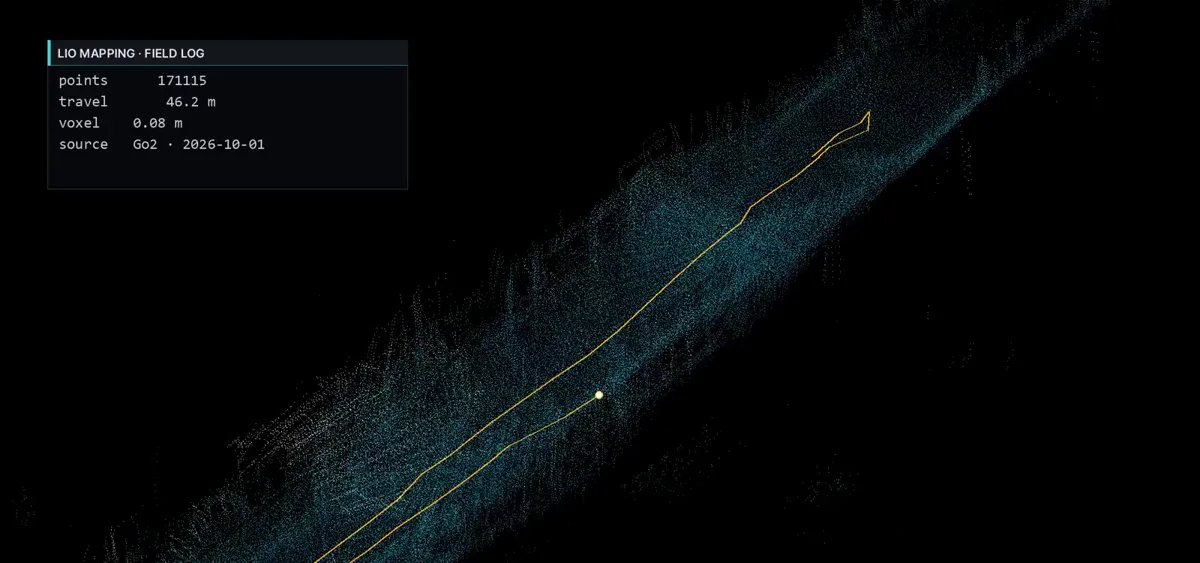
- A long thin bracket flexes at the stepping frequency and shows up as blur in the map. Shorter and stiffer is better.
- Calibrate the LiDAR-to-IMU transform after the final bracket is fitted, and again after any change to the mount.
- A tall RTK antenna mast can sway. Check it by watching the position output while the robot walks in place.
Where soft mounts do help
Compute boards and storage are the usual candidates. Mount the enclosure on small rubber or silicone grommets, keep the enclosure light, and give it a little free space on every side so it can move without touching the frame. Cables leaving a soft-mounted part need slack and a strain relief on the fixed side, otherwise the cable becomes a rigid link and the isolation does nothing.
Do not guess the isolator hardness. Rubber that is too soft lets the part swing at the robot's own stepping frequency, which can make the shaking worse, and rubber that is too stiff does nothing. Choose it from the part's mass and the isolator maker's load curve, and test it on the real robot.
Camera gimbals
A gimbal already has motors that cancel angular shake, so adding foam under it can fight its controller. Follow the gimbal vendor's mounting guide. If a gimbal shows jitter, first check that its base is rigid and that the payload does not touch it, before adding any isolation.
A quick bench check
- Record the IMU output while the robot stands still and while it walks in place. Note how much the signal grows.
- Walk a known loop and compare the start and end of the map. A bracket that is too soft or too flexible shows up as a larger gap.
- Run the compute board for an hour while walking and watch for disconnects, restarts and loose connectors.
- Change one mount at a time. If you change three things together you will not know which one helped.
Next steps
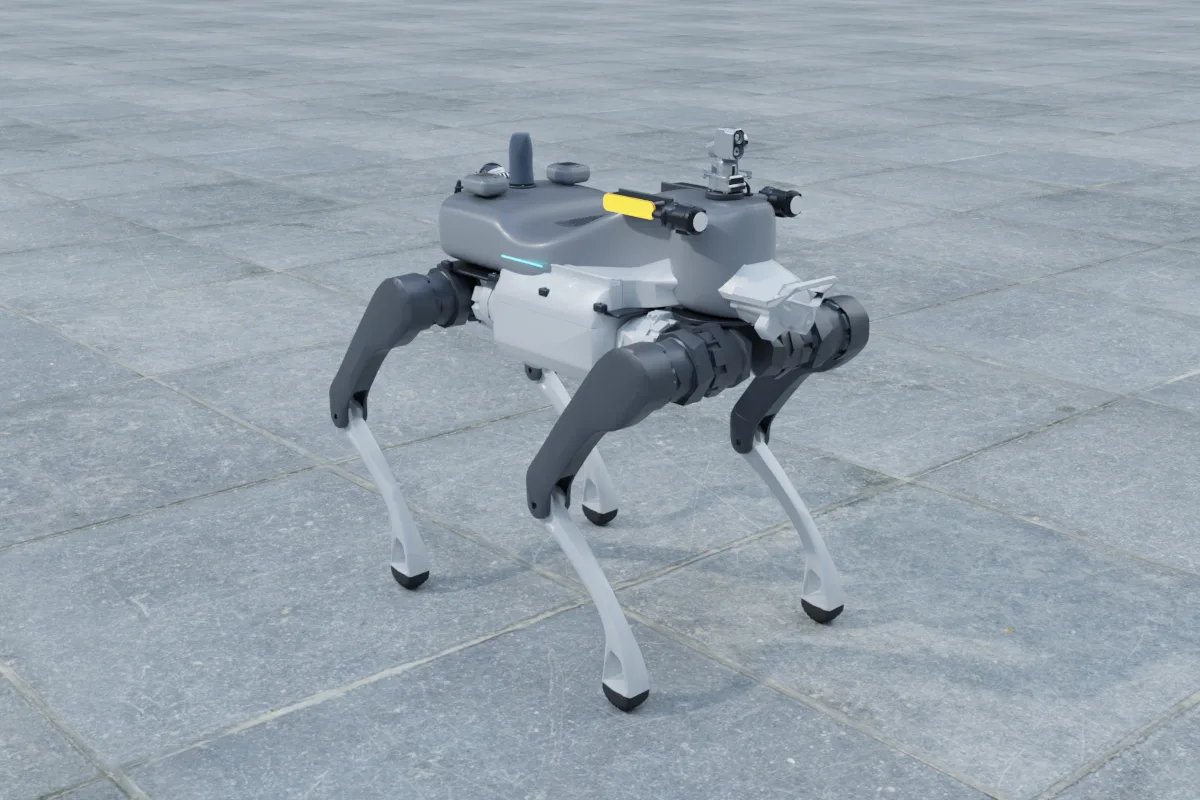
You can place the LiDAR, gimbal and compute board on rail mounts in our payload configurator and see the combined weight and power. Typical carriers are the Unitree A2, Unitree Go2 EDU and Unitree B2. For mounting and integration help see robot payload integration and quadruped development. A related read: Hesai JT128 vs Livox Mid-360 for outdoor robot LiDAR.
FAQ
Should I put a LiDAR on rubber mounts on a robot dog?
Usually no. SLAM assumes a fixed transform between the LiDAR and the IMU, so a soft mount adds relative motion that shows up as map blur. Use a short, stiff bracket instead.
Which payload parts benefit from vibration isolation?
Compute boards in enclosures, spinning storage, battery packs and connectors on long cables. Give them small rubber grommets, free space and cable slack.
Should the IMU and LiDAR be on the same plate?
Yes. If the IMU is separate, bolt both to one plate and recalibrate the LiDAR-to-IMU transform after any mount change.
Do camera gimbals need foam under them?
Not normally. The gimbal motors cancel angular shake, and foam can fight its controller. Follow the vendor mounting guide and check base rigidity first.
How do I test a payload mount?
Record IMU output standing and walking, walk a known loop and compare the start and end of the map, and run the compute board for an hour while walking. Change one mount at a time.