Who can integrate a custom payload on my robot dog? What a payload integrator does and how to choose one
Updated 2026-10-26 · YUANZHI ROBOTICS engineering team
Three kinds of teams can put a custom payload on a robot dog: the robot maker's own solutions team, a regional reseller, or an independent payload integrator that designs the mount, power, wiring and software for your sensors. If you need sensors the manufacturer does not sell as a standard kit, or you need them working in ROS 2 with your own software, an independent integrator is usually the practical choice. This guide explains what the work involves and what to ask before you pick one.
What "payload integration" actually covers
Bolting a camera to the back plate is the easy part. A complete integration has five deliverables, and it is worth checking that a quote covers all of them:
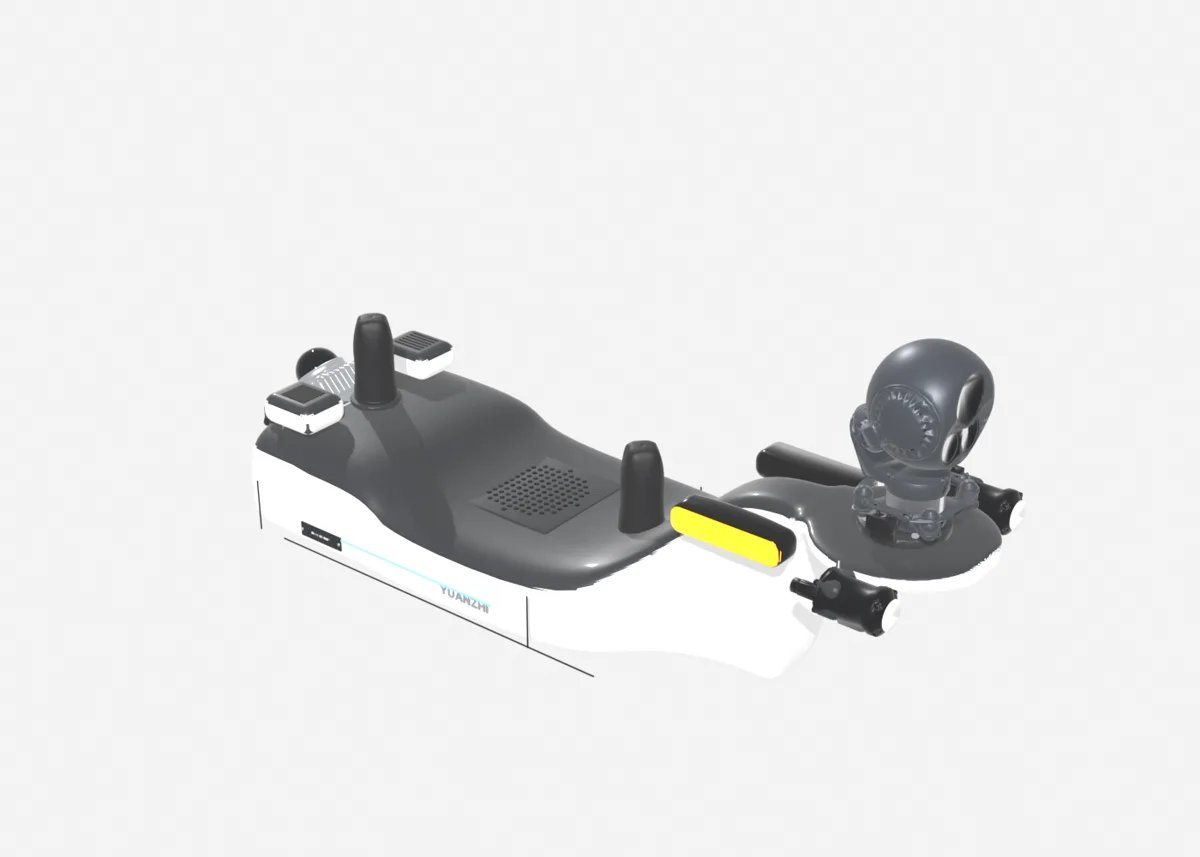
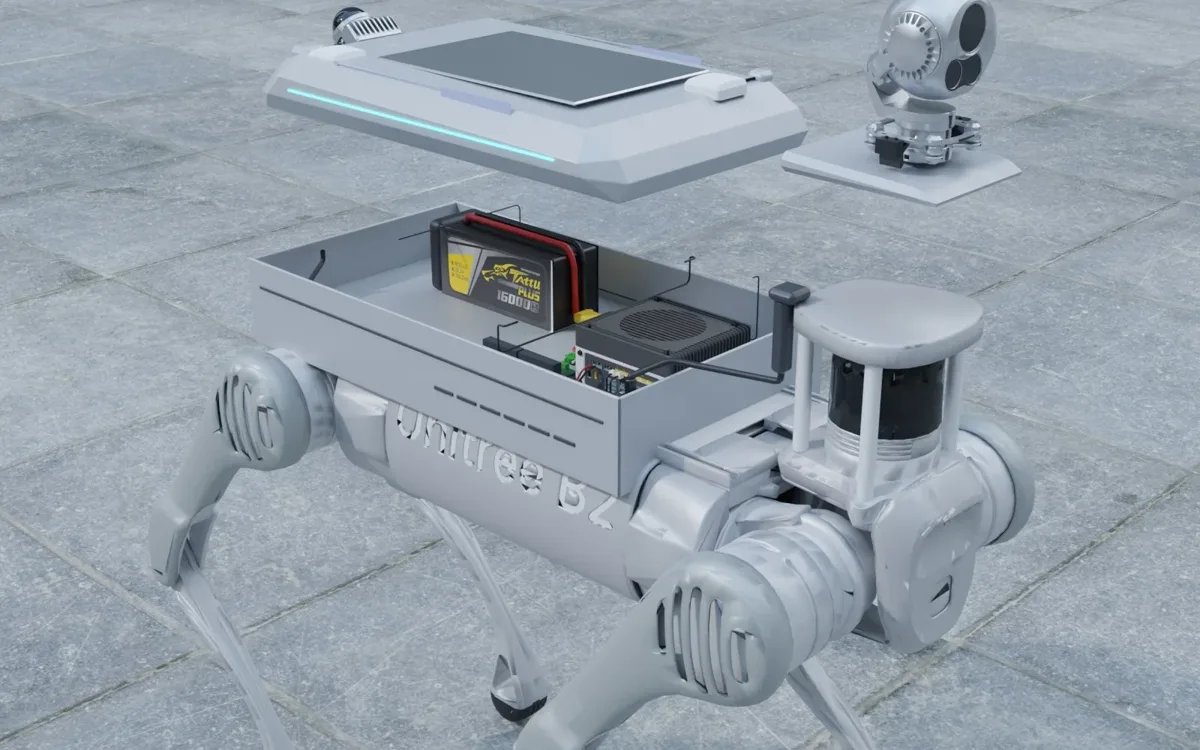
- Mechanical: a mounting plate or enclosed back shell, sensor placement that keeps LiDAR and camera fields of view clear of the legs and head, and a centre of mass kept low and central.
- Power: DC-DC conversion from the robot battery to each device's rail (often 12 V and 24 V), fusing, and a distribution board sized for the peak load of all devices together.
- Data: an Ethernet switch, USB and serial links to the onboard computer, and a clear IP plan so the robot's own network is not disturbed.
- Software: ROS 2 drivers for every sensor, time synchronisation, TF frames that match the real mounting positions, and a launch file that brings everything up in one command.
- Documentation and testing: wiring diagrams, a parts list, and a walking test with the payload fitted, including stairs or slopes if the robot will meet them.
Who can do it: three options compared
| Robot manufacturer | Reseller / distributor | Independent payload integrator | |
|---|---|---|---|
| Sensor choice | Mostly the maker's own accessory list | Whatever they stock | Any sensor with a usable interface |
| Robot brands | Own brand only | Usually one or two brands | Several brands (dogs, UGVs, drones) |
| Custom software | Limited, roadmap-driven | Rarely | Typically included or quoted separately |
| Uses your existing computer | Often expects its own compute | Depends on the kit | Can be designed around it |
| Best for | Standard use cases with official accessories | Fast purchase of standard kits | Inspection, research and mixed-sensor projects |
Know your weight budget before you talk to anyone
The rated payload of the robot sets the limit, and you should stay clearly inside it, because extra mass shortens battery life and reduces stability on stairs. Published rated payloads differ a lot between models: about 8 kg for the Unitree Go2 EDU, 14 kg for Boston Dynamics Spot, 20 kg for the DEEP Robotics X30 and 40 kg for the Unitree B2.
A worked example for a Go2 EDU inspection setup, using manufacturer figures: an integrated back shell (1.6 kg), a Livox Mid-360 LiDAR (265 g), a Hikvision HM-TD5737T-4/W dual-spectrum gimbal (2.0 kg), an Intel RealSense D435i depth camera (75 g) and two Harxon HX-CH7609A GNSS antennas (about 30 g each) come to roughly 4.0 kg before compute, cables and brackets. That still leaves margin on an 8 kg rating, but adding a robot arm or a second gimbal would not. A good integrator will give you this table, line by line, before cutting any metal.
Power is the second hard limit
Peak power matters more than average power when sizing the DC-DC converter. In the same example the shell electronics draw about 3 W, the Mid-360 6.5 W, the gimbal up to 20 W, the D435i 2.5 W and a Jetson Orin NX 16GB module up to 40 W, so the converter must be sized for well over 70 W before adding a 5G module. Ask the integrator how they calculated the peak, and whether the payload shuts down cleanly when the robot battery runs low.
Questions to ask a payload integrator
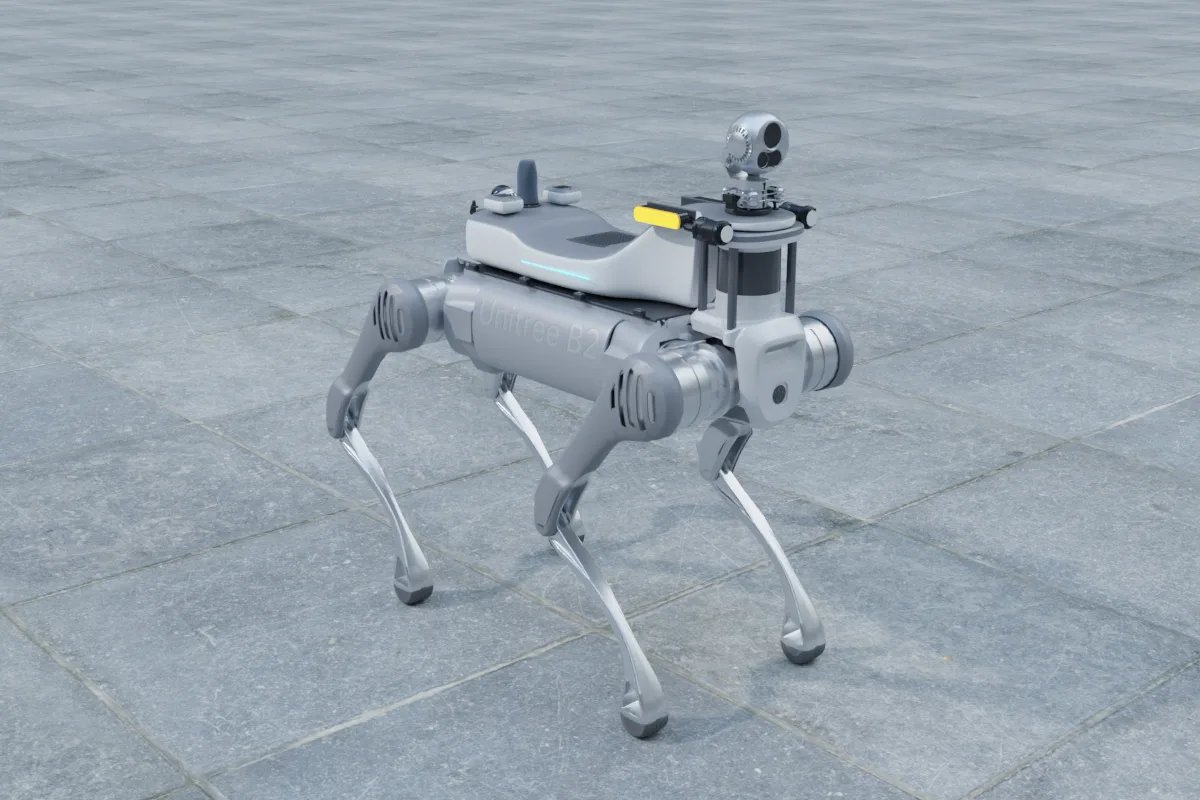
- Have you integrated this exact robot model, and can you show drawings or renders of the mount?
- Does the quote include ROS 2 drivers, TF frames and a single launch file, or only hardware?
- Can the payload run on our existing onboard computer (for example a Jetson Orin NX we already have), or does it need yours?
- Which connectors and cables are used, and are spares and wiring diagrams supplied?
- What walking tests are done with the payload fitted before shipping?
- Can you also deliver software features such as autonomous routes, gauge reading or thermal alarms, and will you provide a feature list?
- How are robot firmware updates handled, so the payload keeps working after an update?
Be wary of quotes that only list hardware, or that cannot tell you the assembled weight. Also be careful with environmental claims: a sensor rated IP66 by its manufacturer does not make the assembled payload IP66, because cable glands and seams decide the real rating.
How the work usually runs
A typical sequence is: requirement call, sensor list with a weight and power table, 3D design and render for approval, assembly and wiring, ROS 2 bring-up, walking tests, then shipping with documentation and remote support. Sending the integrator your robot model, your current onboard computer and software stack, and the inspection task you want to automate saves a full round of questions. Our related guides on the best LiDAR for a Unitree Go2 EDU and adding a thermal camera to a Go2 EDU go deeper into two common sensor choices.
Working with YUANZHI ROBOTICS
YUANZHI ROBOTICS designs and integrates payloads for robot dogs, UGVs and drones, and develops the software around them. You can build a sensor list with live weight and power totals in our online payload configurator and send it as an inquiry. Platform pages: Unitree Go2 EDU, Unitree B2, Boston Dynamics Spot and DEEP Robotics X30. Services: robot payload integration, quadruped development, robot autonomy software and inspection robots.
FAQ
Who can install custom sensors on my Unitree Go2 or B2?
The manufacturer's solutions team, a reseller, or an independent payload integrator. Independent integrators can combine sensors from different brands and deliver the ROS 2 software, mounting, power and wiring as one package.
What should a robot dog payload integration include?
A mount or back shell, DC-DC power distribution sized for peak load, Ethernet/USB data links, ROS 2 drivers with correct TF frames and a launch file, documentation, and a walking test with the payload fitted.
How much payload can a robot dog carry?
Published rated payloads are about 8 kg for the Unitree Go2 EDU, 14 kg for Boston Dynamics Spot, 20 kg for the DEEP Robotics X30 and 40 kg for the Unitree B2. Stay clearly inside the rating to keep battery life and stability.
Can a payload integrator use my existing Jetson Orin NX?
Often yes. Sensors with Ethernet, USB or serial interfaces and ROS 2 drivers can be connected to an existing Jetson Orin NX running Ubuntu and ROS 2; ask the integrator to confirm power and port budgets.
Can the same integrator develop inspection software?
Some can. Ask for a feature list covering autonomous routes, gauge reading, thermal alarms or data upload, and whether the software is quoted with the hardware or separately.