Boston Dynamics Spot vs Unitree B2 for carrying custom payloads
Updated 2026-10-28 · YUANZHI ROBOTICS engineering team
If your payload stays light, roughly under 5–6 kg, and you want plug-in mounting with a mature SDK, Boston Dynamics Spot is the easier platform to integrate. If the payload is heavy, such as a robot arm, a full-size gimbal plus a survey LiDAR and a large compute box, or the robot has to work outdoors in rain for a full shift, the Unitree B2 gives far more headroom: about 40 kg rated payload versus about 14 kg for Spot. Below is how each robot handles a custom payload in practice, with weights taken from real part data.
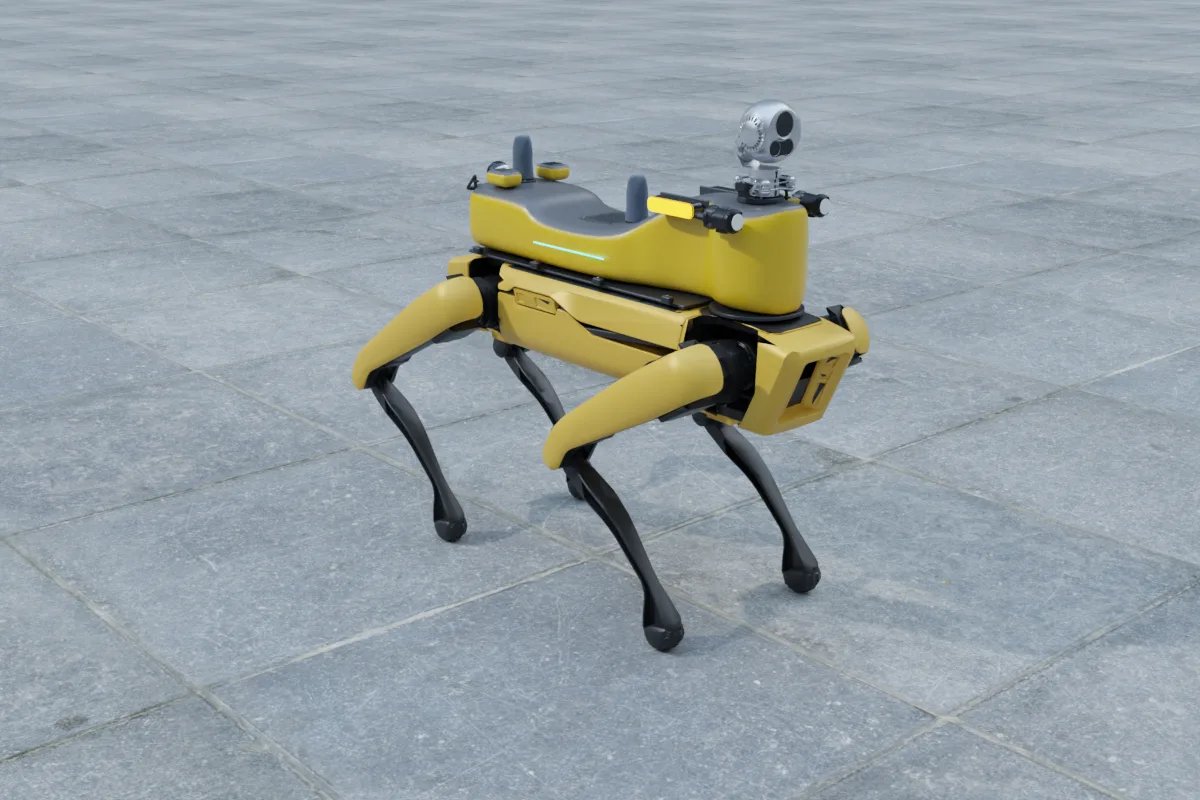
The platform numbers that limit a payload
Robot figures are the manufacturers' ratings, as used in our configurator. Always check the latest official specification before you finalise a design.
| Boston Dynamics Spot | Unitree B2 | |
|---|---|---|
| Body size (L × W × H) | 1100 × 500 × 610 mm | 1098 × 450 × 645 mm |
| Robot weight | about 32.7 kg | about 60 kg |
| Rated payload | about 14 kg | about 40 kg |
| Payload / robot weight | about 43% | about 67% |
| Built-in perception | 5 stereo camera pairs around the body | 3D LiDAR, front and rear depth cameras |
| Mounting interface | two back rails plus payload ports (power and Ethernet) | no accessory rail; custom shell or plate on the back |
| Environmental rating | IP54 | IP67 |
| Rated endurance | about 90 minutes per battery | 4–6 hours |
| Software access | Spot SDK (Python, gRPC API) | Unitree SDK2 with ROS 2 support |
The two robots are almost the same length, so most sensor layouts fit both. The real differences are how much mass you can add, how you attach it and how long it can run.
Mounting: Spot is plug-in, B2 needs a fitted base
Spot was designed around third-party payloads. The back rails take standard T-slot hardware, and the payload ports give an accessory access to robot power and the robot's Ethernet network. A payload can therefore be a self-contained box that bolts to the rails and plugs in, and Spot's software can be told the payload's mass and position so the controller compensates for it.
The B2 has a flat back but no accessory rail standard. A payload needs a base that matches the body: in our designs that is either an aluminium back shell with an integrated compute bay (about 1.6 kg), a two-level shell with room for an extra battery (about 2.4 kg) or a reinforced arm base with a central flange (about 2.1 kg). Power is taken from the robot battery through a DC-DC stage inside the shell. This is more engineering up front, but once the base exists the B2 accepts much heavier hardware.
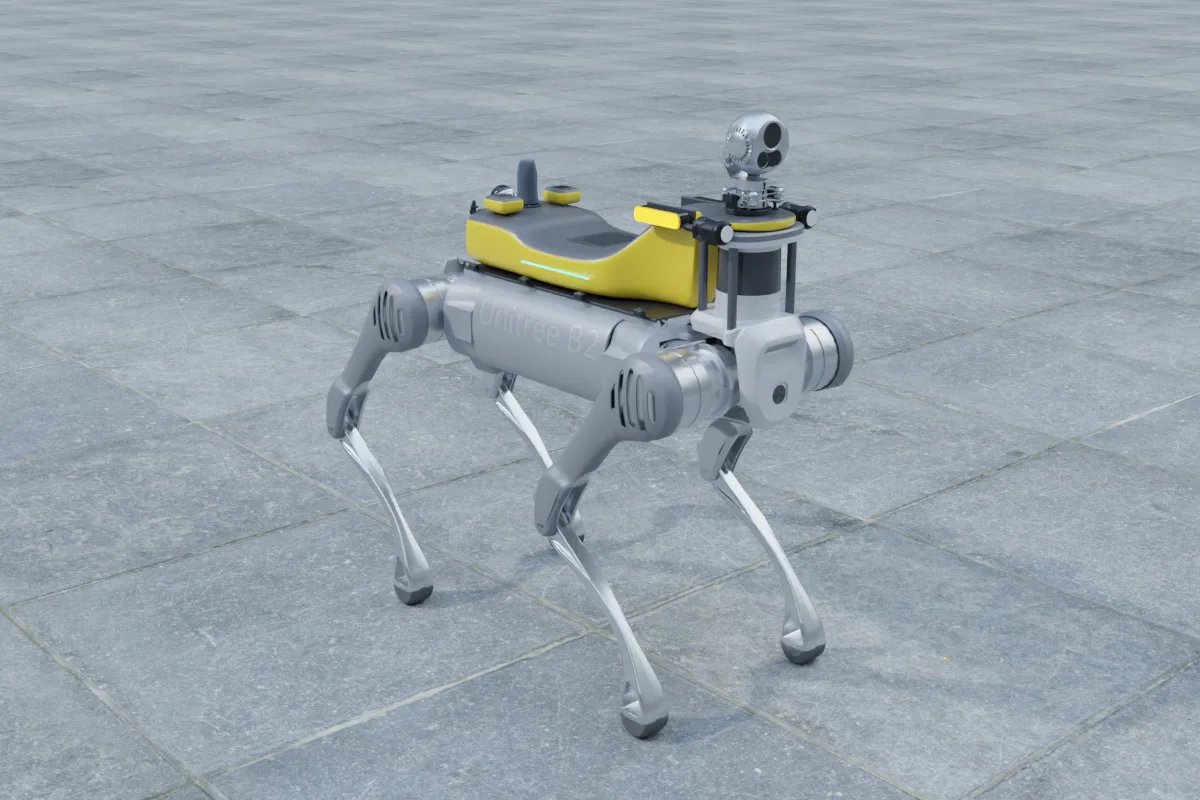
Three real payloads, two very different budgets
Here is what three common payloads weigh, using component data from our catalog. Compute boxes, cables and brackets beyond the listed base are not included, so the real total is higher.
| Payload | Main parts | Approx. weight | Share of Spot (14 kg) | Share of B2 (40 kg) |
|---|---|---|---|---|
| Inspection set | Livox Mid-360 (265 g), Hikvision HM-TD5737T-4/W dual-spectrum gimbal (2 kg), RealSense D435i (75 g), Harxon HX-CH7609A GNSS antenna (about 30 g each), 5G module, aluminium back shell (1.6 kg) | about 4.0 kg | about 28% | about 10% |
| 3D survey set | Hesai PandarXT32 (800 g), Insta360 X4 (203 g), Unicore UM982 dual-antenna RTK board, Xsens MTi-630 IMU, two helix antennas, aluminium back shell (1.6 kg) | about 2.7 kg | about 19% | about 7% |
| Manipulation set | RealMan RM65-B 6-axis arm (about 7.2 kg) on a reinforced arm base (about 2.1 kg) | about 9.3 kg | about 66% | about 23% |
The sensor-only sets fit either robot. The arm is where the decision is made: on Spot a third-party arm of this size uses two-thirds of the rating before any camera, gripper or compute is added, and the moving arm shifts the centre of mass while the robot walks. On the B2 the same arm leaves more than 30 kg of margin. A lighter arm such as the AgileX PiPER (about 4.2 kg) is a more realistic option for Spot if you do not use Boston Dynamics' own Spot Arm.
Power and runtime
Weight is only half of the budget. The inspection set above draws about 6.5 W for the LiDAR, about 20 W for the gimbal and about 2.5 W for the depth camera, and a Jetson Orin NX 16GB can reach about 40 W under full load; a survey set built around a Jetson AGX Orin 64GB can reach about 60 W for compute alone. On Spot every watt drawn by the payload comes out of a battery rated for about 90 minutes, so a heavy-compute payload noticeably shortens each mission and you should plan battery swaps. The B2's 4–6 hour rating makes a 60–80 W payload far less critical, and a two-level shell can add a separate payload battery if needed.
Software and integration effort
Spot's SDK is well documented and stable, with mission recording (Autowalk), docking and a payload registration system, so many inspection tasks can be built on top of existing functions. The trade-off is that you work inside Boston Dynamics' framework and pricing. The B2 is commonly driven through Unitree SDK2 and ROS 2, which suits teams that want their own SLAM, navigation and recognition stack running on an onboard Jetson. On either robot, plan for the same integration steps: time sync between sensors, TF frames from each sensor to the body, a network switch for multiple Ethernet devices and a remote link (Wi-Fi, 4G/5G or mesh radio). Our guide on what a payload integrator does walks through these steps.
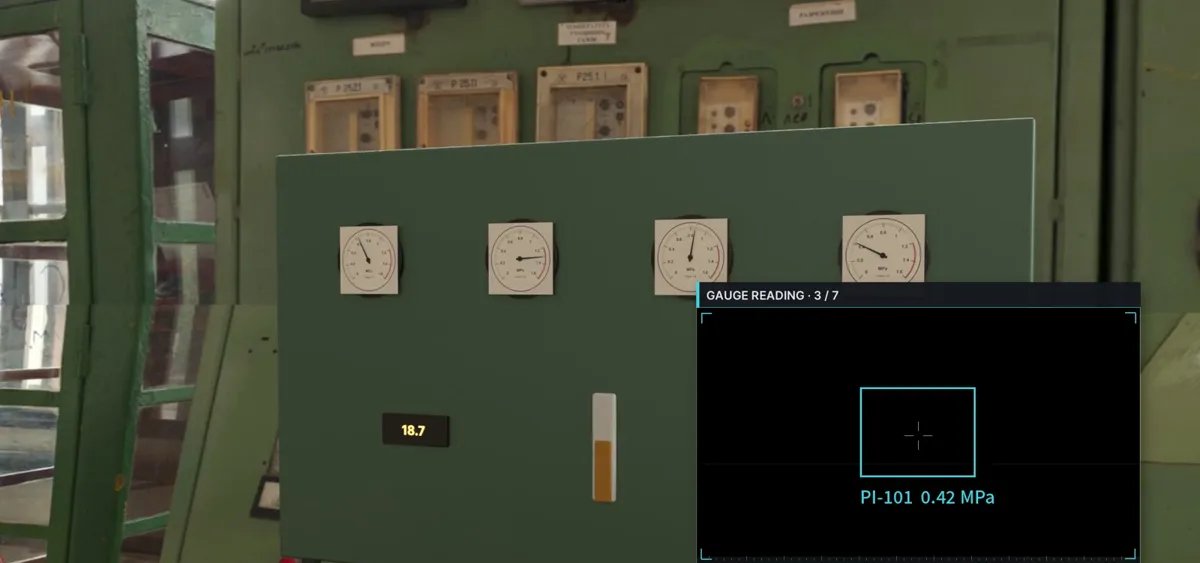
Which one to choose
- Choose Spot if the payload is sensors only and stays under about 5–6 kg, you want to use Autowalk, docking or the Spot Arm, and your organisation already runs Spot or is standardising on Boston Dynamics.
- Choose the B2 if you need a third-party arm, a heavy gimbal plus survey-grade LiDAR, more than about 60 W of payload power, long outdoor shifts, or full control of the software stack through ROS 2.
- Either works for a typical inspection set (LiDAR, dual-spectrum gimbal, depth camera, RTK and 5G); in that case runtime, weather rating and your software plans usually decide.
If you are weighing the B2 against a smaller Unitree robot instead, see Go2 EDU vs B2 for inspection payloads.
Build and compare both configurations
You can load the same sensors onto both robots in our online payload configurator and see the weight and power totals change. Platform details are on the Boston Dynamics Spot and Unitree B2 pages. YUANZHI ROBOTICS designs the mounting structure and harness (robot payload integration), integrates arms and sensors on quadrupeds (quadruped development) and delivers mapping, navigation and recognition software (robot autonomy) for both platforms.
FAQ
Can Spot carry more than 14 kg?
No. Boston Dynamics rates Spot at about 14 kg of payload, and that figure includes brackets, cables and any mounting shell. In practice a custom payload should stay well below it so the robot keeps margin for stairs, slopes and recovery from slips.
Is the Unitree B2 a good alternative to Spot for a robot arm?
For a third-party arm, usually yes. A 6-axis arm such as the AgileX PiPER (about 4.2 kg) or RealMan RM65-B (about 7.2 kg) plus a reinforced mounting base takes a large share of Spot's 14 kg rating but only 16–23% of the B2's 40 kg rating. If you want Boston Dynamics' own Spot Arm, Spot is the natural choice.
Does Spot have standard payload mounting?
Yes. Spot has two mounting rails on its back and payload ports that provide power and Ethernet to accessories, so a payload can be bolted on without modifying the robot. The B2 has no equivalent accessory rail, so payloads use a custom shell or plate fitted to its back.
Which is better outdoors in rain, Spot or B2?
Both are designed for outdoor work. Boston Dynamics rates Spot at IP54; Unitree rates the B2 at IP67 with 4–6 hours of endurance, which gives more margin for wet sites and long patrols. The payload itself still needs its own sealing and cable glands.
Who can integrate a custom payload on Spot or B2?
YUANZHI ROBOTICS designs payload shells, brackets, power distribution and ROS 2 software for both Spot and Unitree B2. You can build a configuration in the online configurator and request a quote.