How to choose a thermal or dual-spectrum gimbal for a robot dog or UGV
Updated 2026-10-27 · YUANZHI ROBOTICS engineering team
Pick the thermal hardware class that your robot can actually carry, then decide whether you need temperature measurement or only detection. As a rule: bare thermal cores (under 100 g) suit small dogs and fixed forward views; a robot-grade compact dual-spectrum gimbal (about 2 kg, about 20 W) is the default for the Go2 EDU, X30, Spot and B2; a radiometric mini PTZ (about 4.5 kg) belongs on B2-class dogs or UGVs; and a heavy-duty dual PTZ (about 18 kg, about 70 W) only makes sense on a wheeled or tracked UGV such as the AgileX Hunter 2.0.
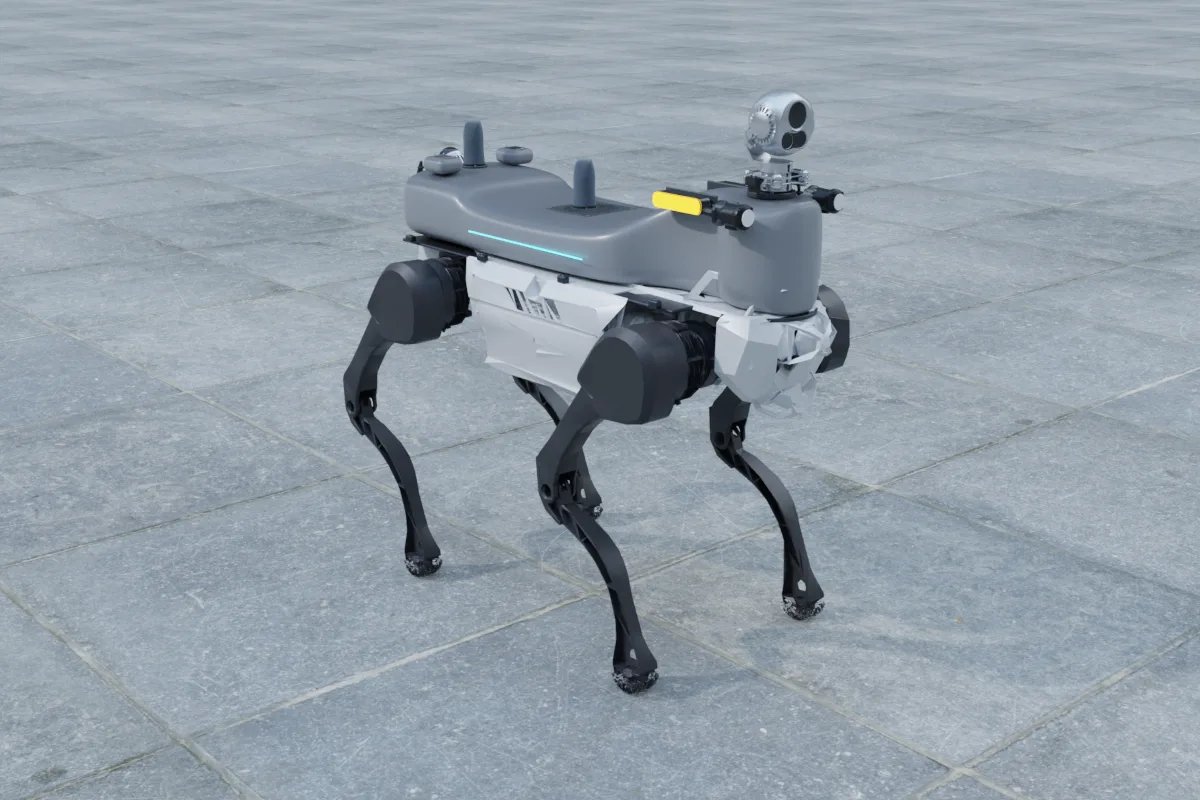
The four classes of thermal hardware for mobile robots
Almost every thermal option we integrate falls into one of four classes. Weights and power below are the figures from our payload component catalog (manufacturer or reseller data); where a figure is not published we leave it blank rather than guess.
| Class | Example parts | Weight | Power | Thermal resolution | Typical carrier |
|---|---|---|---|---|---|
| Micro thermal module | Teledyne FLIR Lepton 3.5, InfiRay Tiny1-C, GST TIMO256 | 0.9-3.9 g | 0.09-0.24 W | 160x120 to 256x192 | small dogs, custom sensor heads, close-range detection |
| Uncooled thermal core | Teledyne FLIR Boson 640, GST PLUG417, Guide IPT640M (network radiometric core) | 7.5-85 g (IPT640M not listed) | 0.5-2 W | 384x288 to 640x512 | fixed forward view on any dog or UGV |
| Robot-grade compact dual-spectrum gimbal | Hikvision HM-TD5737T-4/W | about 2 kg | about 20 W | visible + thermal in one pan-tilt head | Go2 EDU, X30, Spot, B2, small UGVs |
| Radiometric mini PTZ | Hikvision DS-2TD5566T-15/V2 | about 4.5 kg | about 18 W | thermal 640x512 + visible 1080p | B2 / B2-W, larger UGVs |
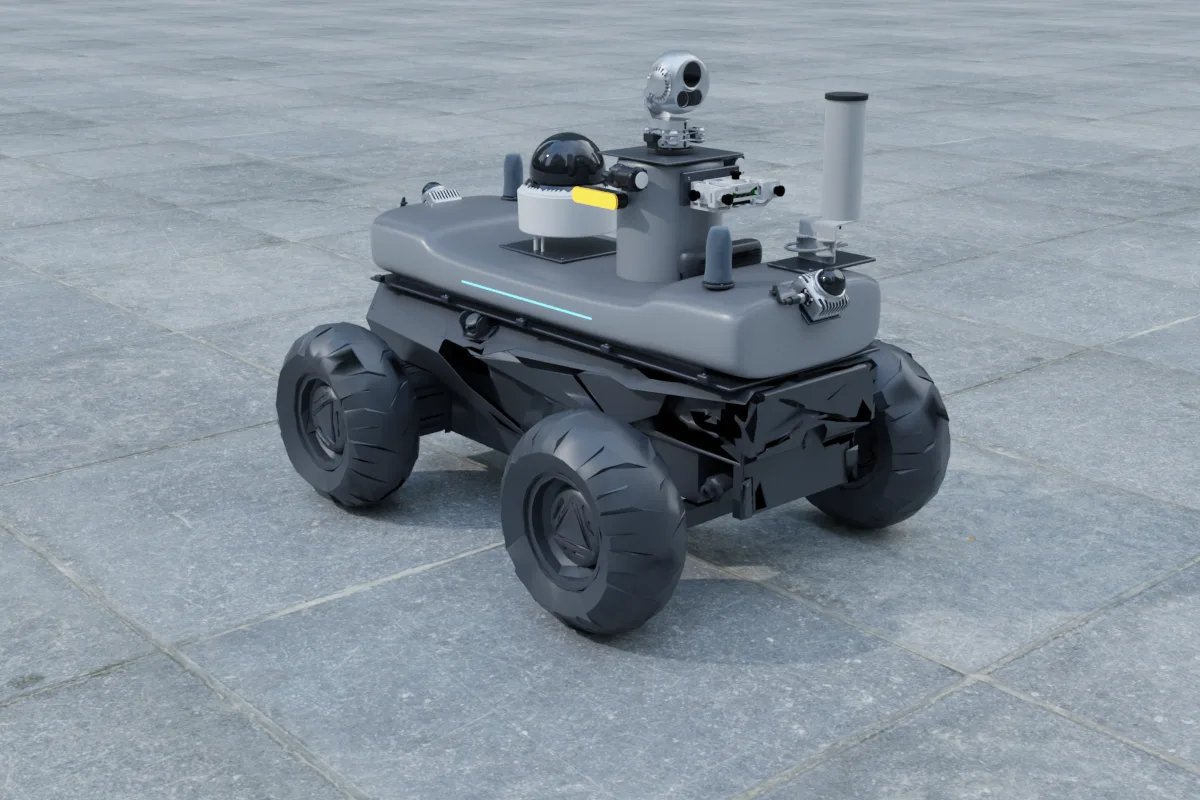
| Heavy-duty dual PTZ | Dahua DH-TPC-PT8X20 (360 x 252 x 464 mm) | about 18 kg | about 70 W | thermal + visible, long range | Hunter 2.0, Bunker Pro, Tracer 2.0, Husky A200 |
Drone gimbals such as the DJI Zenmuse H30T (about 920 g) are tempting because they are light, but they use DJI's drone payload port and are only supported on the Matrice 300/350/400; they are not a practical choice for a ground robot.
Check the payload budget first
The gimbal is rarely the only thing on the robot. LiDAR, compute, a modem, a mounting shell and cabling come first, so look at what share of the rated payload the gimbal alone takes:
- Unitree Go2 EDU (rated 8 kg): a 2 kg compact gimbal is a quarter of the budget. Workable, but nothing heavier.
- Boston Dynamics Spot (14 kg) and ANYmal (10 kg): compact gimbal comfortable; a 4.5 kg mini PTZ eats a third or more.
- DEEP Robotics X30 (20 kg): compact gimbal is 10% of the budget; a mini PTZ is possible if the rest of the stack is light.
- Unitree B2 (40 kg): either the compact gimbal or the mini PTZ fits with room for LiDAR, RTK and 5G.
- DEEP Robotics Lite3 (4 kg): stay with micro modules or a bare core.
- AgileX Hunter 2.0 (150 kg) or Clearpath Husky A200 (75 kg): weight is not the limit, so you can choose by range and image quality; the limit becomes battery energy and mast height.
We explain how to add up the whole stack, including power, in Go2 EDU vs B2 for inspection payloads.
Measurement or detection: radiometric vs imaging-only
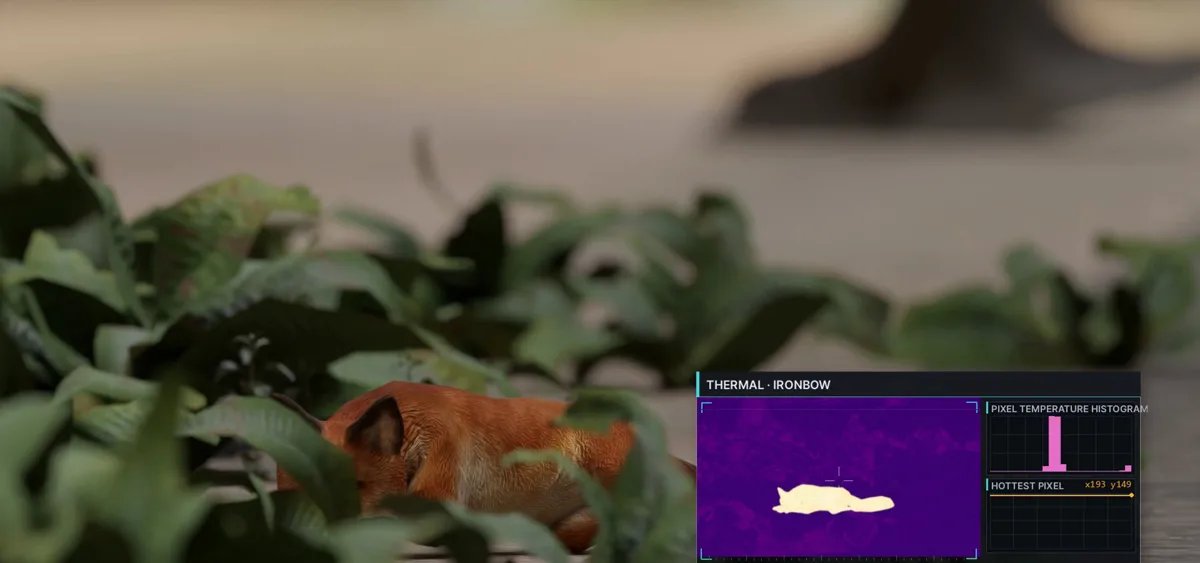
This is the question buyers most often skip. An imaging-only thermal camera shows warm and cold areas; good for spotting people, animals, fire or a motor that looks hotter than its neighbour. A radiometric camera reports a temperature for each pixel, which you need for substation hot-spot reports, cable joint checks or any job where a threshold triggers an alarm. Radiometric gimbals and cores (for example the DS-2TD5566T-15/V2 or the IPT640M network core) cost more and need an SDK call or a temperature stream, not just video, so your software has to be planned for it.
Resolution, lens and distance
A thermal image is low resolution compared with visible video, so the number of pixels that land on the target matters more than the headline resolution. Three practical rules:
- At 160x120 or 256x192 (micro modules), use it for close-range detection, not for reading small components across a room.
- At 640x512, choose the lens by distance: wide lenses for navigation and situational awareness, narrower lenses for equipment several metres away. Cores such as the IPT640M are offered with several lens options (5.9, 15 and 25 mm), so the same core can be set up for either job.
- A pan-tilt head lets the robot stop once and aim at several points, which is usually faster than walking the robot to frame each target.
Gimbal or fixed core?
| Pan-tilt gimbal | Fixed thermal core | |
|---|---|---|
| Aiming | points at gauges, valves, joints from one stop | looks where the robot looks |
| Weight and power | about 2 kg and up, 18-70 W | grams, 0.1-2 W |
| Integration | network video plus gimbal control API | USB, UVC or a camera interface on the compute board |
| Best for | inspection rounds, patrol with zoom | detection, mapping overlays, small robots |
Integration checklist before you buy
- Power: feed the gimbal from the robot battery through its own DC-DC converter and size it for the motor peak when the head slews, not only the average draw.
- Data: most network gimbals deliver RTSP video and a vendor SDK for pan, tilt, zoom and temperature. Confirm the SDK runs on Linux / ARM if your compute is a Jetson.
- ROS 2: plan a node that publishes the video, camera info, gimbal angles and (for radiometric units) temperatures, with timestamps aligned to the LiDAR.
- Mounting: raise the head so the robot's own body and the LiDAR do not block the view, and keep the LiDAR's field of view clear of the gimbal.
- Vibration and weather: legged robots shake the payload at every step; use a stiff mount. An individual camera's weather rating does not automatically carry over to the assembled payload, so the connectors and shell matter as much as the camera.
Our step-by-step for one platform is in How to add a thermal camera to a Unitree Go2 EDU.
Quick picks by use case
- Indoor rounds on a Go2 EDU or Spot: robot-grade compact dual-spectrum gimbal.
- Outdoor substation or plant inspection on a B2 or X30: compact gimbal, or a radiometric mini PTZ on the B2 if you need per-pixel temperature at longer range.
- Perimeter security patrol on a UGV: heavy-duty dual PTZ on a Hunter 2.0 or Bunker Pro, plus a speaker and light.
- Research or small robots: a micro module or a 640x512 core on a fixed bracket.
To try combinations with real part weights, use the YUANZHI ROBOTICS payload configurator and select your platform, for example the Unitree Go2 EDU, DEEP Robotics X30, Unitree B2 or AgileX Hunter 2.0. If you want us to design the mount, power and ROS 2 software, see our robot payload integration, UGV payload and inspection robot services.
FAQ
What is the best thermal camera for a Unitree Go2 EDU?
A robot-grade compact dual-spectrum gimbal such as the Hikvision HM-TD5737T-4/W (about 2 kg, about 20 W) is the usual choice. It uses about a quarter of the Go2 EDU's rated 8 kg payload, so heavier PTZ cameras are not practical on a Go2.
Do I need a radiometric thermal camera on an inspection robot?
Yes if the job needs temperature values, such as substation hot-spot reports or alarm thresholds. For detecting people, animals or fire, an imaging-only thermal camera is enough and simpler to integrate.
Can I put a DJI H30T or H20T drone gimbal on a robot dog?
Not practically. DJI Zenmuse gimbals connect through DJI's drone payload port and are supported only on the Matrice 300, 350 and 400, so a ground robot cannot control them in the normal way.
What thermal PTZ fits on a UGV like the AgileX Hunter 2.0?
With a 150 kg rated payload, the Hunter 2.0 can carry a heavy-duty dual PTZ such as the Dahua DH-TPC-PT8X20 (about 18 kg, about 70 W). The limits become battery energy and mast height rather than weight.
Who can integrate a thermal gimbal on my robot dog or UGV?
YUANZHI ROBOTICS designs the mount, power distribution and ROS 2 software for thermal and dual-spectrum gimbals on robot dogs and UGVs. You can compare options in the online configurator and request a quote.