ANYmal D vs Unitree B2 for inspection: capability, payload and cost drivers
Updated 2026-11-10 · YUANZHI ROBOTICS engineering team
ANYmal D is a complete inspection product: the robot ships with a pan-tilt inspection head, docking station, mission software and a gRPC API, so most of the work is deployment. The Unitree B2 is a stronger, longer-running carrier with an open SDK, but the inspection head, docking logic, gauge reading and reporting have to be integrated on top of it. Choose ANYmal D when you want a vendor-supported inspection workflow inside its 0 to 40 degrees C specified range; choose the B2 when you need more payload, more runtime, wider temperature margin or full control of the software. The figures below come from the ANYbotics Generation D technical specification sheet and Unitree's B2 product page.
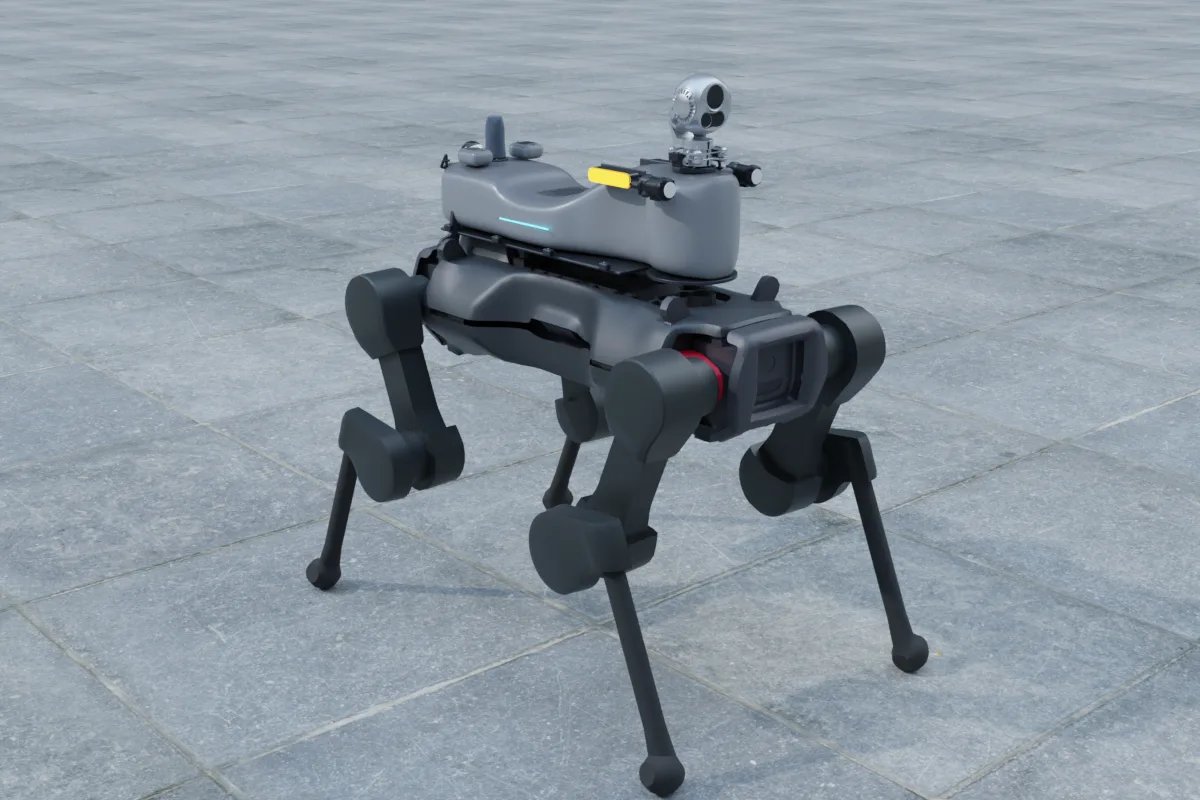
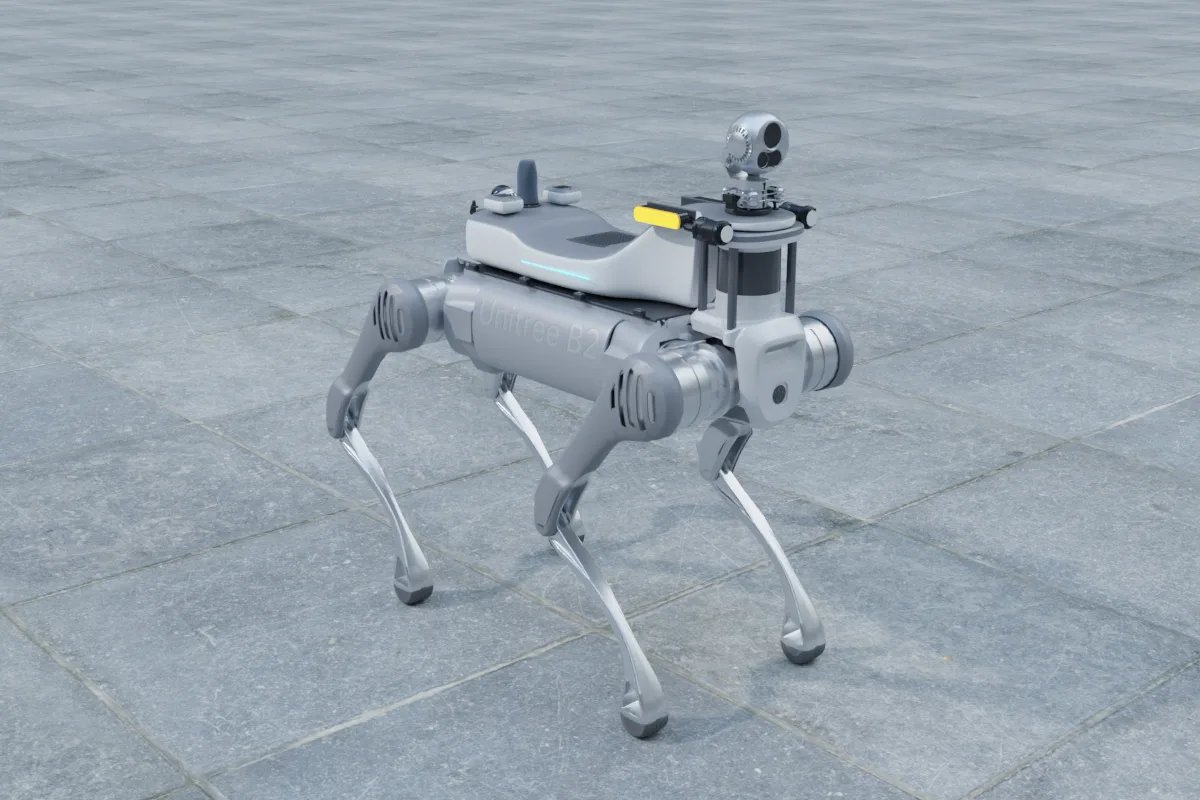
The two robots side by side
| ANYbotics ANYmal D | Unitree B2 | |
|---|---|---|
| Weight | 50 kg; 55.7 kg with the inspection payload | About 60 kg |
| Size (walking) | 930 x 530 x 890 mm | About 1098 x 450 x 645 mm |
| Extra payload | Up to 10 kg additional payload (product page) | More than 40 kg walking |
| Battery | Swappable Li-ion, 932.4 Wh | 58 V, 2250 Wh, quick change |
| Runtime | 90 to 120 min; up to 2 km on a typical inspection mission | Over 5 h unloaded; over 4 h with 20 kg |
| Recharge | 3 h full, 100 min to 70% | Quick battery change supported; swap packs on long shifts |
| Temperature | Specified 0 to 40 degrees C, typical -10 to 50 degrees C | -20 to 55 degrees C |
| Ingress protection | IP67 | IP67 |
| Stairs and steps | Stairs up to 45 degrees, max rise 230 mm, open risers and grated steps; 250 mm step; 300 mm gap | Continuous 20 to 25 cm steps; obstacles up to 40 cm |
| Slope | Plus or minus 30 degrees | Above 45 degrees |
| Walking speed | 1.3 m/s max, 0.75 m/s recommended | Speed limited in normal use, much higher in special configurations |
| Navigation sensors | 16-channel LiDAR (0.4 to 100 m), depth cameras for 0.3 to 3 m, two tele-operation cameras | Built-in 3D LiDAR, front and rear cameras |
| Inspection head | Included: 20x zoom, 336 x 256 radiometric thermal, ultrasonic microphone, spotlight | Not included; chosen and integrated per project |
| Docking | Docking station and automatic return to charge | Autonomous charging listed as an option |
| Software access | Operator GUI, mission editor, gRPC-based ANYmal API | unitree_sdk2 and unitree_ros2, user development computer |
Inspection capability out of the box
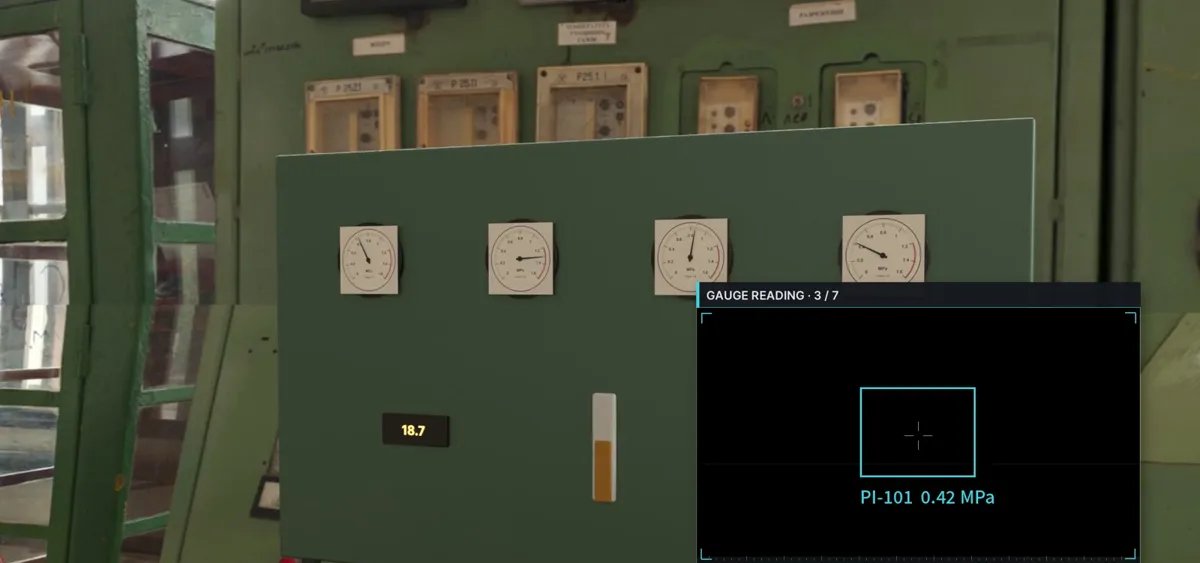
The real difference is not legs or motors, it is what arrives in the box. ANYmal D's inspection payload is a 5.7 kg pan-tilt head (229 x 177 x 246 mm) with a zoom camera up to 4K at 30 FPS, a radiometric thermal camera covering -40 to +550 degrees C, an ultrasonic microphone sampling up to 384 kHz and a spotlight of 1895 lm continuous. Pan is plus or minus 165 degrees and tilt -90 to +180 degrees. On top of that hardware, ANYbotics supplies trained instrument reading for analog gauges, thermal hot-spot reporting, sound recording with frequency analysis, rule-based missions that change when a threshold is crossed, and PDF or XML inspection reports.
A B2 starts as a carrier. To reach a similar result you add a dual-spectrum pan-tilt camera, an acoustic imager or ultrasonic sensor, gas sensors if the site needs them, a payload computer and the software that ties inspection points to the map. As a reference from our parts catalog, a Hikvision HM-TD5737T-4/W dual-spectrum pan-tilt weighs about 2.0 kg and draws up to 20 W, a CRYSOUND CRY8124 acoustic imager about 1.4 kg, and a Livox Mid-360 LiDAR 265 g at 6.5 W. Even with a structure and wiring, a full inspection set stays well inside the B2's walking payload, which is why the B2 is usually chosen when the payload list keeps growing.
Payload headroom and runtime
ANYmal D's own inspection head already uses part of its budget, and the product page lists up to 10 kg of additional payload, with options for up to two gas concentration sensors and an acoustic imager. That is enough for the standard ANYbotics options, but it leaves little room for a second LiDAR, a robot arm, a large gas analyser or a 5G and RTK GNSS block. The B2 is rated for more than 40 kg walking, so the payload decision becomes a question of centre of mass and cable routing rather than weight limits. For working through a budget, see how to calculate the weight and power budget of a robot payload.
Runtime follows battery size. ANYmal D carries 932.4 Wh and plans for 90 to 120 minutes, relying on its docking station to keep missions going. The B2 carries 2250 Wh and Unitree states over 4 hours with a 20 kg load. On a long outdoor route with few places to dock, the B2 covers more ground per battery; in a compact plant with a dock on each floor, ANYmal's shorter runtime matters less.
Environment and terrain
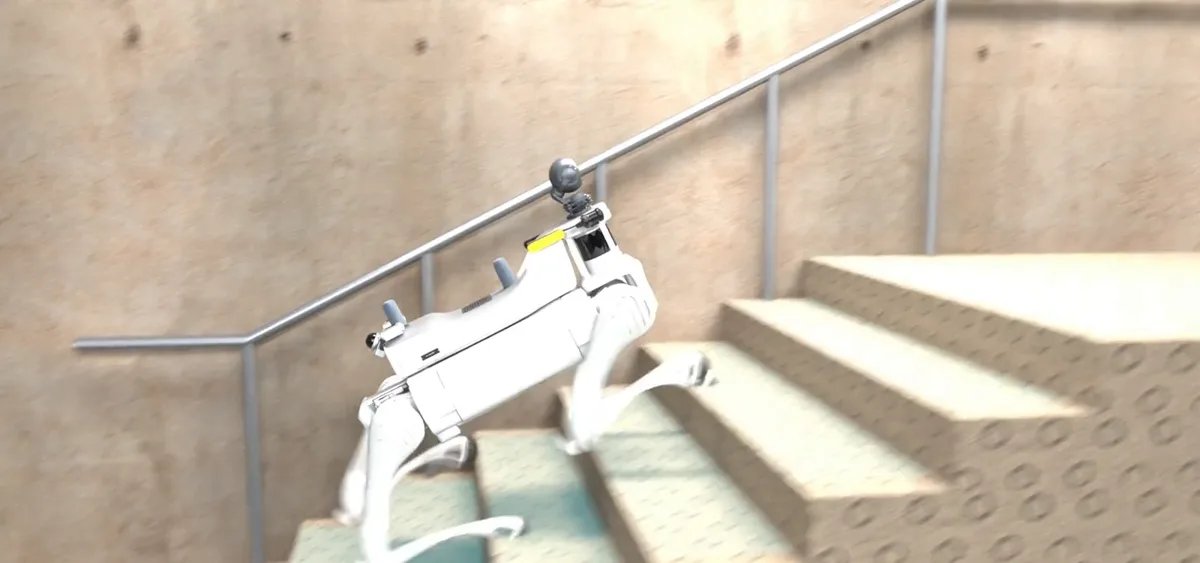
Both robots are IP67. ANYmal D's specification is precise about industrial stairs: up to 45 degrees, a maximum rise of 230 mm, a minimum run of 210 mm, a minimum width of 800 mm, open risers and grated steps. It also lists 600 mm narrow passages and 600 mm suspended clearance. Its specified temperature range, 0 to 40 degrees C, is narrower than the B2's -20 to 55 degrees C, so sites with winter outdoor routes or hot rooms should check the typical range of -10 to 50 degrees C against their own conditions with ANYbotics. Neither of these two models is sold as explosion-proof; ANYbotics offers a separate ANYmal X for hazardous zones.
Software and data integration
With ANYmal D, integration work is mostly at the data level. The ANYmal Server syncs results on-premise or in the cloud, and the gRPC ANYmal API exposes mission control and data to third-party portals. Missions are taught by walking the robot through the plant (Show and Go) or set up from imported CAD or BIM. You work within the vendor's software stack, and new inspection types depend on what ANYbotics supports.
With the B2, you or an integrator own the whole stack: mapping and localisation, inspection point management, docking behaviour, gauge and thermal analysis, alarms and reports. This is more work, but nothing is closed. A typical setup runs ROS 2 on a Jetson Orin class payload computer and talks to the robot over unitree_sdk2. Our guide on who can develop custom software for a robot dog lists what to ask before contracting that work.
What drives the cost
Neither vendor publishes a list price; both are quoted per configuration. The cost drivers differ:
- ANYmal D: the robot with its inspection head, docking stations per floor or area, software licences and support terms, and site deployment. Hardware customisation is limited, so cost is predictable.
- Unitree B2: a lower robot price is typical, but you add the inspection sensors, a payload structure and power board, a docking solution, and software development for inspection logic and reporting. Software is usually the largest and least predictable item.
- Both: number of inspection points, analysis types (gauges, thermal, acoustic, gas), integration with your CMMS or historian, and acceptance testing on site.
Which one to choose
| Situation | Better fit |
|---|---|
| Indoor plant, climate controlled, team wants a supported product | ANYmal D |
| Many grated stairs and narrow walkways, standard gauge and thermal rounds | ANYmal D |
| Outdoor routes below 0 degrees C or above 40 degrees C | Unitree B2 |
| Payload above 10 kg: second LiDAR, arm, gas analyser, RTK and 5G | Unitree B2 |
| Long routes with few docking points | Unitree B2 |
| Custom analysis, own data pipeline or ROS 2 research | Unitree B2 |
Next steps
You can build a B2 inspection configuration in the payload configurator, which totals weight and power as you add parts, and compare details on the Unitree B2 and ANYbotics ANYmal D platform pages. YUANZHI ROBOTICS designs payload structures and power boards through our robot payload service and develops mapping, navigation and inspection software through robot autonomy and quadruped development. For complete systems, see inspection robots.
FAQ
Is ANYmal D or Unitree B2 better for industrial inspection?
ANYmal D is better when you want a supported inspection product with gauge reading, thermal and acoustic checks, docking and reports included. The Unitree B2 is better when you need heavy payloads, longer runtime, a wider temperature range or full control of the software, and are prepared to integrate the inspection stack.
How much payload can ANYmal D carry compared with the B2?
ANYbotics lists up to 10 kg of additional payload for ANYmal, on top of its 5.7 kg inspection head (50 kg robot, 55.7 kg with the head). Unitree lists more than 40 kg walking payload for the B2.
How long do ANYmal D and Unitree B2 run on a charge?
ANYmal D runs 90 to 120 minutes on its 932.4 Wh battery, up to 2 km on a typical inspection mission, and needs 3 hours for a full charge or 100 minutes to 70%. The B2 has a 2250 Wh battery and Unitree states over 4 hours with a 20 kg load.
Can ANYmal D work outdoors in winter?
ANYbotics specifies 0 to 40 degrees C, with a typical range of -10 to 50 degrees C, and IP67 protection. For routes regularly below 0 degrees C, confirm with ANYbotics or consider the B2, which Unitree rates for -20 to 55 degrees C.
Can I write my own software for ANYmal D or Unitree B2?
ANYmal D exposes a gRPC-based ANYmal API for mission control and data integration within the ANYbotics software stack. The Unitree B2 offers unitree_sdk2 and unitree_ros2, so mapping, navigation and inspection logic can be written from scratch on a payload computer.