AgileX Tracer 2.0 for indoor warehouse inspection and inventory: payload options
Updated 2026-11-11 · YUANZHI ROBOTICS engineering team
Short answer: the AgileX Tracer 2.0 is a low indoor UGV base, 702 × 610 × 169 mm and about 54 kg, with a rated payload of about 150 kg (OEM reference figures). For warehouse inspection and inventory it needs three things on top: a 3D LiDAR and a depth camera for navigation in aisles, a mast that lifts cameras or readers to rack height, and a computer that runs localisation and the scanning software. The navigation sensors weigh well under 1 kg, so the payload budget goes to the mast, extra battery and whatever reads your labels. The design work is in mast stability, coverage of the upper rack levels and getting a reliable position in long repetitive aisles.
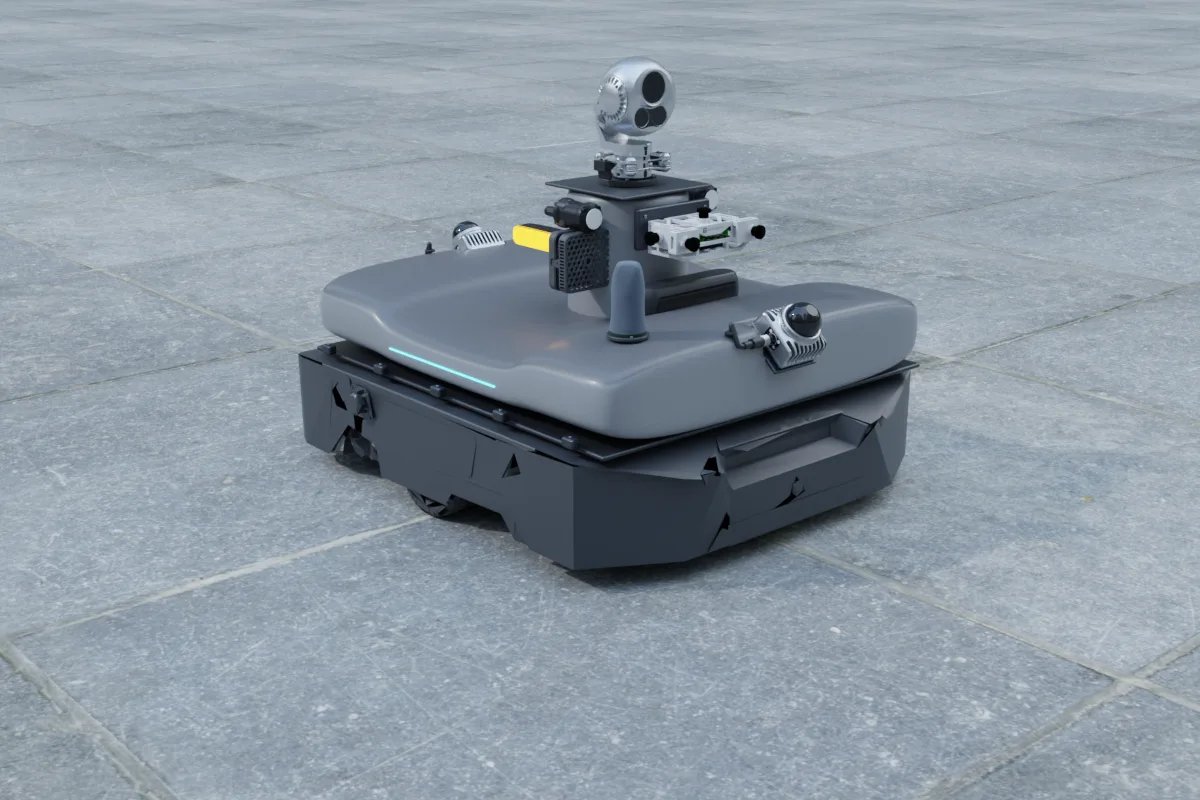
Why a low, flat base suits warehouse work
A warehouse floor is flat and hard, so legs and tracks add cost without adding access. What matters instead is a small footprint, a low deck and enough payload margin to carry a tall structure without tipping. At 169 mm high, the Tracer 2.0 keeps the heavy parts of the vehicle close to the floor, which is exactly what a mast needs underneath it. At 610 mm wide it passes through standard doors and pallet-racking aisles with room to spare, and its differential drive lets it turn on the spot at the end of an aisle.
The limits are just as clear. It is an indoor base for smooth floors. Dock plates, door thresholds, cable covers and expansion joints need checking against the ground clearance in the current AgileX datasheet, and it does not climb stairs or kerbs. If your route leaves the building or crosses rough yard surfaces, look at a four-wheel-drive base instead, or split the job between two robots.
Tracer 2.0 against other indoor bases
The figures below are the reference values we use in our configurator. Check the manufacturer's latest datasheet for your version before you commit.
| Base | Size (mm) | Weight | Rated payload | Best for |
|---|---|---|---|---|
| AgileX Tracer 2.0 | 702 × 610 × 169 | about 54 kg | about 150 kg | Tall masts, heavy scanner sets, added battery |
| AgileX Tracer | 685 × 570 × 155 | about 30 kg | about 100 kg | Lighter masts, narrower aisles |
| AgileX Scout Mini | 612 × 580 × 245 | about 23 kg | about 10 kg | Sensor-only mapping and walk-through inspection |
| Clearpath Dingo-D | 681 × 513 × 168 | about 13 kg | about 20 kg | Research labs, light sensor loads |
| Clearpath Ridgeback | 960 × 793 × 296 | about 135 kg | about 100 kg | Omnidirectional moves, mobile manipulation |
The pattern is that a rack-height mast rules out the 10 to 20 kg class quickly. Once you add a mast, its base plate, a camera head and a second battery, you want a base that carries the load at a small fraction of its rating. Our Scout Mini indoor mapping guide covers the case where a sensor-only payload is enough.
Navigation sensors for long aisles
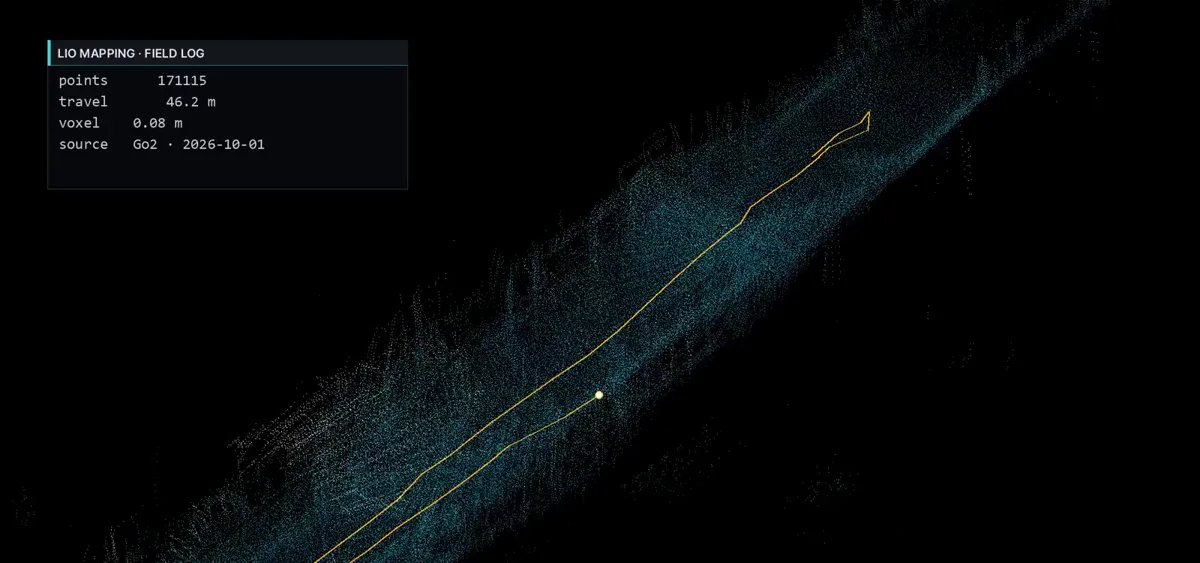
Warehouse aisles are a hard case for localisation: long, parallel and nearly identical, with contents that change every day. A 2D scanner at ankle height sees pallet feet and little else. A 3D LiDAR mounted above the deck sees uprights, beams, ceiling structure and end-of-aisle walls, which change far less than the stock.
- Livox Mid-360: 265 g, 6.5 W, 360° × 59° field of view, about 70 m range. Its upward-looking field of view picks up roof trusses and upper rack beams, which makes it a good default indoors.
- Ouster OS0: 430 g, 20 W, 360° × 90° field of view, about 35 m range. The wider vertical view helps when the robot runs close to tall racking on both sides.
- Intel RealSense D435i: 75 g, 2.5 W, 87° × 58°, useful to about 3 m. Mount it low and forward, tilted down, to catch pallet forks, wrapped film on the floor and other obstacles that sit below the LiDAR's view.
Mount the LiDAR ahead of the mast or on a short offset arm, so the mast does not cut a blind sector out of the scan. If the mast must sit in the field of view, the driver has to mask that sector, and the localisation tuning should assume it.
The inspection and inventory head
What goes on the mast depends on what you want to count or check.
- Visual records of every bay: a panoramic camera such as the Insta360 X4 (203 g) or Ricoh THETA X (170 g) at one or two heights gives a time-stamped picture of each rack position for remote review, with very little integration effort.
- Label and barcode reading: fixed industrial cameras with their own lighting, aimed at each rack level. Resolution, lens and working distance must be chosen from your smallest label and your aisle width, so this part is always sized per site.
- RFID inventory: reader antennas on both sides of the mast. Read rate depends on the tags, the goods and the metal around them, so plan a trial in your own aisle before fixing the antenna layout.
- Temperature checks: a thermal core such as the Teledyne FLIR Boson 640 (7.5 g, 0.5 W) on the head finds warm motors on conveyors, overloaded distribution boards and hot spots in charging areas during the same run.
A fixed mast with several cameras is simpler and more robust than a lifting mast with one. A lifting mast earns its place when racks are very high or when door heights force the robot to lower the head between zones.
Compute, power and weight
For LiDAR localisation plus image capture and upload, a Jetson Orin Nano 8GB (67 TOPS, 25 W peak) is enough. If label detection and reading run on the robot rather than on a server, use a Jetson Orin NX 16GB (157 TOPS, 40 W peak). A Mid-360, a D435i and an Orin NX together draw under 50 W at peak, and the two sensors weigh 340 g. Camera lighting, RFID readers and a lifting mast usually draw more than the navigation set, so list them first in the power budget. Our guide to the weight and power budget of a robot payload shows how to lay that table out.
Weight is rarely the limit on a 150 kg-class base. Height is. Keep batteries and the computer box on the deck, keep the mast head light, and check stability under an emergency stop at full speed, not just at rest.
Software to plan for
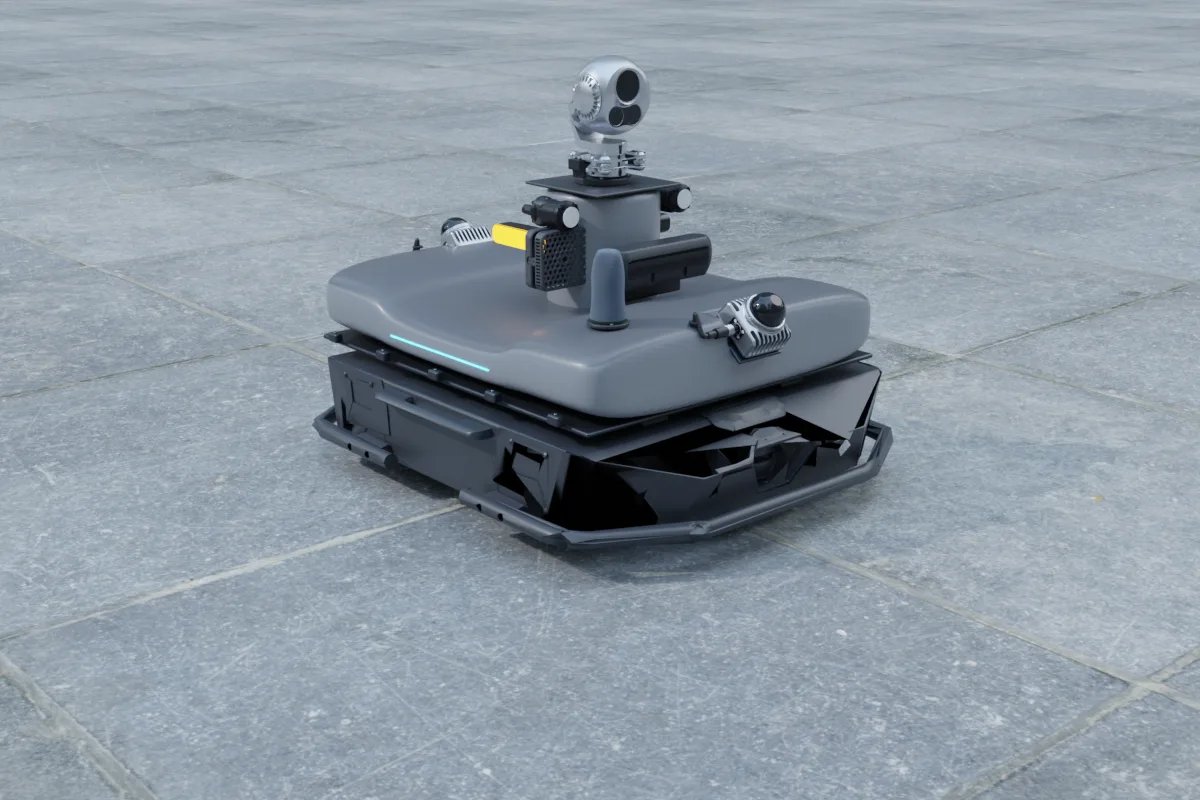
The hardware is the shorter half of the project. The software list normally includes mapping the site once and localising against that map as stock changes, a route that visits every aisle and stops or slows at each bay, tagging each image or read with the rack position, comparing the result with the warehouse management system, safe behaviour around forklifts and people, and automatic return to a charger. Ask any integrator which of these they deliver and how the results reach your existing systems.
Next step
You can lay out a Tracer 2.0 sensor set and see its weight and power in our online payload configurator, then send it to us for review. Platform details are on the AgileX Tracer 2.0, AgileX Tracer and Clearpath Ridgeback pages, and our scope of work is described under UGV payload integration, inspection robots and robot autonomy development.
FAQ
How much payload can the AgileX Tracer 2.0 carry?
The OEM reference figure is about 150 kg on a base of about 54 kg measuring 702 × 610 × 169 mm. A navigation set of a Livox Mid-360 and a RealSense D435i weighs 340 g, so almost all of the capacity is available for a mast, scanners and extra battery. Check the current AgileX datasheet for your version.
Can an AgileX Tracer be used for warehouse inventory scanning?
Yes, as the mobile base. It needs an added payload: a 3D LiDAR for localisation, a mast that carries cameras or RFID antennas to rack height, a computer, and software that tags every image or read with a rack position and compares it with the warehouse management system.
What sensors does an indoor warehouse robot need to navigate aisles?
A 3D LiDAR mounted above the deck is the main sensor, because it sees rack uprights, beams and roof structure that stay the same while stock changes. Add a depth camera mounted low and tilted down to catch pallet forks and debris below the LiDAR's view, plus wheel odometry and an IMU.
Tracer 2.0 or Scout Mini for indoor inspection?
Choose the Tracer 2.0, with about 150 kg payload, when the robot carries a tall mast, several cameras or added batteries. Choose the Scout Mini, with about 10 kg payload, when a sensor-only payload for mapping and walk-through inspection is enough and you want a smaller, lighter robot.
Who can build a warehouse inspection payload on an AgileX Tracer 2.0?
A UGV payload integrator designs the mast, mounts, power conversion and harness, and delivers the drivers, navigation and scanning software. YUANZHI ROBOTICS does this for the Tracer 2.0 and other UGVs, and you can sketch a configuration in its online payload configurator first.