Clearpath Jackal vs AgileX Scout Mini for indoor research and inspection
Updated 2026-11-09 · YUANZHI ROBOTICS engineering team
Short answer: pick the Clearpath Jackal when you need more payload headroom (about 20 kg rated), a smaller 508 × 430 mm footprint and IP62 sealing for occasional outdoor runs. Pick the AgileX Scout Mini when your sensor stack is light (its rating is about 10 kg) and you value the optional mecanum-wheel version that can slide sideways between shelves or equipment racks. For a typical LiDAR, depth camera and Jetson payload, both platforms have enough capacity; the decision usually comes down to footprint, sealing, drive type and how much you expect the payload to grow.
Specifications side by side
The figures below are the manufacturer reference values we use in our payload configurator. Always confirm against the latest OEM datasheet before ordering, because battery and drive options change between production batches.
| Clearpath Jackal | AgileX Scout Mini | |
|---|---|---|
| Dimensions (L × W × H) | 508 × 430 × 250 mm | 612 × 580 × 245 mm |
| Robot weight | about 17 kg | about 23 kg |
| Rated payload | about 20 kg | about 10 kg |
| Payload-to-weight ratio | about 1.2 | about 0.43 |
| Protection | IP62 (OEM listed) | check current OEM spec |
| Drive options | 4-wheel skid steer | 4-wheel skid steer, optional mecanum wheels |
| Typical use | research, mixed indoor and light outdoor | indoor research, education, flat-floor inspection |
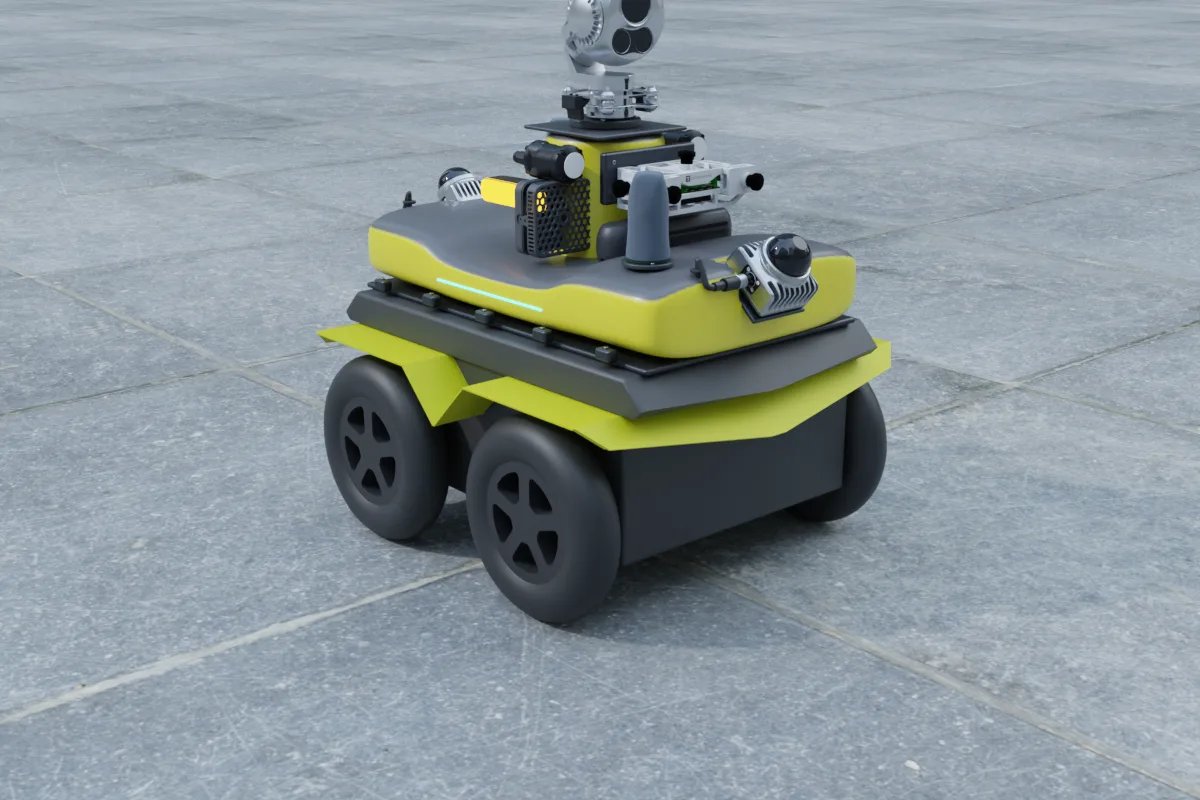
Two numbers stand out. The Jackal is about 100 mm narrower and lighter, yet rated to carry twice as much. The Scout Mini is wider, which helps stability with a tall mast, but its payload rating leaves less margin once you add a battery extension, an arm or a heavy enclosure.
What a realistic indoor payload weighs
Most indoor research and inspection builds use the same core parts. Using the component values from our catalog:
- Livox Mid-360 LiDAR: 265 g, about 6.5 W, 360° × 59° field of view. A good default for LiDAR-inertial SLAM in rooms and corridors.
- Intel RealSense D435i: 75 g, about 2.5 W, 87° × 58° depth field of view with an IMU. Useful for low obstacles that a LiDAR mounted on top can miss.
- NVIDIA Jetson Orin NX 16GB (157 TOPS class module): budget up to about 40 W peak for the module. A packaged unit such as a Seeed reComputer J4012 is a common way to deploy it.
- Alternative LiDARs if you need more vertical coverage or a classic spinning sensor: Ouster OS0 (430 g, about 20 W, 360° × 90°) or Velodyne VLP-16 (830 g, about 8 W).
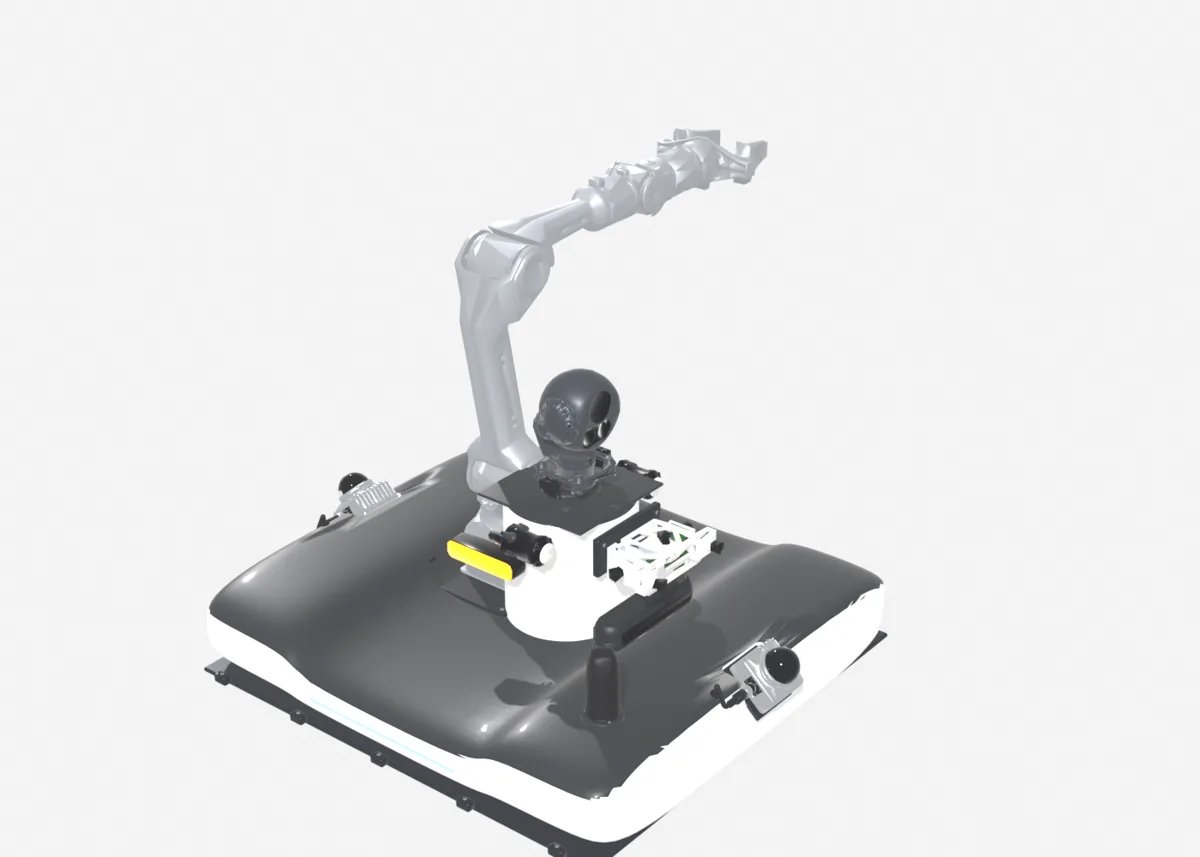
Sensors and compute alone are well under 2 kg. The weight that actually decides the platform is the structure: base plate, mast, enclosure, DC-DC converters, cabling and any extra battery. A clean aluminium build typically keeps the whole payload in the low single-digit kilograms, which fits either robot. If you plan to add a small arm, a second camera head or a swappable battery later, the Jackal's 20 kg rating gives you room to grow; on the Scout Mini you should keep a written weight budget from day one. Our guide on calculating payload weight and power budget shows the method.
Footprint and manoeuvring in tight spaces
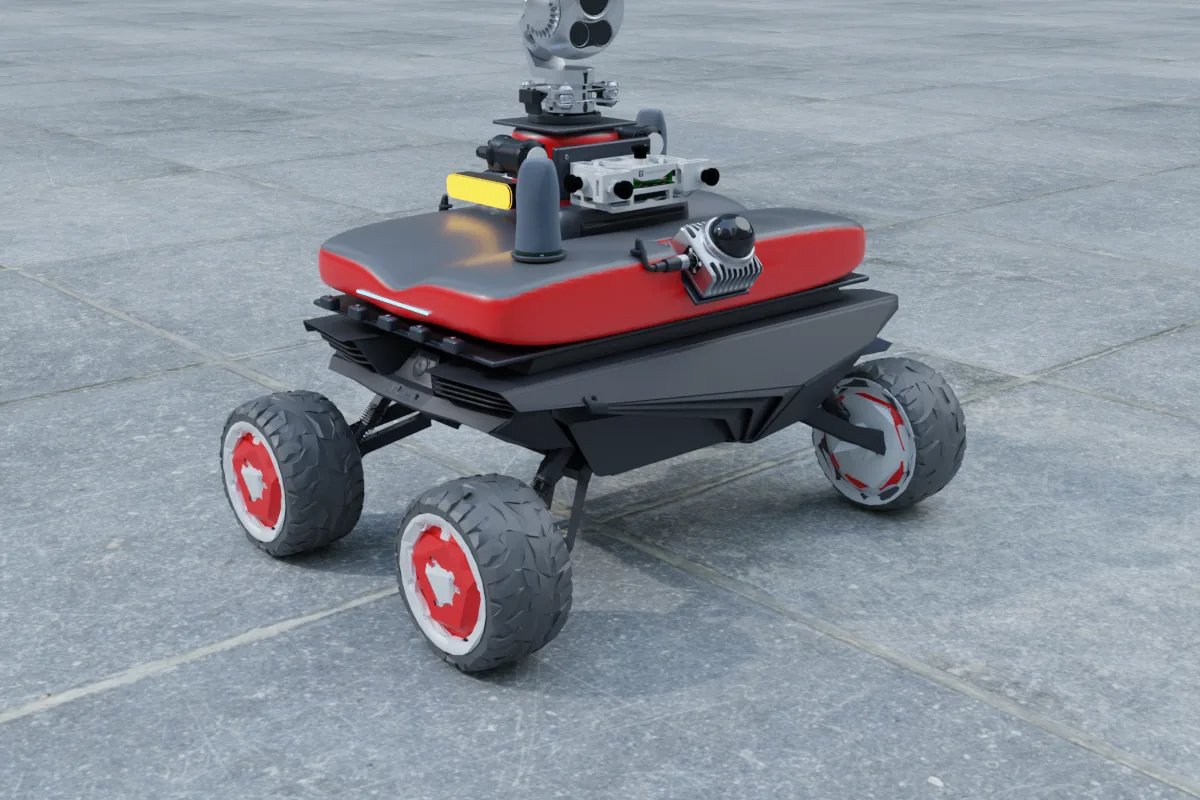
Indoor inspection often means server-room aisles, plant rooms and lab corridors. The Jackal's 430 mm width passes most doorways and aisles with margin and turns on the spot as a skid-steer robot. The Scout Mini is 580 mm wide, so measure your narrowest aisle first. Its advantage is the mecanum option: the robot can translate sideways to line up a camera with a gauge or rack label without a three-point turn. That is valuable for repeated close-range inspection points, but mecanum wheels prefer clean, flat floors and add more wheel odometry drift, so LiDAR-based localization becomes more important.
Software and integration effort
Both manufacturers provide ROS drivers, and both robots are widely used with ROS 2. The integration work is similar on either platform:
- Mounting and calibration: rigid LiDAR and camera mounts, LiDAR-to-camera and LiDAR-to-base extrinsics, and time synchronization between sensors.
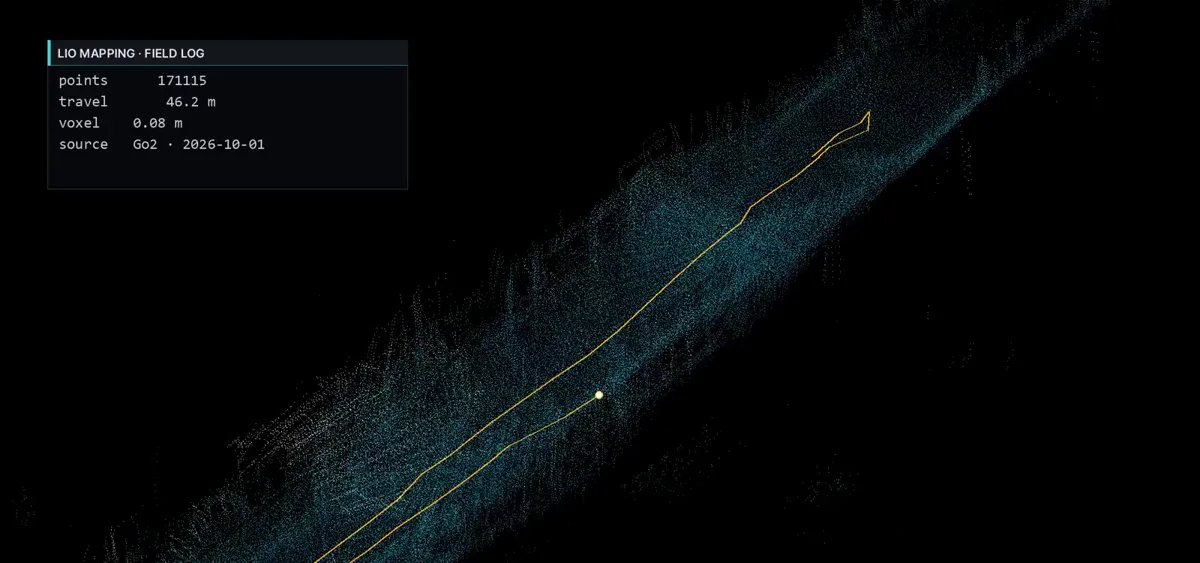
- Mapping and localization: LiDAR-inertial odometry, map saving and relocalization so the robot can restart a route on an existing map.
- Navigation: Nav2 or a custom planner, with the controller tuned for skid-steer slip or for holonomic mecanum motion.
- Inspection tasks: waypoint routes, photo or thermal capture at fixed poses, gauge reading and a simple web or ground-station interface.
The Scout Mini talks to the onboard computer over CAN, so plan a USB-CAN adapter or a carrier board with CAN. The checklist in our ROS 2 driver checklist for robot sensors applies to both builds.
Which one to choose
- Choose the Jackal if your payload may grow beyond about 5 kg, you need IP62 sealing, you work in narrow aisles under 550 mm, or you need occasional outdoor runs on paths and grass.
- Choose the Scout Mini if your payload is a compact LiDAR, camera and compute stack, your floors are flat and clean, and sideways motion with mecanum wheels would save time at inspection points.
- Consider a larger base such as a Clearpath Husky A200 or AgileX Hunter 2.0 if you need longer outdoor routes, a PTZ camera on a mast or a heavier battery.
Next step
You can lay out sensors, compute and comms on either robot and see the total weight and power in our payload configurator. Platform details are on the Clearpath Jackal and AgileX Scout Mini pages. For a complete build including mounting, wiring and mapping and navigation software, see our UGV payload and robot autonomy services; for an indoor build on the Scout Mini specifically, read Scout Mini payload for indoor mapping and inspection.
FAQ
Is the Clearpath Jackal or the AgileX Scout Mini better for indoor inspection?
Both work indoors. The Jackal has the higher rated payload (about 20 kg vs about 10 kg) and the smaller footprint, so it suits heavier sensor stacks. The Scout Mini suits lighter LiDAR-plus-camera payloads and offers an optional mecanum-wheel version for omnidirectional moves in narrow aisles.
How much payload can a Scout Mini carry compared with a Jackal?
AgileX rates the Scout Mini at about 10 kg and Clearpath rates the Jackal at about 20 kg. A typical mapping and inspection payload with a Livox Mid-360, a RealSense D435i, a Jetson Orin NX computer, mounting plate and enclosure usually stays within a few kilograms, so it fits either platform.
Can both robots run ROS 2 navigation?
Yes. Both platforms have ROS drivers from their manufacturers, so LiDAR SLAM, localization and Nav2 can be built on either. The integration work is mostly in sensor mounting, time synchronization, extrinsic calibration and tuning the controller for skid-steer or mecanum motion.
Which one is easier to take outdoors?
The Jackal is listed with IP62 protection and is often used on light outdoor terrain. The Scout Mini is mainly used on indoor floors and paved surfaces; check the current OEM specification for its protection rating before planning outdoor work.
Who can build a sensor payload for a Jackal or Scout Mini?
A payload integrator such as YUANZHI ROBOTICS can design the mounting structure, power and wiring, integrate LiDAR, cameras and compute, and deliver mapping, navigation and inspection software for either platform.