Clearpath Husky A200 vs AgileX Hunter 2.0 as an inspection or patrol UGV base
Updated 2026-10-27 · YUANZHI ROBOTICS engineering team
Pick the Clearpath Husky A200 when the site is rough, cramped or unpaved and the robot must turn in place: it is a compact skid-steer base (about 50 kg, rated payload about 75 kg) with a long ROS research track record. Pick the AgileX Hunter 2.0 when the job is long patrol routes on roads, campuses or parks: it uses Ackermann steering and carries about twice the rated payload (about 150 kg), which matters once you add a heavy dual-spectrum PTZ, loudspeaker and lights. Terrain and route shape decide first; payload weight decides second.
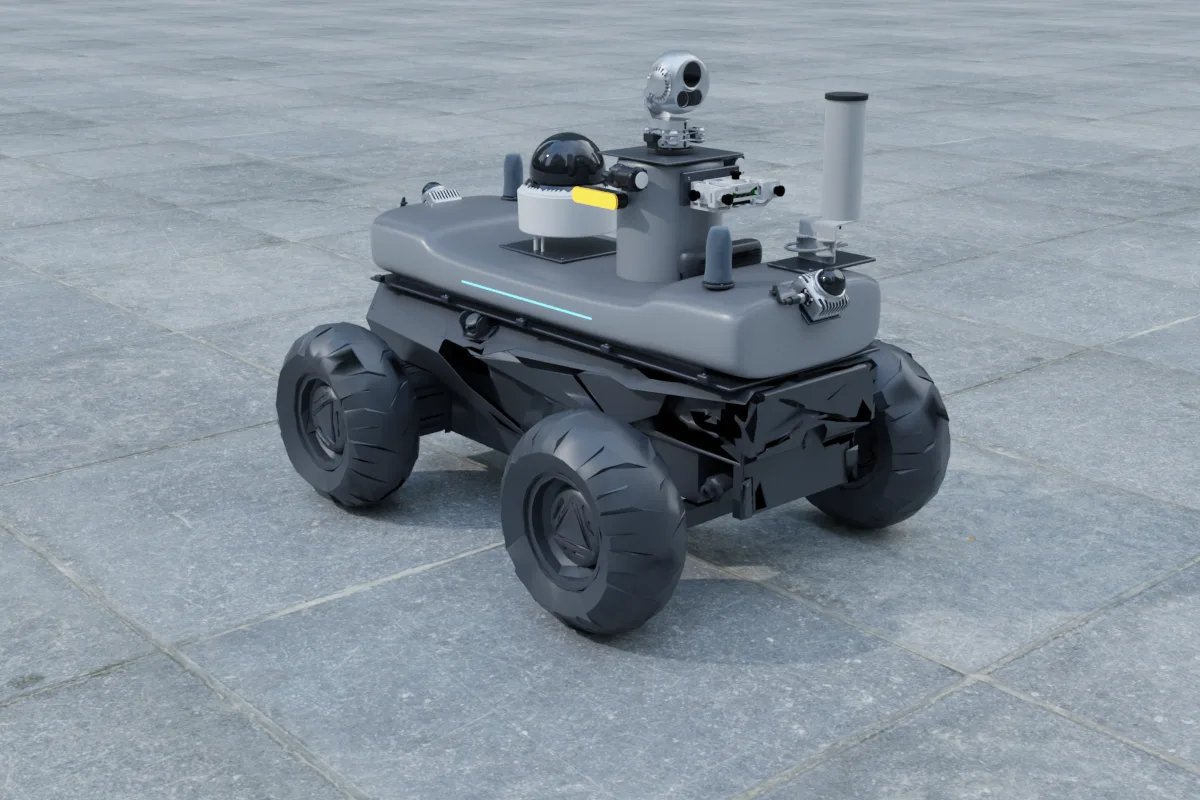
Side-by-side: the numbers that matter for a payload
These are the platform figures we use when sizing payloads in our configurator. They are manufacturer reference values; always check the latest official datasheet before you commit.
| Clearpath Husky A200 | AgileX Hunter 2.0 | |
|---|---|---|
| Size (L × W × H) | 990 × 670 × 390 mm | 980 × 745 × 380 mm |
| Robot weight | about 50 kg | about 65 kg |
| Rated payload | about 75 kg | about 150 kg |
| Steering | skid-steer, 4 wheels, turns in place | Ackermann (car-like), needs a turning radius |
| Best terrain | gravel, grass, mud, mixed indoor/outdoor | paved roads, campuses, parks, perimeter paths |
| Typical role | research, site inspection, rough-ground patrol | campus logistics, long-route security patrol |
The two footprints are almost the same, so the mounting area on top is not what separates them. The difference is how they move and how much margin they leave for heavy equipment.
Steering: the decision most teams underestimate
Skid-steer lets the Husky rotate on the spot, reverse out of dead ends and squeeze around equipment in plant rooms or between containers. The cost is wheel scrub: on asphalt and concrete, every turn drags the tyres sideways, which wears tyres, draws more current and adds vibration to the payload. That vibration is worth considering if you run a long-focal-length zoom camera or a LiDAR-inertial mapping stack.
Ackermann steering on the Hunter 2.0 behaves like a car. Turns are smooth and efficient, which suits patrols of several kilometres on roads, but it cannot turn in place. Your navigation stack needs a planner that respects a minimum turning radius (for example a Hybrid A* or Reeds-Shepp style planner rather than a pure differential-drive local planner), and the route needs space for three-point turns at dead ends. If your patrol map has narrow corridors that end in walls, that is a strong argument for the Husky.
A real patrol payload on each base
A typical outdoor security patrol set from our configurator looks like this (weights and power from manufacturer datasheets as listed in our catalog):
| Component | Weight | Power |
|---|---|---|
| Dahua DH-TPC-PT8X20 heavy-duty dual-spectrum PTZ | about 18 kg | about 70 W |
| Livox Mid-360 LiDAR | 265 g | 6.5 W |
| Loudspeaker and LED light combo (reference spec) | 650 g | 30 W |
| NVIDIA Jetson Orin NX 16GB module | module only | up to 40 W |
| 2020 aluminium extrusion frame | about 2.4 kg | — |
| Approximate total (before 5G, cables, enclosure) | about 21.3 kg | about 147 W peak |
On the Husky that is roughly 28% of the rated payload; on the Hunter 2.0 roughly 14%. Both are within rating, but the Hunter leaves room for a second camera, a mast, a gas detector or a battery extension without re-engineering the mount. On the Husky, keep the PTZ low and close to the centre: the base is only 390 mm tall, and an 18 kg camera on a tall mast moves the centre of gravity up quickly, which hurts stability on slopes and kerbs.
If you do not need a long-range zoom, a compact dual-spectrum gimbal such as the Hikvision HM-TD5737T-4/W (about 2 kg, about 20 W) cuts the payload by about 16 kg and makes the Husky a much easier fit. Our guide on choosing a thermal or dual-spectrum gimbal compares these weight classes.
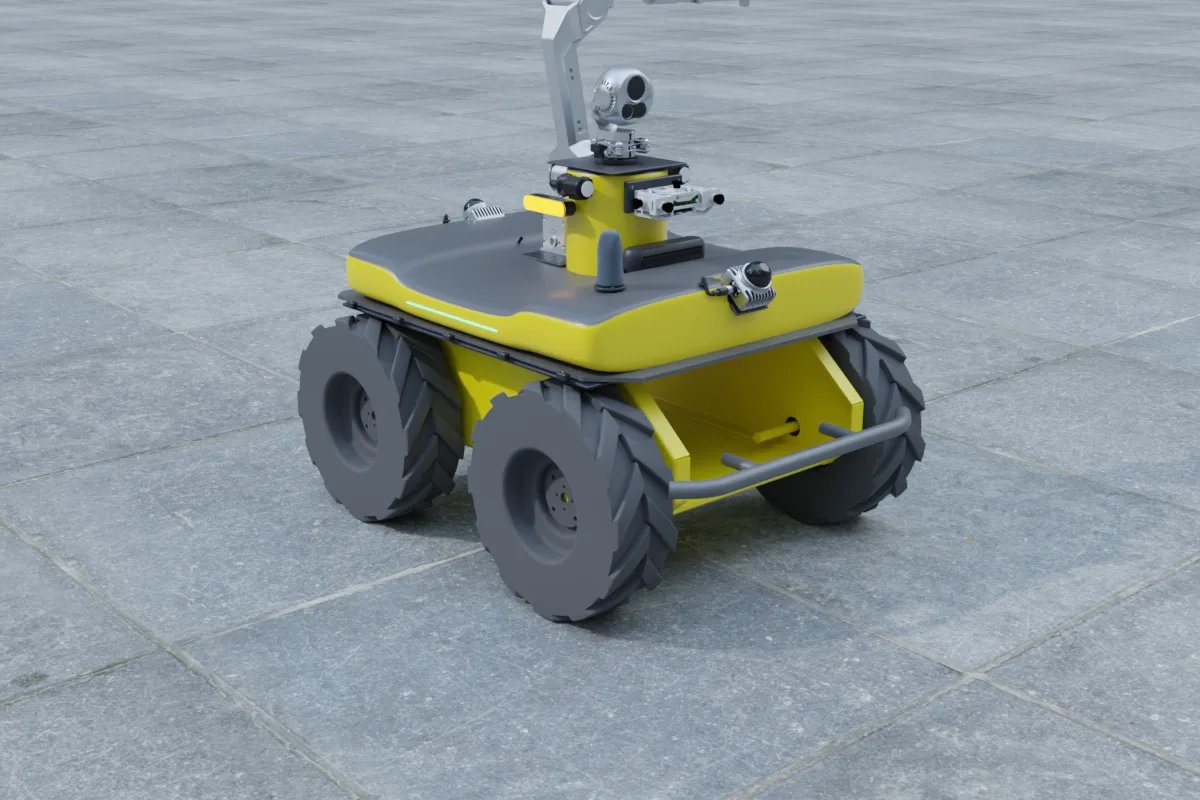
Power and endurance
About 147 W peak from the payload is significant on either base. Plan the power path explicitly: an isolated DC-DC stage from the robot battery for the compute and LiDAR, a separate high-current rail for the PTZ heaters and motors, and a loudspeaker rail that will not brown out the computer when it starts. Because skid-steer turning draws extra current, a Husky running a heavy payload on long paved routes will usually see its endurance drop more than a Hunter doing the same route. Measure endurance with the real payload switched on rather than relying on the base's unloaded figure.
Software and integration
Both bases can be driven from ROS 2. The Husky has years of community material as a ROS research robot; the Hunter 2.0 is commanded over CAN through AgileX's SDK and ROS packages. In our experience the base driver is the smallest part of the work. The effort goes into LiDAR-inertial mapping, localisation that survives open car parks and repetitive fences, a planner suited to the steering type, PTZ preset patrols, thermal alarm logic, 5G video uplink and the ground-station interface.
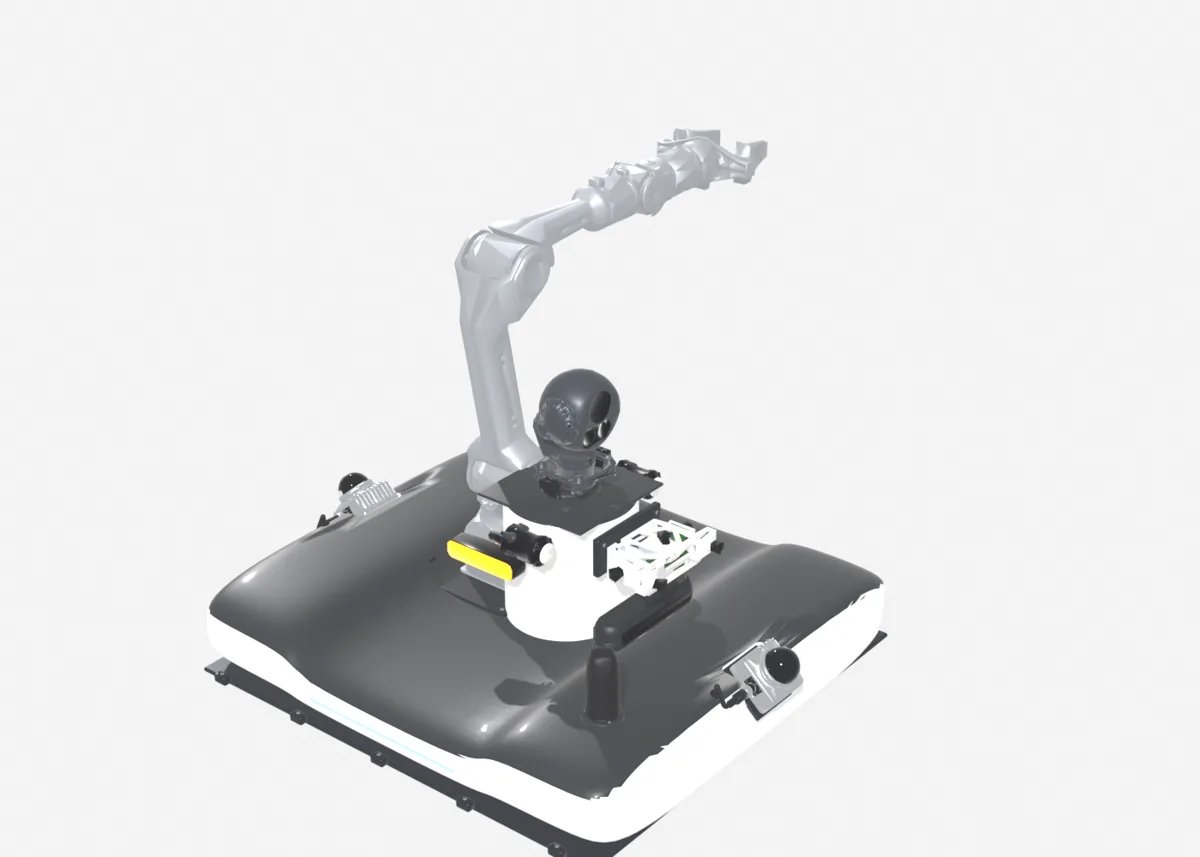
Quick decision guide
- Mostly unpaved, tight or mixed indoor/outdoor sites: Husky A200.
- Long patrol loops on roads, campuses or parks: Hunter 2.0.
- Heavy PTZ plus extras (mast, gas detector, arm): Hunter 2.0 for payload margin.
- Research team that wants maximum community ROS material: Husky A200.
- Compact gimbal and LiDAR only: either works; choose by terrain.
Next steps
Build your payload in our online payload configurator to see total weight and peak power against each base's rating, and compare the platform pages for the Clearpath Husky A200 and the AgileX Hunter 2.0. For a complete system, see our UGV payload integration, inspection robot and autonomy and navigation development services.
FAQ
Is the Clearpath Husky or the AgileX Hunter better for security patrol?
For patrols on paved roads and campuses the Hunter 2.0 usually fits better: Ackermann steering is gentle on tyres and pavement over long routes, and its rated payload of about 150 kg leaves plenty of margin for a heavy dual-spectrum PTZ, loudspeaker and lights. The Husky is the better pick when the route includes gravel, grass, mud or tight spaces where it must turn in place.
Can a Clearpath Husky A200 carry a heavy PTZ thermal camera?
Yes. A heavy-duty dual PTZ such as the Dahua DH-TPC-PT8X20 weighs about 18 kg; with LiDAR, speaker and a 2020 aluminium frame the payload is around 21 kg, roughly 28% of the Husky's rated 75 kg. Keep the camera low and centred because the Husky is only 390 mm tall and a tall mast raises the centre of gravity.
Can the Hunter 2.0 turn in place like the Husky?
No. The Hunter 2.0 uses Ackermann (car-like) steering, so it needs a turning radius and route planning has to respect that. The Husky A200 is skid-steer and can rotate on the spot.
Which UGV is easier to integrate with ROS 2?
Both can be driven from ROS 2. The Husky has a long history as a ROS research platform with extensive community material; the Hunter 2.0 is controlled over CAN through AgileX's SDK and ROS packages. In practice the integration effort is dominated by your payload, navigation stack and power distribution, not by the base driver.
Who can build an inspection payload for a Husky or Hunter?
YUANZHI ROBOTICS designs the mounting structure, harness and power distribution, integrates compute, LiDAR, cameras and 5G, and develops mapping, navigation and recognition software for both platforms.