Best depth camera for a robot dog: RealSense D435i vs D455 vs stereo alternatives
Updated 2026-11-16 · YUANZHI ROBOTICS engineering team
The best depth camera for a robot dog depends on what you want it to see. For obstacles, steps and curbs within about 3 m of the legs, a compact stereo camera like the Intel RealSense D435i or Orbbec Gemini 335 is the usual choice. For depth farther out, a longer-baseline camera like the D455 or Gemini 335L is better. For wet, dusty or high-vibration outdoor work, a sealed GMSL2 camera like the Stereolabs ZED X is worth the extra integration work. This guide compares the common options with figures from our payload catalog and explains how to choose.
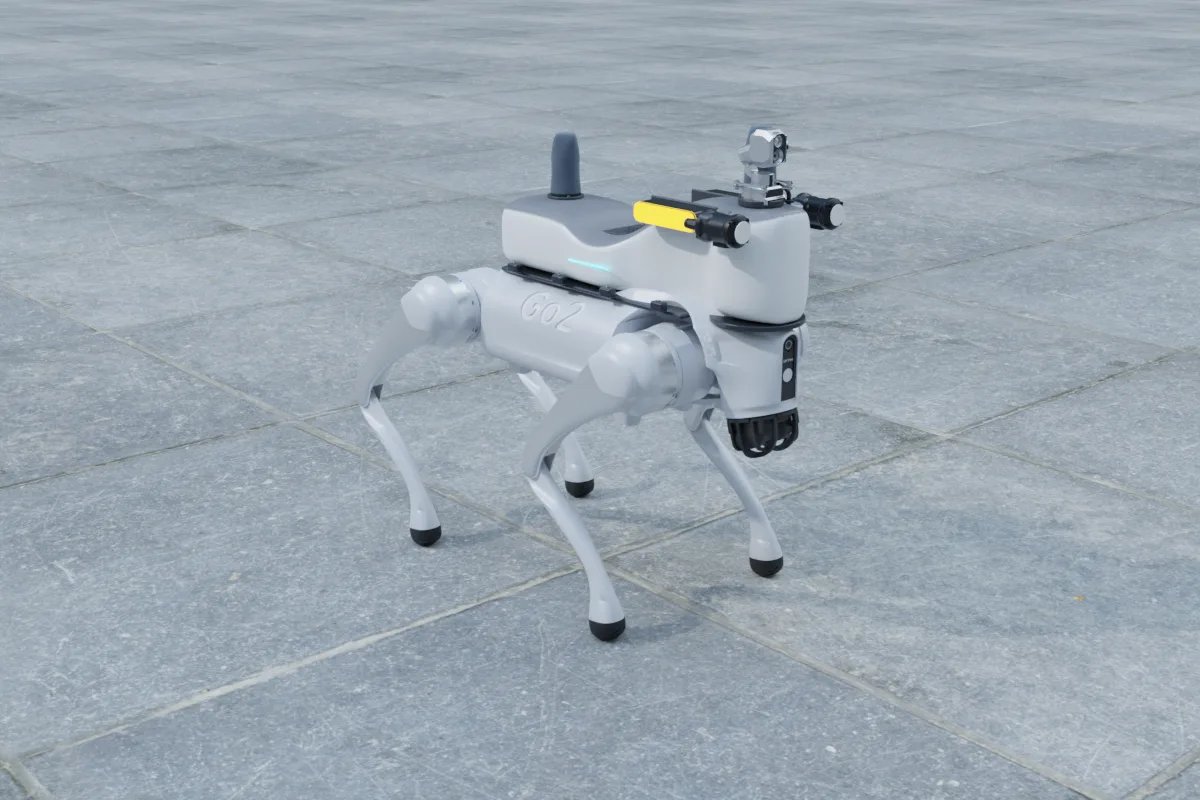
Start with the job, not the spec sheet
On a quadruped, a depth camera usually does one of three jobs, and each one favours a different camera:
- Near-field safety: seeing low obstacles, step edges, cables on the floor and people's feet in the zone directly ahead of the legs, where a roof-mounted LiDAR often has a blind spot. Short range is fine; low mass, low power and a wide view matter most.
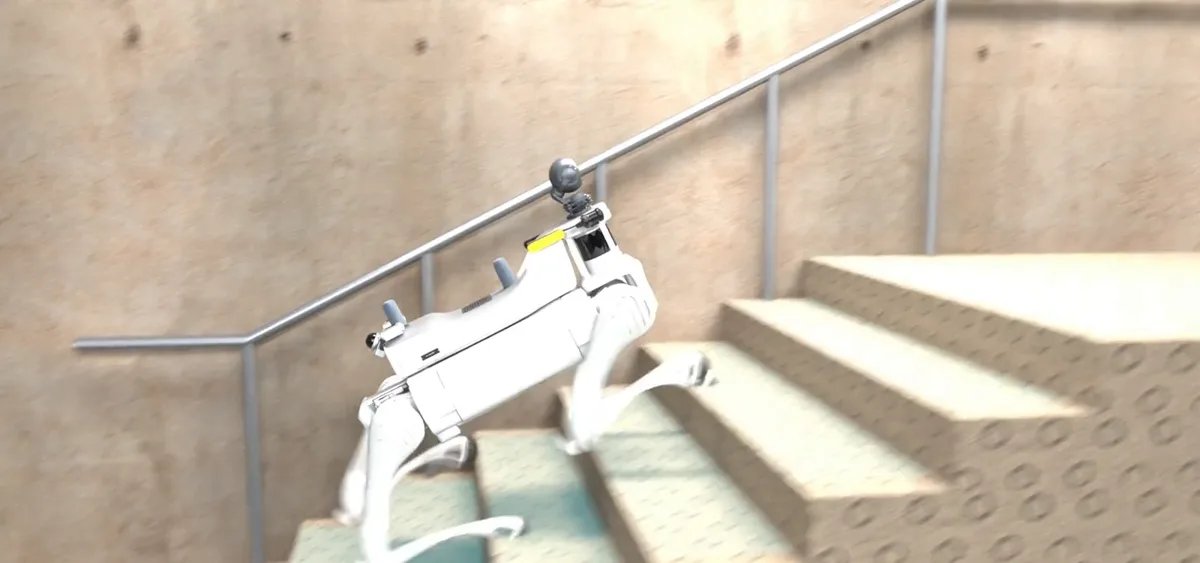
- Terrain and stairs: building a local height map so the gait or planner can place feet. The camera must look down at the ground ahead, so the mounting angle matters as much as the model.
- Perception at a distance: measuring objects or people several metres away, for example to stop in front of a gauge or keep distance from a worker. Here the stereo baseline, which sets how fast depth error grows with distance, becomes the deciding factor.
If the robot already carries a 3D LiDAR for mapping, the depth camera is almost always doing the first two jobs. That points you toward small, light cameras rather than the longest-range model.
Comparison of common depth cameras for robot dogs
The table uses mass, power and size from our payload configurator catalog, which takes them from the manufacturers' published data. Range is the vendor-stated ideal or recommended range, not a guaranteed accuracy figure. Blank cells mean we do not have a confirmed number.
| Camera | Link | Size (mm) | Mass | Power | Depth view | Stated range | Best use on a robot dog |
|---|---|---|---|---|---|---|---|
| Intel RealSense D405 | USB | 42 x 23 x 42 | 60 g | 1.55 W | 87 x 58 deg | 0.5 m | Close-range work, e.g. a camera on an arm gripper; too short for walking |
| Intel RealSense D435i | USB | 90 x 25 x 25 | 75 g | 2.5 W | 87 x 58 deg | 3 m | Front obstacle and step camera on small and mid-size quadrupeds |
| Intel RealSense D455 | USB | 124 x 26 x 29 | - | - | 87 x 58 deg | 6 m | Longer forward depth where there is room for a wider body |
| Intel RealSense D457 | GMSL | 124 x 26 x 36 | - | - | 87 x 58 deg | 6 m | D455-class depth with a locking link; vendor-rated IP65 |
| Orbbec Gemini 335 | USB | 90 x 30 x 25 | 97 g | 3 W | 90 x 65 deg | 20 m | Alternative to the D435i with a slightly wider view; indoor and outdoor |
| Orbbec Gemini 335L | USB | 124 x 27 x 29 | 133 g | 3 W | 90 x 65 deg | 20 m | Longer-baseline option; vendor-rated IP65 |
| Stereolabs ZED X Mini | GMSL2 | 94 x 32 x 37 | 151 g | 1.46 W | 110 x 80 deg | 8 m | Wide view in a compact sealed body, for Jetson-based robots |
| Stereolabs ZED X | GMSL2 | 163 x 32 x 37 | 239 g | 1.46 W | 110 x 80 deg | 20 m | Outdoor robots on larger platforms; vendor-rated IP67 |
Two things the table does not show. First, the power figure for Stereolabs cameras is the camera head only: depth is computed by the ZED SDK on an NVIDIA GPU, so the real load lands on your Jetson. RealSense and Orbbec cameras compute depth on the camera itself. Second, a long stated range does not mean useful depth at that range. Stereo depth error grows roughly with the square of distance, so wider baselines (the 124 mm class bodies) hold accuracy farther out than the 90 mm class.
D435i vs D455: the trade-off on a quadruped
This is the most common question we get. The D455 sees usefully farther, but on a robot dog the extra reach is often not where the problem is. The front camera usually looks down at 25 to 35 degrees to cover the ground ahead of the feet, which already limits how far it sees along the floor. What the D455 costs you is width: 124 mm instead of 90 mm, which can be hard to fit in a head bracket or bumper without blocking the robot's own sensors. Pick the D455 if the camera faces more forward than down and you care about objects 3 to 6 m away; keep the D435i if it is mainly a step and obstacle sensor. Our D435i mounting guide covers tilt, cabling and ROS 2 setup in detail.
USB or GMSL2: the cable decides more than you think
Robot dogs vibrate and flex every step. A USB 3 connector on a camera that moves relative to the compute board is one of the most frequent field faults in payload work: the stream drops, the driver restarts, and obstacle data disappears mid-mission. If you use USB, fix the cable within a few centimetres of the camera, use a strain-relieved or screw-locking connector where the camera offers one, and keep the run short. GMSL2 cameras (ZED X, ZED X Mini, RealSense D457, Orbbec Gemini 335Lg) use a locking coaxial cable that tolerates long runs and vibration much better, but they need a GMSL2 deserializer on the Jetson carrier board, which narrows your compute choices.
Sunlight, glass and dark floors
Active stereo cameras project an infrared pattern to add texture on blank walls and floors. Indoors this helps a lot; outdoors in direct sun the pattern washes out and depth relies on natural texture, which is why outdoor robots often move to passive stereo with wider baselines. No stereo camera handles mirrors, glass doors or shiny wet floors reliably, so do not rely on the depth camera alone for safety near glass. Very dark, matte floors and thin railings are also weak cases. Test the camera on the actual floor and lighting of the site before committing to a model.
How many cameras, and where
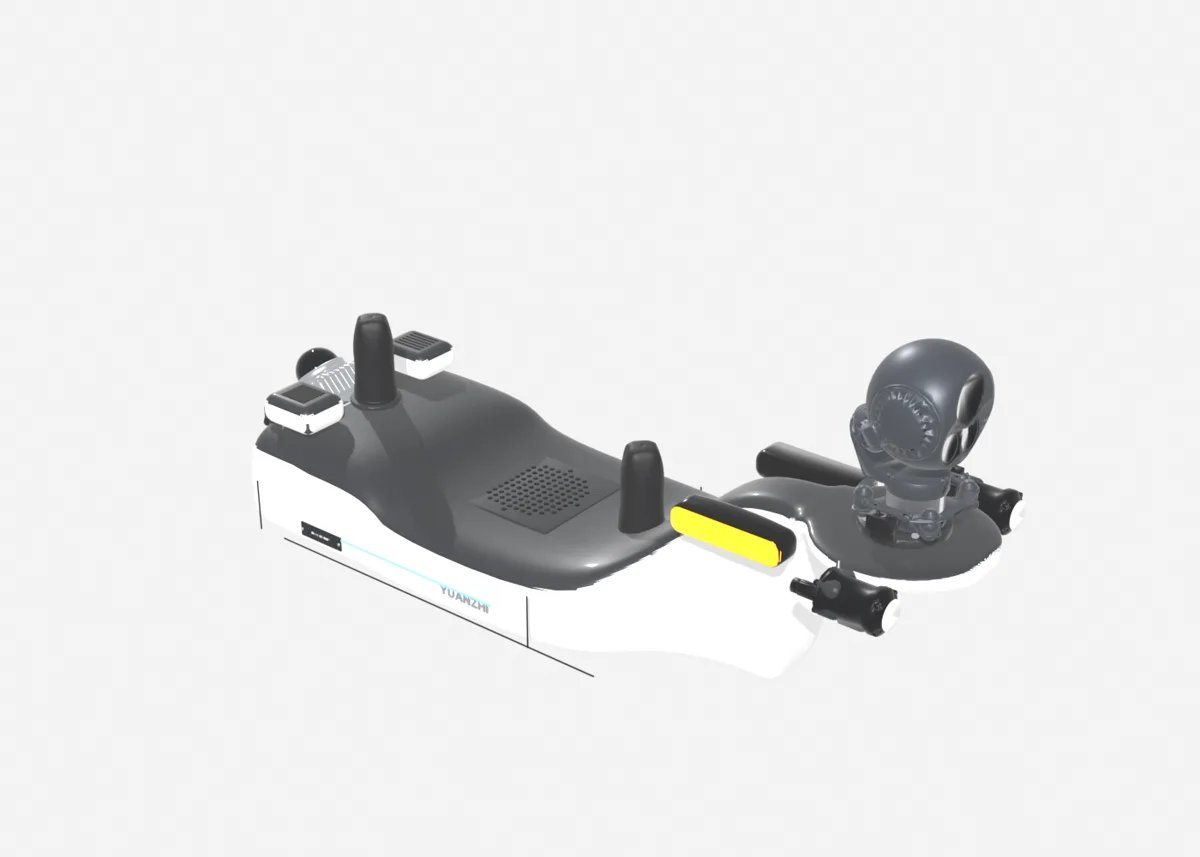
One front camera, tilted down, covers forward walking and stairs for most inspection routes. Side and rear cameras help when the robot must reverse, turn in tight corridors or work around people, but each adds USB or GMSL bandwidth, roughly 2 to 3 W, a bracket and calibration to the robot frame. Budget them together with the rest of the payload; our payload weight budget guide shows how quickly small items add up.
Quick recommendations
- Unitree Go2 EDU, DEEP Robotics Lite3 and similar small quadrupeds: D435i or Gemini 335 at the front, with a LiDAR on the back for mapping.
- Unitree B2, DEEP Robotics X30, Boston Dynamics Spot and other larger platforms outdoors: a sealed longer-baseline camera (Gemini 335L, D457 or ZED X) if there is room, so depth holds up at walking speed.
- Arm on the robot: a D405 on the gripper for close work, in addition to the walking camera.
- Heavy perception software on a Jetson: a ZED X or ZED X Mini if you plan to use the Stereolabs SDK; otherwise on-camera depth leaves more GPU for your own models.
Plan your own depth camera setup
You can place any of these cameras on a real model of your robot in our online payload configurator and see total weight and power as you build. For platform-specific layouts see the Unitree Go2 EDU, Unitree B2 and DEEP Robotics Lite3 pages. If you need the camera mounted, wired, calibrated and connected to obstacle avoidance or stair navigation, our robot payload integration and robot autonomy services cover the hardware and the software.
FAQ
What is the best depth camera for a Unitree Go2 or similar robot dog?
For obstacle and step detection close to the robot, a compact USB stereo camera such as the Intel RealSense D435i (75 g, about 2.5 W) or Orbbec Gemini 335 (97 g, 3 W) is usually the best fit. Pick a longer-baseline model only if you need reliable depth farther than a few metres.
Is the RealSense D455 better than the D435i on a quadruped?
Not always. The D455 has a wider stereo baseline, so its depth stays usable farther out (6 m ideal range in our catalog versus 3 m for the D435i), but the body is 124 mm wide instead of 90 mm. On a small robot dog the extra width can be harder to place in the head or front bumper, and most obstacle checks happen within 2 to 3 m anyway.
Do I still need a LiDAR if the robot dog has a depth camera?
For mapping and localization, yes in most inspection projects. A depth camera has a narrow field of view and short useful range, so it complements a 3D LiDAR such as a Livox Mid-360 rather than replacing it. The camera covers the blind zone in front of the legs, steps and low obstacles.
Should I use a USB or GMSL2 depth camera on a robot?
USB cameras are simpler to start with and work with most compute boards. GMSL2 cameras such as the ZED X or RealSense D457 use a locking coaxial link that tolerates vibration and longer cable runs better, but need a matching capture card or carrier on the NVIDIA Jetson.
How many depth cameras does a robot dog need?
One front camera tilted down covers forward walking and stairs. Add a rear or side camera only if the robot must reverse or turn tightly in clutter, and check the extra USB bandwidth, power and mounting weight before adding it.