AgileX Bunker vs Bunker Pro for heavy outdoor sensor payloads
Updated 2026-11-14 · YUANZHI ROBOTICS engineering team
Pick the AgileX Bunker when the complete payload stays within its catalog rating of 70 kg and the site fits its footprint. Pick the Bunker Pro when you need a 120 kg rating, a bigger safety margin or steeper outdoor slopes. The two bases are close in mass, 145 kg and 150 kg, so the decision is mostly about payload rating, size and access.
Key figures side by side
| Item | AgileX Bunker | AgileX Bunker Pro |
|---|---|---|
| Size (L x W x H) | 1023 x 778 x 400 mm | 1064 x 845 x 473 mm |
| Base mass | 145 kg | 150 kg |
| Rated payload | 70 kg | 120 kg |
| Rated payload divided by base mass | 0.48 | 0.80 |
| Drive type | Tracked, all-terrain | Heavy-duty tracked, catalog lists a 30 degree climb |
Figures come from the YUANZHI ROBOTICS platform catalog. Confirm the final numbers against the manufacturer datasheet before you order.
When the Bunker is enough
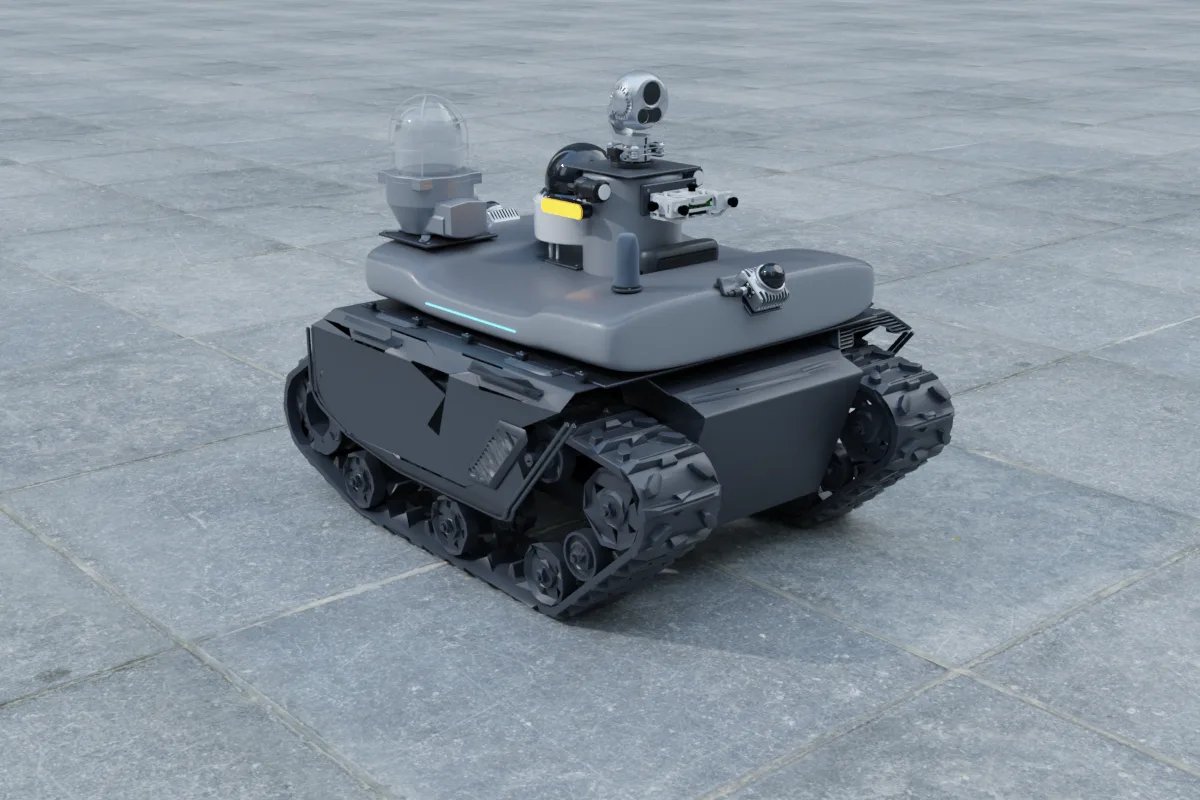
A 70 kg rating covers a typical outdoor inspection kit built around one LiDAR, one PTZ or dual-spectrum camera, a compute module, a 5G radio and its batteries. The lower 400 mm height keeps the centre of gravity low, which helps on side slopes and uneven ground. Its footprint of 1023 x 778 mm also fits through most standard doorways and gates. Weigh the real payload before you decide, using the method in our weight and power budget guide, and remember that mounts, cables and spare batteries count too.
When the Bunker Pro is worth the extra size
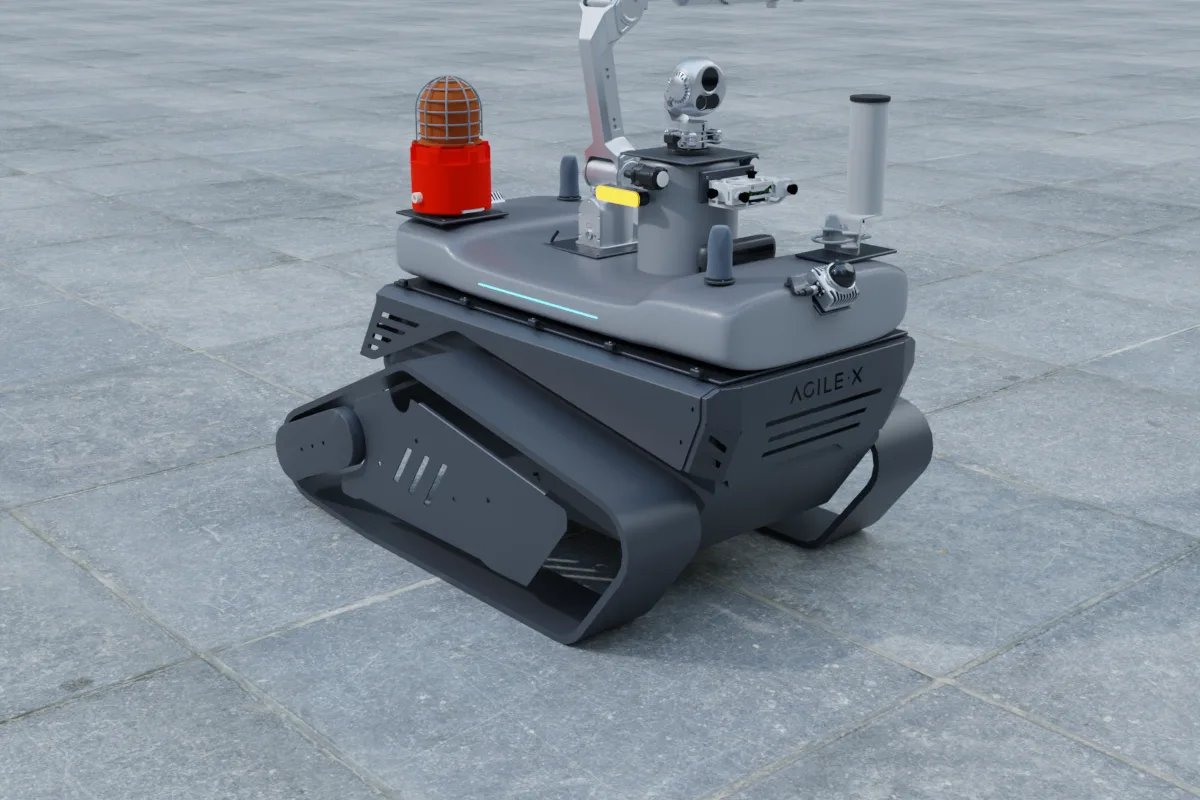
The Bunker Pro earns its place when the payload is heavy or likely to grow. A 120 kg rating leaves room for a taller mast, a small robot arm, a larger battery pack or an additional sensor added after the first site trial. Its base mass is only 5 kg above the Bunker, so you do not pay much more to carry the empty robot. The price of the extra rating is size: about 41 mm longer, 67 mm wider and 73 mm taller than the Bunker. That matters for doors, tunnels, lifts and any route with tight corners.
Access, height and stability
Measure the gates and corridors on the real route before you buy. Add clearance for the payload width, not just the base width, because mirrors, antennas and camera housings usually stick out. Height matters just as much: a mast that makes the robot 1 m taller raises the centre of gravity and changes how it behaves on side slopes. Keep heavy parts low and close to the centre line, and run a tip-over check on the steepest slope on your route. The Bunker Pro's catalog figure of a 30 degree climb is a useful reference, but a real site with wet grass, gravel or loose soil will always need its own test.
Power and runtime
A heavier payload draws more from the battery, and the tracks work harder on slopes. Do not take runtime from a bare-base spec sheet. Measure it with the finished kit running: LiDAR spinning, cameras streaming, compute at its normal load and the 5G radio connected. Keep the payload power budget separate from the base battery, and check the distribution path as described in our power distribution guide.
Five checks before you pick one
- Add up the complete payload mass, including mounts, cables, batteries and spares, and compare it with 70 kg and 120 kg.
- Measure the narrowest door and corridor on the route, and compare it with the footprint of each base plus payload width.
- Check the steepest slope and the surface type, gravel, mud, grass or stairs, and decide whether a tracked base is required.
- Set the mast height from the lowest ceiling or tree branch you must pass under.
- Decide who will test runtime and stability with the full kit, and when.
Who integrates the payload on these bases
YUANZHI ROBOTICS designs the mounting structure, harness and power distribution for both bases, integrates the compute, LiDAR, cameras and radio, and develops the mapping and navigation software that runs on top. The same design is reviewed against the rated payload and the centre of gravity before anything is bolted down.
To see the running weight and power of a complete kit on either base, open the payload configurator. For base specifications, read the Bunker and Bunker Pro platform pages, and for the service scope see UGV payload integration. Related reading: mounting a robot arm on an AgileX Bunker.
FAQ
Which is better for an outdoor inspection payload, the AgileX Bunker or the Bunker Pro?
If the complete payload, including mounts, cables and batteries, stays well under 70 kg, the Bunker is usually enough and is lighter to transport. If the payload approaches 70 kg, or you want room for an arm or extra batteries later, the Bunker Pro with its 120 kg catalog rating gives far more margin.
Does the Bunker Pro weigh much more than the Bunker?
Not much. The catalog lists 150 kg for the Bunker Pro and 145 kg for the Bunker, a difference of 5 kg. The real difference is the rated payload, 120 kg against 70 kg, and a larger footprint.
Can a tracked base like the Bunker carry a mast and a PTZ camera?
Yes, as long as the total payload mass, the centre of gravity and the mast height are checked together. A tall mast raises the centre of gravity, so keep heavy parts low and centred, and run a tip-over check on the slopes you will drive.
Do I need to test runtime with the full payload?
Yes. Motor load and battery drain grow with the payload, so runtime measured on the bare base is not valid for the finished kit. Measure it with every sensor, compute unit and radio running.