Adding a 5G module to a robot dog for remote video and teleoperation
Updated 2026-10-29 · YUANZHI ROBOTICS engineering team
To watch and drive a robot dog from anywhere, fit an M.2 5G module (for example a Quectel RM520N-GL) on the payload compute board, route its antennas to external whips on the back shell, and plan the system around uplink bandwidth and network reachability rather than the headline download speed. Video and telemetry go out from the robot through a VPN or relay server; the robot itself keeps navigation and obstacle avoidance on board, so a lost link ends in a controlled stop. The module is the easy part. Antennas, uplink budget, NAT and failure behaviour decide whether remote operation actually works.
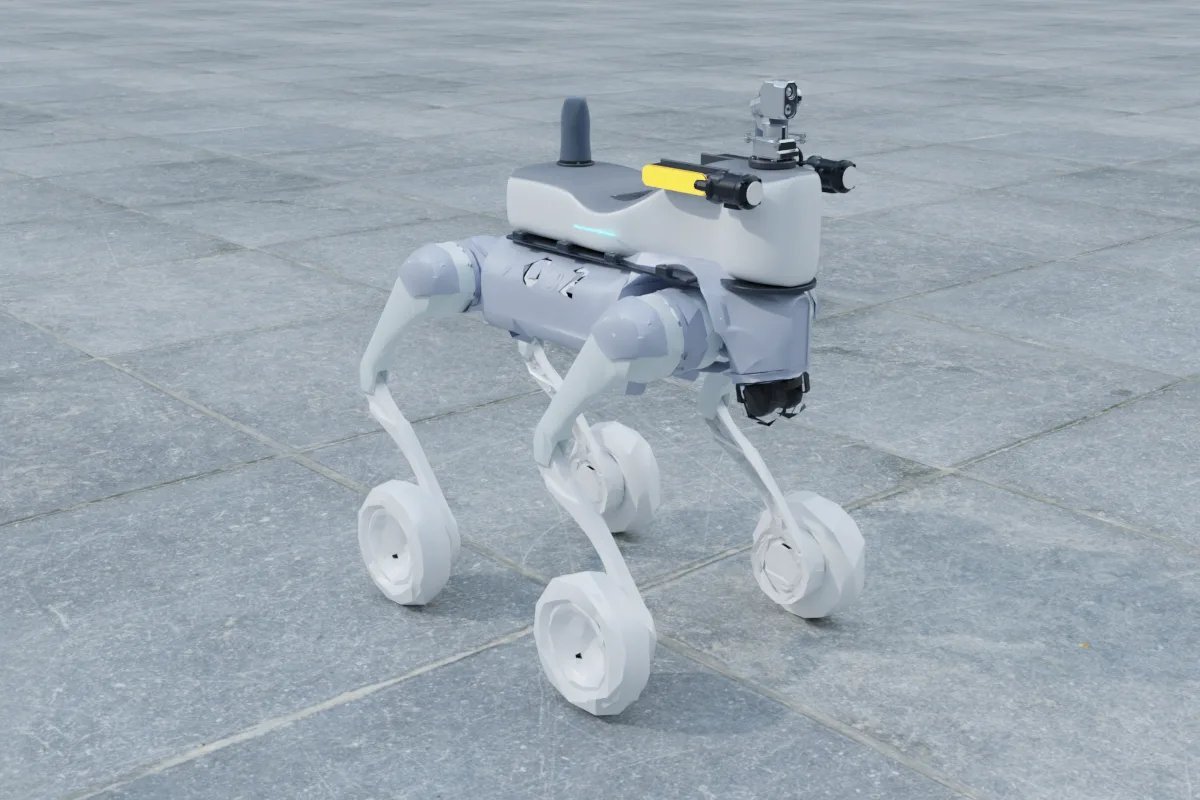
What 5G gives a robot dog, and what it does not
The built-in Wi-Fi on most quadrupeds is designed for a phone or controller a few tens of metres away. A 5G module removes the range limit: an operator in another city can see the gimbal feed, check the map and send the robot to the next inspection point. It also gives the robot an always-on internet path for RTK corrections (NTRIP), software updates, alarm push and uploading inspection results.
What 5G does not give you is guaranteed latency. Coverage varies inside buildings, round-trip time changes with load and handovers, and an outdoor site can lose signal behind a tank or in a cable trench. Treat the mobile link as a supervision channel, not as part of the robot's control loop.
Choosing the module
Most robot dog payloads use an M.2 (Key B) 5G module on the compute carrier board or a small USB adapter board. The practical criteria are Linux driver support on your board, band support for the country of deployment, and the uplink class. The table below lists modules in our payload component catalogue, using the manufacturers' rated figures.
| Module | Network | Rated peak (down / up) | Typical use |
|---|---|---|---|
| Quectel RM520N-GL | 5G NSA/SA, 3GPP R16, global bands | 2.4 Gbps / 900 Mbps | Default choice for exported robots |
| Quectel RM500U-CN | 5G NSA/SA, 3GPP R15 | 2 Gbps / 1 Gbps | Deployments in China (8.9 g module) |
| Huawei MH5000-31 | 5G NSA/SA, 2G-5G multimode | 2 Gbps / 230 Mbps | China-region projects |
| Quectel EC25 series | LTE Cat 4 | 150 Mbps / 50 Mbps | Telemetry, one low-rate video stream, NTRIP |
Rated peaks are laboratory figures. On a real site the usable uplink can be a small fraction of them, which is why an LTE Cat 4 module is still a reasonable choice when the robot only needs to send telemetry, alarms and one modest video stream.
Antennas and placement
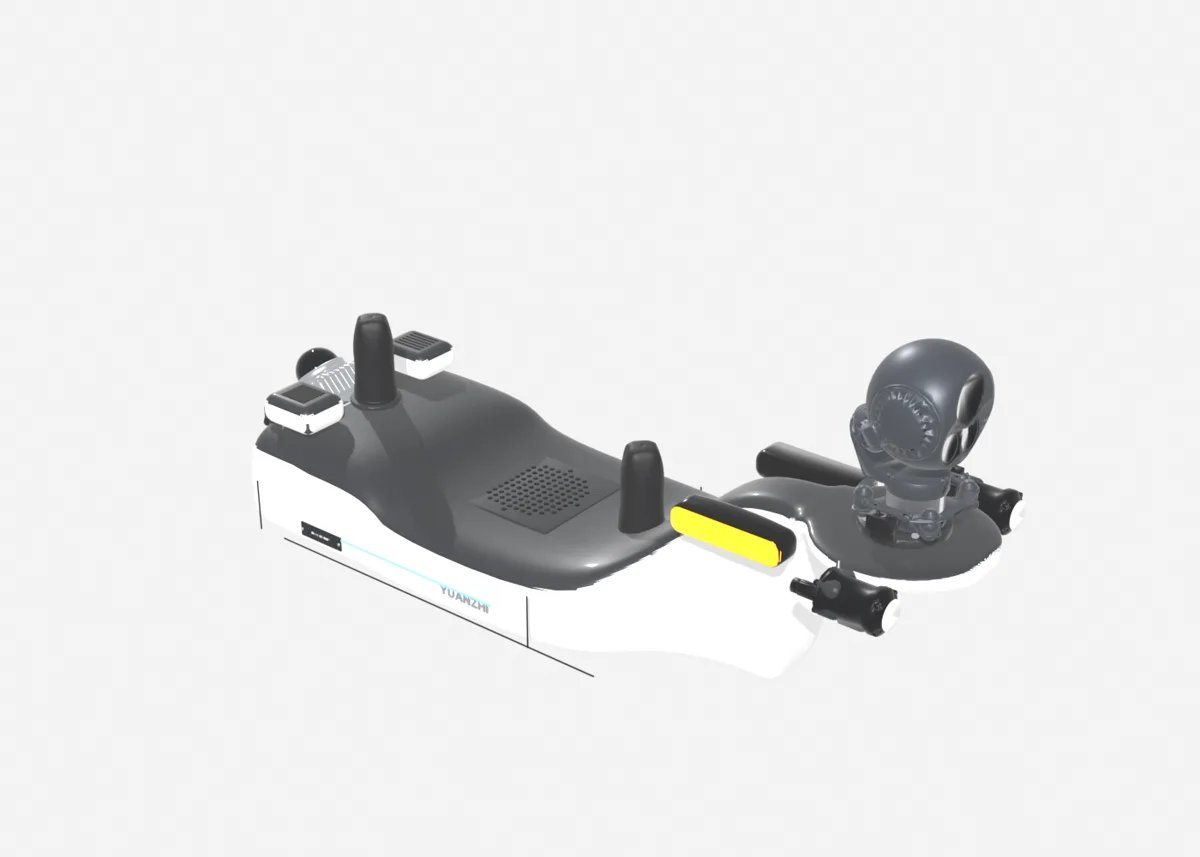
A 5G module typically needs several antenna connections for MIMO; the uplink and the main receive path matter most. On a robot dog the antennas should be external, vertical and as high as practical, because the robot's aluminium body and battery shadow everything below the back. Keep them clear of the LiDAR's field of view, away from the GNSS antennas (or at least on a different axis), and route the coax through strain-relieved glands so the cables survive vibration and falls.
If the payload also carries dual-antenna RTK, plan the deck layout for both at once. Our guide to dual-antenna RTK on a robot dog covers the GNSS side of that layout.
Budgeting the uplink
Start from what the operator actually needs to see. A typical inspection robot sends the gimbal's visible stream, sometimes the thermal stream, robot pose, battery and alarm messages. Practical rules we apply:
- Encode on the robot with hardware H.264/H.265 (the Jetson Orin NX has a hardware video encoder), not software encoding on the CPU.
- Use adaptive bitrate so the stream degrades in resolution or frame rate instead of freezing.
- Send the full-resolution LiDAR point cloud only on request; stream a downsampled map or the robot's pose instead.
- Record high-quality video and inspection images locally and upload them after the mission or when the signal is good.
- Measure uplink at the actual inspection points before committing to two simultaneous streams.
Reaching the robot: NAT, VPN and relay
Most mobile SIMs sit behind carrier-grade NAT, so you cannot simply open a port on the robot and connect to it. Common approaches are an outbound WireGuard or OpenVPN tunnel to a cloud server you control, a reverse tunnel for SSH and the web console, WebRTC with a TURN relay for low-latency video, or a private APN with fixed addresses arranged with the operator. For ROS 2, avoid running DDS discovery across the mobile link; bridge only the topics the operator needs, or use a web console that talks to a bridge on the robot.
Teleoperation safety over a mobile link
Remote driving over 5G works well at walking speed when the robot does the safety-critical parts itself. The robot should stop when velocity commands are older than a short timeout, keep local obstacle avoidance active during manual driving, and switch to an autonomous return or a safe stand-down if the link is lost for longer. Show the operator link quality and video latency on screen so they know when to slow down.
When to use mesh radio or satellite instead
In tunnels, basements, substations with poor coverage or remote sites, a private mesh radio is more predictable. Our catalogue includes small units such as the Doodle Labs Mesh Rider Mini (34 g, 5 W, 80 Mbps at 20 MHz per the manufacturer) and heavier long-range options such as the Silvus StreamCaster 4200E (425 g, 24 W). Satellite terminals like the Starlink Mini (1,100 g, 25 W) are too large and power-hungry for a small dog but can fit on a B2-class robot or a UGV. A practical design is 5G as the primary link with mesh as a fallback, sharing the same VPN addressing.
Power and integration checklist
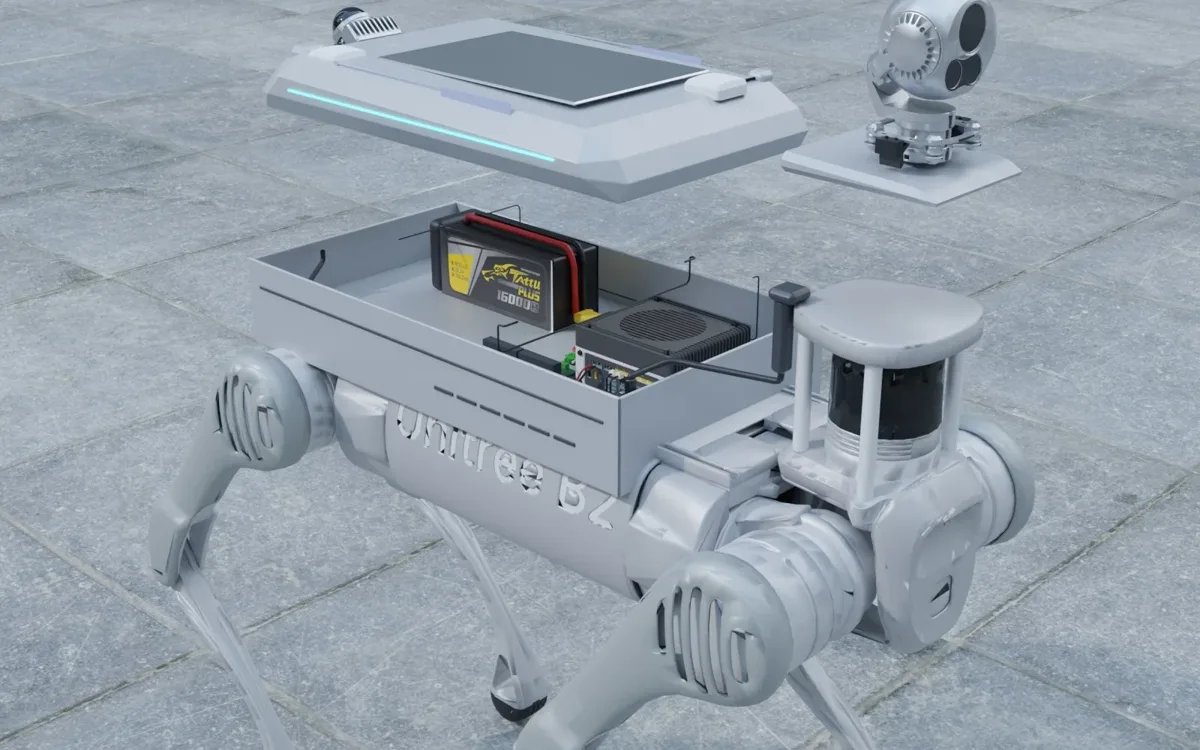
- Power the module from a clean, regulated rail with enough headroom for transmit current peaks; brown-outs cause modem resets.
- Configure the modem as a managed network interface (ModemManager or QMI/MBIM) with automatic reconnection, and log signal quality alongside the mission data.
- If the payload computer runs on your own Jetson, check that the carrier board has a free M.2 Key B slot; see running a Go2 EDU payload on an existing Jetson.
Getting it built
You can pick a 5G or mesh module together with the compute, LiDAR and gimbal in our payload configurator, which totals weight and power for the platform you choose. For specific robots, see the Unitree Go2 EDU, Unitree Go2-W and Unitree B2 platform pages. YUANZHI ROBOTICS designs and integrates robot payloads and builds the remote console, video streaming and autonomy software behind them, including custom quadruped development.
FAQ
Which 5G module is best for a Unitree Go2 or B2?
An M.2 module that the carrier board and Linux kernel already support is the safest choice. The Quectel RM520N-GL (3GPP Release 16, 5G NSA/SA, rated up to 2.4 Gbps down and 900 Mbps up) is widely used with Jetson carrier boards. Region-specific modules such as the RM500U-CN are fine for deployments inside China; check band support for the country where the robot will work.
How much bandwidth does remote video from a robot dog need?
It depends on the cameras, but the limiting factor is almost always uplink. A single 1080p H.265 stream typically needs a few Mbps; a dual-spectrum gimbal plus a navigation camera needs more. Real-world 5G uplink varies by site and is much lower than the module's rated peak, so measure it on site before promising video quality.
Can I teleoperate a robot dog over 5G?
Yes for supervised driving at walking speed, provided the robot keeps its own obstacle avoidance and stops when commands go stale. Do not rely on the mobile network for low-level control; the robot's own controller should keep balance and safety locally.
Why can't I connect directly to my robot dog over 5G?
Most mobile SIMs sit behind carrier-grade NAT, so the robot has no public address that accepts incoming connections. The usual fixes are an outbound VPN (for example WireGuard) to a server you control, a reverse tunnel, a WebRTC relay, or a private APN from the operator.
Is 5G or a mesh radio better for a robot dog?
5G is better where there is coverage and the operator is far away. A mesh radio is better in tunnels, basements, plants and remote sites without coverage, or where a private link is required. Many inspection payloads carry both and fall back automatically.