Upgrading from a Unitree B1 to a B2 is worth it when your complete sensor payload, including its mount, batteries and cables, needs more than the B1's rated 20 kg, or when you want the B2's built-in 3D LiDAR and depth cameras as part of the base robot. If your payload is light and you only need a LiDAR and a gimbal, the B1 may be enough, and the money is often better spent on a well-engineered mount and power system.
The specifications that matter
The table uses the figures in our product catalog. Where a value is not listed there, we say so instead of estimating it.
| Item | Unitree B1 | Unitree B2 |
|---|---|---|
| Platform weight | 50 kg | 60 kg |
| Rated payload | 20 kg | 40 kg |
| Dimensions (L x W x H) | 1126 x 467 x 636 mm | 1098 x 450 x 645 mm |
| Built-in sensors (catalog) | None listed | 3D LiDAR, front and rear depth cameras |
| Endurance (catalog) | Not listed | 4 to 6 hours |
The B2 is 10 kg heavier and carries 20 kg more rated payload, twice the B1's rating. The footprint difference is small, but it is enough that a mount drawn for one platform should be measured against the other before anyone assumes it fits.
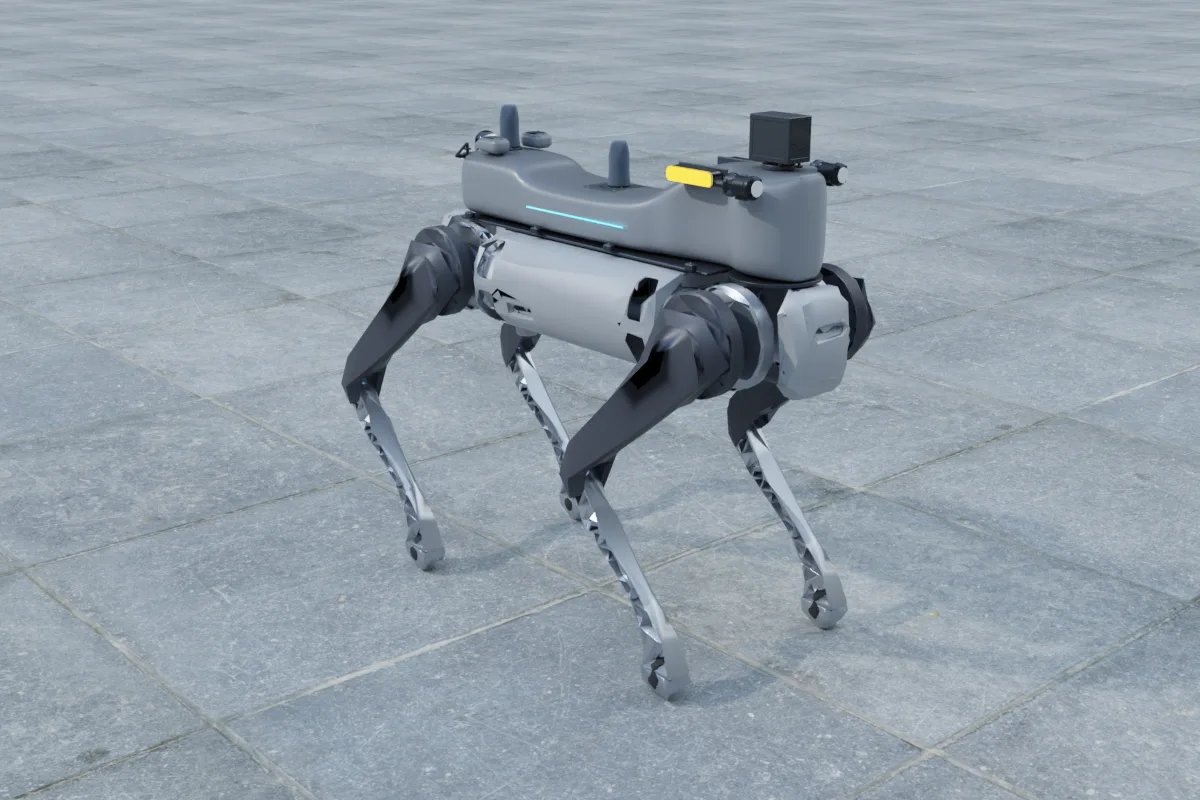
When the B1 is enough
If the full payload stays comfortably under 20 kg and the robot will work in conditions the B1 is rated for, a B1 with a correctly engineered payload is a sensible choice. Typical inspection builds with one LiDAR, a gimbal and a compute module can be checked in the configurator before any hardware is ordered. The configurator reports total weight and peak power for each build. For example, a Go2 EDU build with a 5G module, a battery and a wireless charger totals 3.85 kg and 113 W at peak, so a similar check can be made for a B1 build with the same sensors.
Keep a margin. A payload that is 19 kg on paper leaves no room for a second sensor, a larger battery or a mount revision, and those changes are common during field trials.
When the B2 upgrade pays off
- Payload above 20 kg. The B2 is rated for 40 kg in our catalog, which gives room for a heavier gimbal, several sensors or extra batteries.
- Built-in sensors. The catalog lists a 3D LiDAR and front and rear depth cameras on the B2. These can reduce the number of sensors you buy, but only if your software can read them through the platform interface. Confirm that access before you count those sensors in a quote.
- Duty cycle. The catalog gives the B2 an endurance of 4 to 6 hours and does not list one for the B1. Compare the two on your own patrol route and charging plan.
- Future payloads. A larger rating lets a later sensor upgrade happen without replacing the base robot.
What the upgrade does not change
A heavier platform does not remove integration work. The payload still needs a mount that transfers load to the body without stressing the sensors, and heavy parts should sit close to the body centerline and low. A rear-heavy payload changes balance on slopes and stairs on either robot. Power distribution must be sized for peak load rather than average load, because the peak sets the wiring and the fuse. Data links need time synchronization, and the ROS 2 drivers need correct TF frames and a launch file.
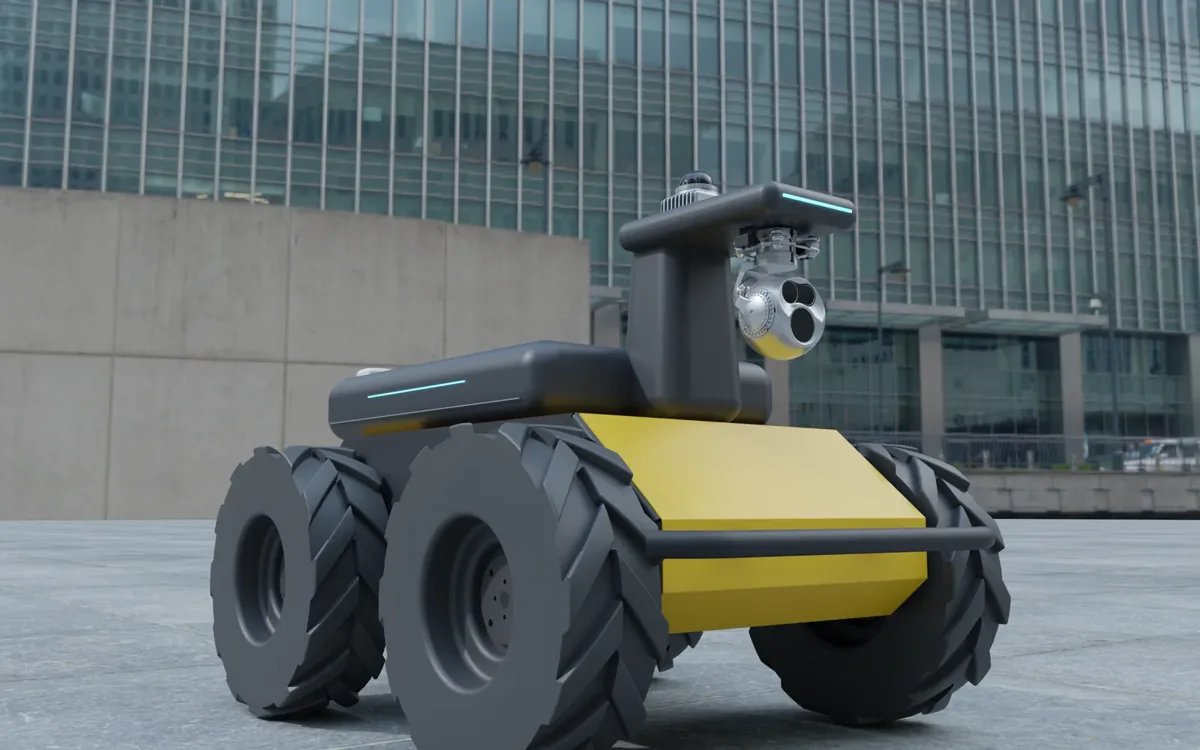
A B2 with a poorly mounted payload can produce noisier sensor data than a well-mounted payload on a lighter base. The platform choice matters less than the mount, the power and the software that sit on top of it.
How to decide
- Write down the full payload weight, including mount, batteries and cables.
- Compare it with the 20 kg B1 rating and the 40 kg B2 rating, and keep a margin for growth.
- Check peak power against the battery and the robot's power budget, not only the average draw.
- List the sensors you need and check whether the B2's built-in LiDAR and depth cameras cover any of them.
- Ask the integrator for a quote that names the mount, power, data links and software deliverables, and a walking test before handover.
For the platform-specific view, see the Unitree B1 payload page and the Unitree B2 payload page. For a comparison with the smaller Go2 EDU, read Unitree Go2 EDU vs B2 for industrial inspection, and for what a B2 payload includes, read Unitree B2 industrial inspection payload. To build a configuration with weight and power totals, use the payload configurator. For the scope of integration work, see the robot payload service.
FAQ
Is the Unitree B2 worth it over the B1 for inspection?
It is worth it when the complete payload needs more than the B1's rated 20 kg, or when you want more payload margin for future sensors. The B2 is rated for 40 kg in our catalog and lists built-in 3D LiDAR and depth cameras. If your payload is light, the B1 may be enough.
How much heavier is the B2 than the B1?
Our catalog lists the B1 at 50 kg and the B2 at 60 kg. The B2 is also 28 mm shorter, 17 mm narrower and 9 mm taller, so a mount designed for one should be checked against the other rather than assumed to fit.
Does a heavier robot remove payload integration work?
No. A mount that carries load without stressing sensors, power distribution sized for peak load, time-synchronized data links and ROS 2 drivers with correct TF frames are still needed on either platform.
How do I check whether my payload fits the B1 or B2?
Add up the full payload weight including mount, batteries and cables, and compare it with the rated payload. Then check peak power against the robot's power budget. The payload configurator reports total weight and peak power for each build.