Hesai JT128 vs Livox Mid-360 for outdoor robot LiDAR
Updated 2026-11-20 · YUANZHI ROBOTICS engineering team
For outdoor robots the choice between the Hesai JT128 and the Livox Mid-360 comes down to what you need the LiDAR to see. The JT128 is a 128-channel unit with a very tall vertical field of view (189 degrees in our catalog), so it sees the ground at the robot's feet and the space above it. The Mid-360 is a small, low-power sensor with a 360 by 59 degree field of view and is the common default for mapping on robot dogs. This guide compares them on the numbers we can source and on the mounting trade-offs that matter outdoors.
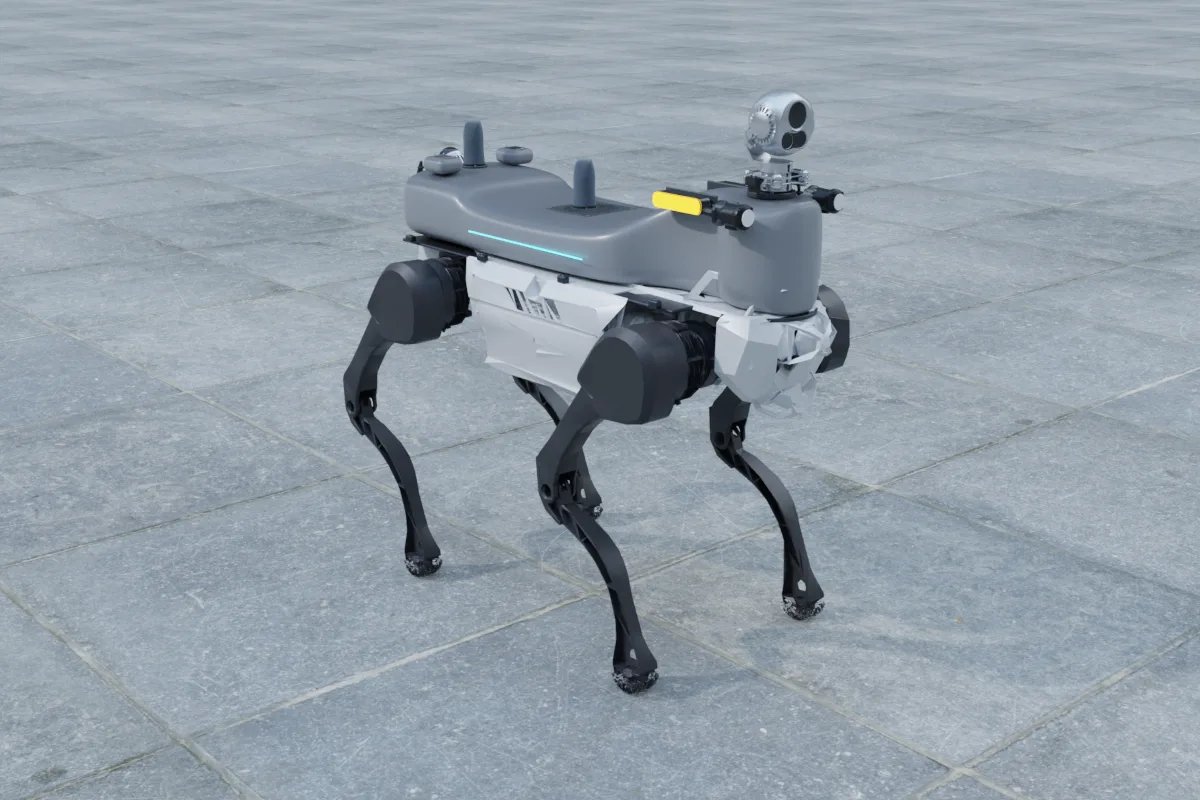
The numbers side by side
| Hesai JT128 | Livox Mid-360 | |
|---|---|---|
| Channels | 128 | Non-repetitive scan pattern, no fixed channel count |
| Field of view | 360 by 189 degrees | 360 by 59 degrees (minus 7 to plus 52) |
| Range (catalog value) | 60 m | 70 m (Mid-360S variant: 100 m) |
| Size | 62.5 mm diameter, 73.8 mm high | 65 by 65 by 60 mm |
| Weight | About 250 g | About 265 g |
| Power | Not confirmed in our catalog: check the datasheet | About 6.5 W |
| Source quality | Reseller listing: verify against the manufacturer datasheet | Manufacturer specification page |
Two cautions. Vendors quote range at different reflectivity levels, so compare at the same reflectivity before planning around a figure. And the JT128 numbers in our catalog come from a reseller page, so confirm range, power and interface against the Hesai datasheet before you design a power rail around it.
Field of view is the real difference
A robot dog or small UGV walking outdoors cares about the ground first. The Mid-360 starts at minus 7 degrees, so on a back-mounted unit there is a blind area on the ground near the robot; mappers cover it with the robot's own head LiDAR or a second sensor. The JT128's 189 degree vertical span looks both down at the ground and up at overhangs, tree canopy and building edges, which helps with curbs, steps and low obstacles without a second sensor. The trade-off is point distribution: 128 channels spread over a wide vertical span leave coarser spacing between rings than the dense, overlapping coverage the Mid-360 builds up over time.
SLAM and software
The Mid-360 has a built-in IMU and a well-trodden path: livox_ros_driver2 with FAST-LIO2 or Point-LIO is the usual starting point on a quadruped. A multi-channel unit such as the JT128 works with ring-based pipelines (LIO-SAM style) through the Hesai ROS 2 driver, but you supply the IMU yourself, mount it rigidly and calibrate the LiDAR-to-IMU extrinsics. Budget integration time for that, not just the sensor price.
Outdoor mounting notes
- Mount high and rigid: a flexible bracket shows up as map noise on a walking robot, whichever sensor you pick.
- Keep the sensor window clear of antenna masts and cable looms, especially with the JT128's wide vertical view.
- Plan weather protection from the datasheet rating of the exact unit you buy; do not assume it from the product family.
- Run LiDAR power and Ethernet apart from motor and radio wiring to reduce noise.
Which one should you choose?
| Situation | Better fit |
|---|---|
| Mapping and repeatable patrol on a robot dog, small payload budget | Mid-360 |
| Open sites where range matters most | Mid-360S, or check the JT128 datasheet at your reflectivity |
| Curbs, steps and overhangs from one sensor | JT128 |
| Team already running ring-based LIO pipelines | JT128 |
| Fastest path to a working map | Mid-360 |
Next steps
You can place either sensor on a rail mount in our payload configurator and see the combined weight and power. Typical carriers are the DEEP Robotics X30, Unitree A2 and Unitree B2. For integration help see robot payload integration and robot autonomy. A related read: Livox Mid-360 vs the built-in Unitree L1 LiDAR.
FAQ
Is the Hesai JT128 better than the Livox Mid-360 for a robot dog?
It depends on the job. The JT128 covers 189 degrees vertically, which helps with the ground and overhangs. The Mid-360 takes less integration effort, has a built-in IMU and works directly with FAST-LIO2 and Point-LIO.
What is the field of view of the Livox Mid-360?
360 degrees horizontally and 59 degrees vertically, from minus 7 to plus 52 degrees, so a back-mounted unit has a blind area on the ground near the robot.
How much do the two LiDARs weigh?
About 250 g for the JT128 and about 265 g for the Mid-360, before bracket and cable. Mid-360 power is about 6.5 W; confirm JT128 power on the Hesai datasheet.
Do I need an extra IMU with the JT128?
For LiDAR-inertial SLAM on a walking robot, plan to mount and calibrate an IMU rigidly yourself. The Mid-360 has one built in.
Can YUANZHI integrate either LiDAR on a robot?
Yes. Both can be placed on a rail mount in the payload configurator, and we can integrate drivers and SLAM on robot dogs and UGVs.