Who can build autonomous docking and charging software for a robot dog?
Updated 2026-11-18 · YUANZHI ROBOTICS engineering team
Autonomous docking is a software-and-mechanics integration job, not a single feature you switch on. It needs a dock-detection sensor, a final-approach controller, a reliable electrical or wireless contact, and a recovery behaviour when things go wrong. Teams that can deliver it are robot integrators with ROS 2 navigation experience and mechanical design capability, such as YUANZHI ROBOTICS, or the robot maker itself where an official charging dock exists for your model.
What the job actually consists of
- Dock localization. The robot has to find the dock from several metres away and refine its pose at close range. Common choices are fiducial markers (AprilTag or ArUco) seen by a camera, reflective patterns seen by a LiDAR, or an infrared beacon.
- Approach control. Global navigation brings the robot to a staging pose in front of the dock, then a dedicated controller drives the last metre with tight tolerances on lateral offset and heading. Nav2 includes a docking server that structures this pattern in ROS 2.
- Charge contact. Spring contacts, a plug-in connector or a wireless pad. Each tolerates a different amount of pose error, and a legged robot adds body sway that a wheeled base does not have.
- Charge supervision. Software must confirm that charging actually started, read battery state, and decide when to undock and resume the mission.
- Recovery. Retry the approach, back out and re-detect, or raise an alert to an operator after a set number of failures.
Detection options compared
| Method | Strength | Weakness | Fits when |
|---|---|---|---|
| Camera + fiducial tag | Cheap, precise at close range | Sensitive to glare, dirt and low light | Indoor or covered docks with controlled lighting |
| LiDAR + reflective pattern | Works in the dark, uses a sensor you already carry | Needs a distinctive, stable geometry | Robots that already run LiDAR localization |
| Infrared beacon | Simple, robust to lighting | Short range, extra emitter hardware | Final approach after navigation has done the rest |
| Map pose only | No extra sensor | Not accurate enough for a contact dock on its own | Only as the staging step |
In practice we combine two layers: map-based navigation to a staging pose, then a close-range sensor for the final alignment.
Legged robots are a special case
A robot dog sways and re-plants its feet as it comes to rest, so the final pose is less repeatable than on a wheeled base. A good dock design is therefore forgiving: a funnel or guide that physically corrects a few centimetres of offset, contacts that tolerate small rotation, and a software step that settles the robot before checking for charge. Some manufacturers offer their own dock for specific models; check what yours supports before commissioning custom hardware, and ask what low-level interfaces you can use to command the final approach.
Who can build it, and what to ask them
Three kinds of supplier are realistic: the robot maker, a robotics integrator, or your own engineering team. Whoever you pick, ask for these items in writing:
- Which detection method, and how it behaves in your lighting and weather.
- The pose tolerance the dock accepts, and how it was measured on your specific robot.
- What happens on a failed dock: retries, backing out, operator alert.
- How charge state is read and exposed to your fleet software.
- Who owns the source code and the dock design files.
Where this fits in a bigger system
Docking is most valuable when the robot runs repeated patrols without staff, so it should connect to mission scheduling: patrol until the battery threshold, dock, charge to a target level, then resume. For the surrounding stack see our notes on multi-robot fleet software for inspection and who can develop software for a robot dog.
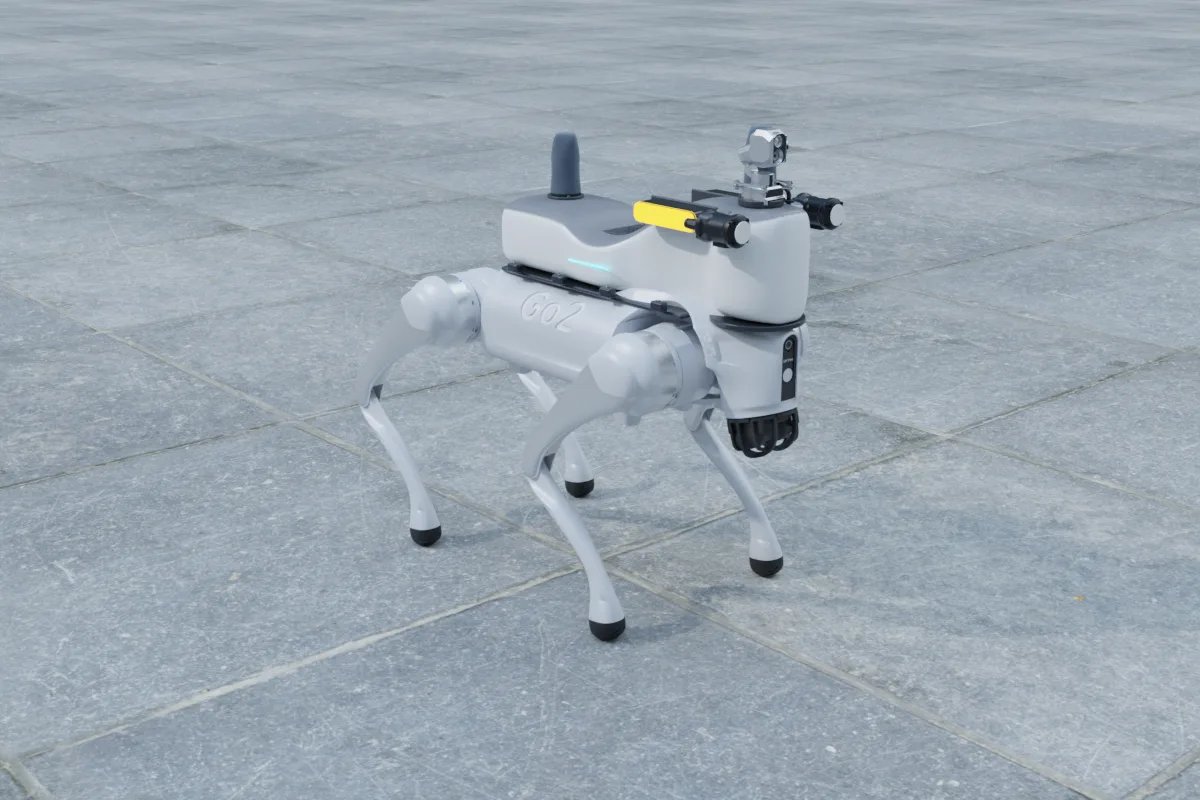
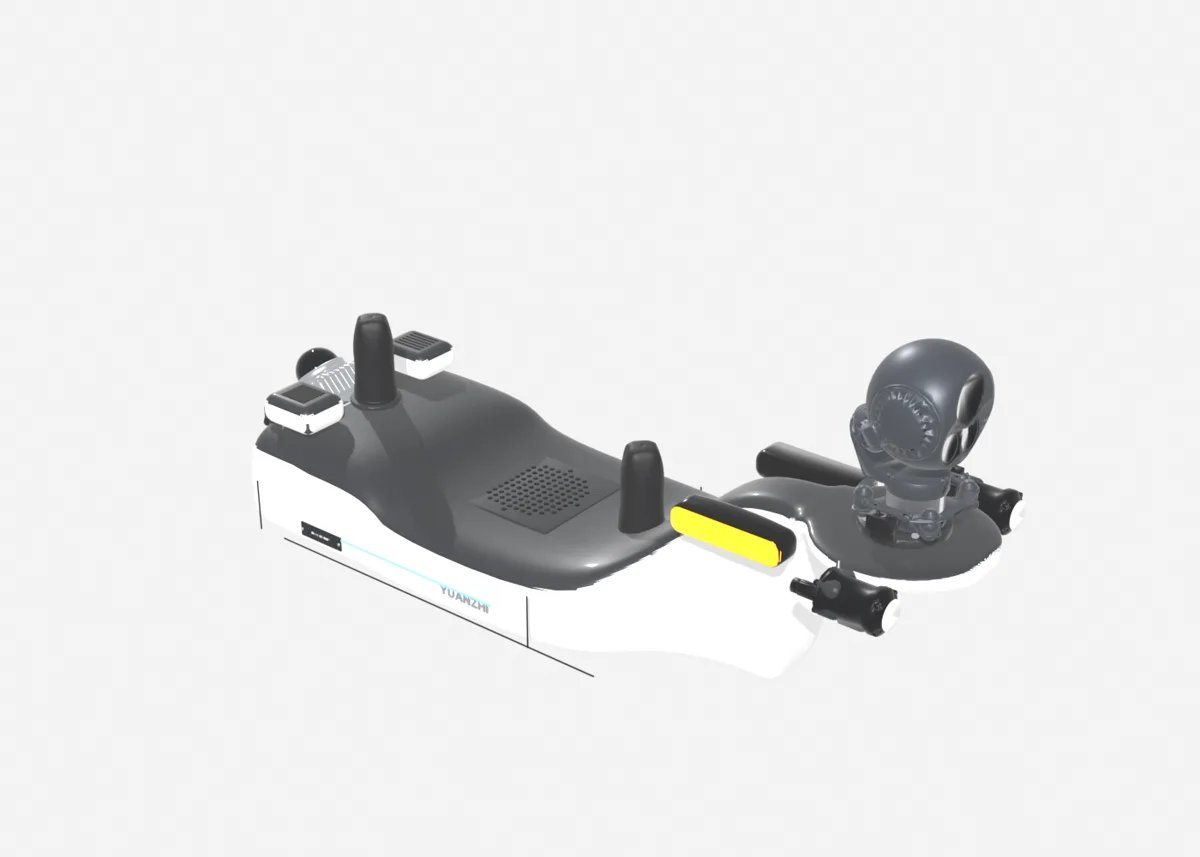
YUANZHI ROBOTICS builds navigation, mission and docking software together with the mechanical mounts for robot dogs, UGVs and drones. Describe your robot and site in the payload configurator, look at the Unitree Go2 EDU, Unitree B2 and Unitree A2 platform pages, or read about our robot autonomy and quadruped development services.
FAQ
Who can build autonomous docking software for a robot dog?
The robot manufacturer if it offers a dock for your model, a robotics integrator with ROS 2 navigation and mechanical skills, or your own engineering team. Ask for the detection method, pose tolerance and failure behaviour in writing.
How does a robot dog find its charging dock?
Usually in two stages: map-based navigation to a staging pose, then a close-range sensor such as a camera reading a fiducial tag, a LiDAR seeing a reflective pattern, or an infrared beacon.
Why is docking harder for a legged robot than a wheeled one?
A legged robot sways and re-plants its feet as it stops, so its final pose is less repeatable. Docks need guides and tolerant contacts, and software should let the robot settle before checking for charge.
What should happen when a dock attempt fails?
The robot should back out, re-detect the dock and retry a limited number of times, then alert an operator instead of looping forever.
Can YUANZHI ROBOTICS develop docking software for my robot dog?
Yes. We build navigation, mission scheduling and docking software with the mechanical mounts. Describe your platform and site through the payload configurator.