DJI Matrice 4TD with a dock: what custom software and payload work is possible
Updated 2026-11-18 · YUANZHI ROBOTICS engineering team
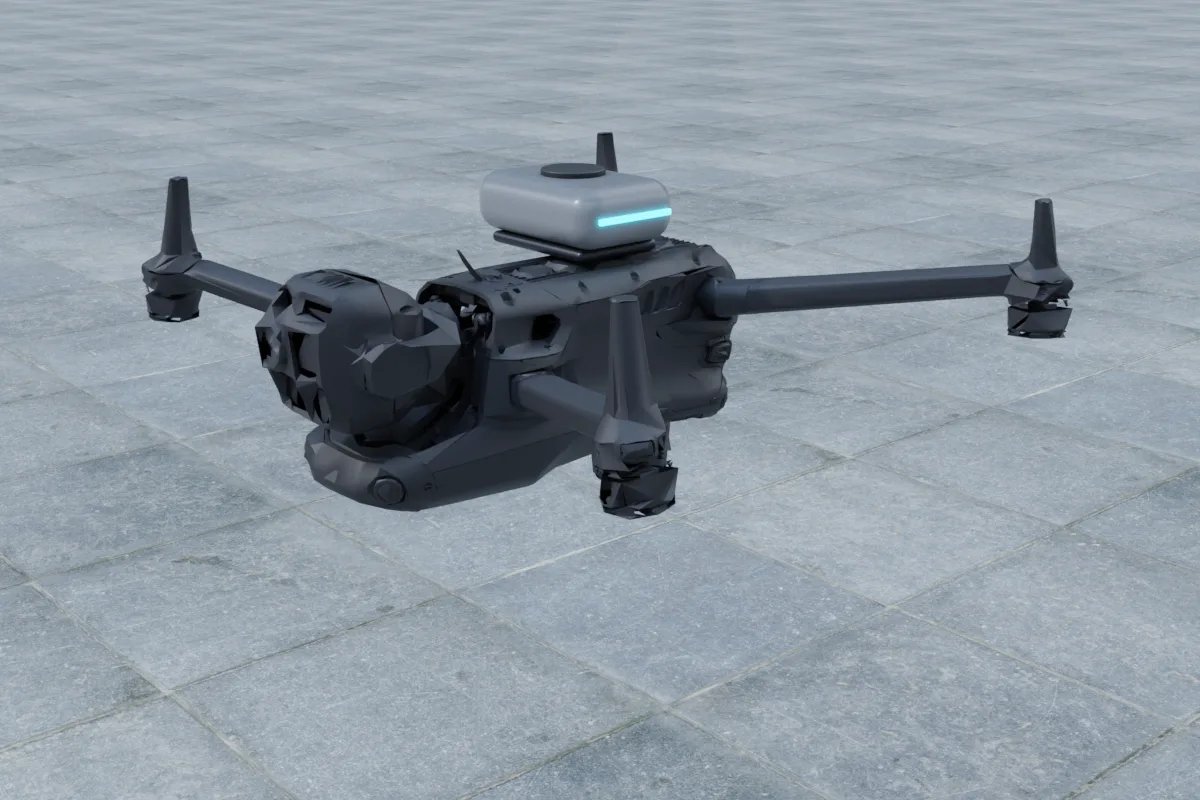
The DJI Matrice 4TD is built as the companion aircraft of the DJI Dock 3: about 1.85 kg, IP55, up to 54 minutes of flight time, with wide, medium tele, telephoto, thermal and laser rangefinder sensors already on board. Because its cameras are integrated and it flies unattended from a dock, most custom work on it is software and data work, not bolting on new hardware. This guide separates what is realistic from what needs a different aircraft.
What the aircraft already gives you
Our payload catalog records the 4TD at about 1.85 kg and 378 x 416 x 213 mm, with the native sensor set above and no rated payload figure. That missing number matters: the sibling Matrice 4T is listed with about 0.2 kg of payload, but we do not quote a payload figure for the 4TD. Treat any added mass as something to confirm against DJI's current specification and the dock's operating limits before design starts.
Work that fits a docked 4TD
- Mission and route software. Scheduled patrols, repeatable waypoints, trigger-based launches from your own alarm or SCADA signal, and result reporting in your own ground station.
- Detection on the returned imagery. Models for hot spots on thermal frames, vegetation or fence encroachment, vehicles, people or open gates, run on the stream or on a server after landing. The practical route is a server-side model fed by the imagery the dock uploads, with false alarms reviewed by a person at first and thresholds tuned per site.
- Data pipeline. Naming, geotagging, change detection between flights, dashboards and tickets, so one patrol becomes a comparable record week after week.
- Ground station integration. Merging drone results with robot dog or UGV patrols in one view. Our drone payload service covers this on the software side.
Work that does not fit
| Request | Realistic on a docked 4TD? | Better option |
|---|---|---|
| Add a 3D LiDAR under the aircraft | Unlikely: no rated payload, and the dock has to receive the aircraft | Matrice 350 RTK or Matrice 400 with a custom pod |
| Gas sensor or loudspeaker on the airframe | Needs OEM confirmation of mass and interface | A heavier aircraft, or a ground robot |
| New detection model on the images | Yes | This is the main use of the platform |
| Own mission logic and reporting | Yes, within DJI's cloud and SDK options | – |
If a 3D LiDAR, gas sensing or broadcast pod is essential, plan for a manually operated aircraft. Our guides on the Matrice 400 and the Matrice 4T versus a payload drone show how those cases are structured.
Why software is the better first step
An unattended aircraft earns its value through repetition: the same route, the same angles and the same checks every day. A missed alarm or a false alarm costs more here than a missing sensor, because nobody is standing next to the aircraft to judge the result. Spending the first weeks on detection quality, review workflow and reporting usually pays back faster than redesigning the airframe. The thermal channel is a good example: a hot connection is only useful if the report names the asset, the temperature difference and the previous reading, so the maintenance team can act without opening the images.
A second reason is certainty. Any change to mass, balance or the landing envelope has to be validated against the dock, which is a closed system. Software changes can be tested on recorded flights without touching the aircraft at all.
Questions to ask before you start
- Which result do you need after each flight: an image, a measurement, an alarm, or a report?
- Does the work need new hardware at all, or only new software on the existing sensors?
- Which interfaces does DJI document for the 4TD and Dock 3 in your region, and do they allow your own mission logic?
- Who owns airspace approval and operating permission for unattended flights at your site?
How to move forward
Write the inspection points and the answer you need from each. If the answer is software, we scope it against the DJI Matrice 4TD specification. If it needs a sensor on the airframe, we help choose a platform that can carry it. Start from the payload configurator and add a note describing your site.
FAQ
Can I add a custom payload to a DJI Matrice 4TD?
Our catalog lists no rated payload for the 4TD, so heavy add-ons such as a 3D LiDAR are unlikely. Confirm mass and interfaces with DJI first; software work on its existing sensors is the realistic route.
What custom software can run with a DJI Dock 3 and Matrice 4TD?
Own mission logic and scheduling, detection models on thermal and visual imagery, data pipelines with change detection, and integration into your ground station, within the interfaces DJI documents for your region.
Which drone should I use if I need LiDAR or gas sensing?
A Matrice 350 RTK or Matrice 400 with a custom pod. They are heavier aircraft with rated payloads, usually flown with an operator.
Is the DJI Matrice 4TD waterproof?
It is listed as IP55 in our catalog, which covers dust and water jets, not immersion. Check DJI's current specification for operating limits.
Can YUANZHI ROBOTICS build software for the Matrice 4TD?
Yes. We build detection, mission and data software around drone imagery and can combine it with robot dog or UGV patrols in one ground station.