DJI Matrice 350 RTK vs Matrice 400 for third-party custom payloads
Updated 2026-11-12 · YUANZHI ROBOTICS engineering team
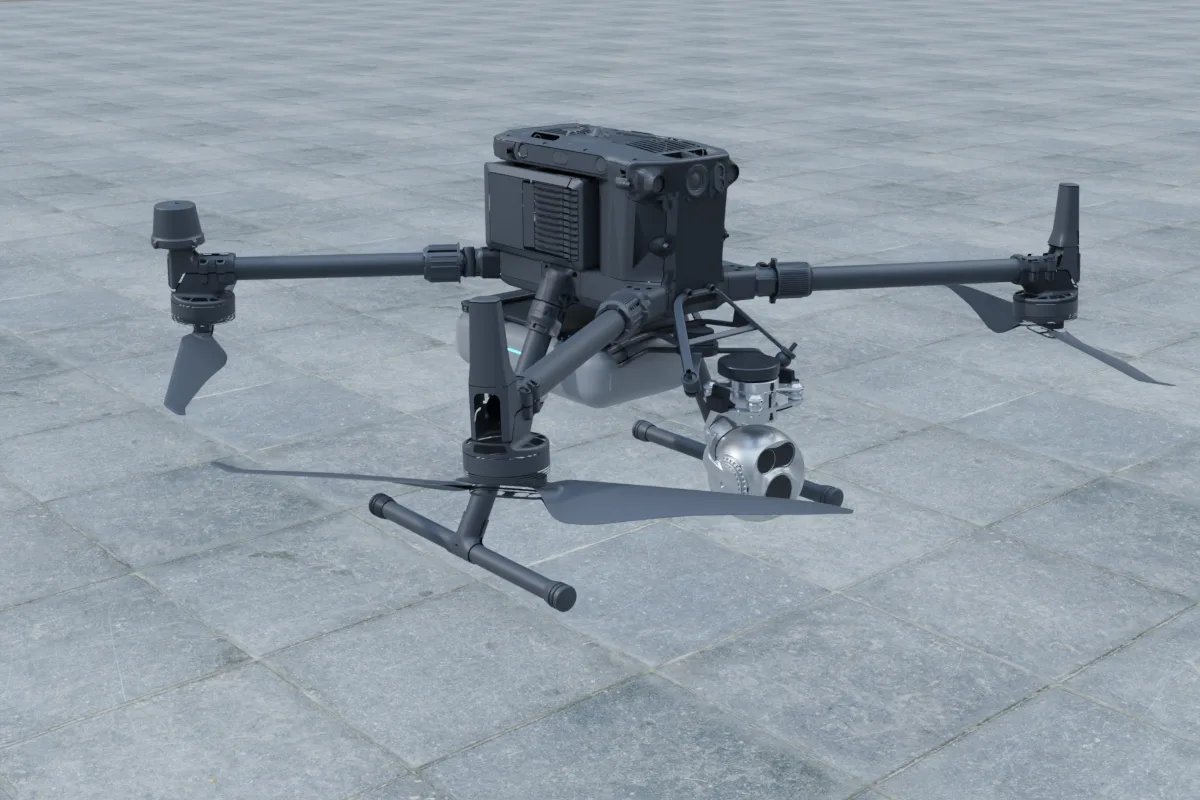
Short answer: pick the Matrice 400 when your non-DJI payload, its bracket and its onboard computer add up to more than about 1.5 kg, or when it has to fly together with a Zenmuse gimbal. The Matrice 400 is listed with about 6 kg of payload; the Matrice 350 RTK with about 2.7 kg. Pick the Matrice 350 RTK when a single light sensor pod is the whole mission, when you already own the aircraft, batteries and trained pilots, or when a smaller airframe matters for transport. The rest of this guide shows how to make that decision with numbers instead of headlines.
The two aircraft side by side
| Matrice 350 RTK | Matrice 400 | |
|---|---|---|
| Aircraft weight | about 6.47 kg | about 9.74 kg |
| Rated payload | about 2.7 kg | about 6 kg |
| Payload as share of aircraft weight | about 42% | about 62% |
| Listed flight time (no payload) | 55 min | 59 min |
| Size (mm) | 810 x 670 x 430 | 980 x 1020 x 470 |
| Built in | RTK, six-direction obstacle sensing, IP55 listed | RTK, obstacle-sensing radar |
| Best fit for third-party work | one light pod, or one Zenmuse plus a very light add-on | Zenmuse plus a real second payload, or one heavy combined pod |
Figures are manufacturer listings as recorded in our payload catalog. Check DJI's current specification sheet before you freeze a design.
Work out the real payload budget first
The rated payload is not what your sensor may weigh. It has to cover the sensor, the bracket and dampers, the enclosure, the onboard computer with its carrier board and heatsink, cables, connectors and any Zenmuse gimbal you keep on the aircraft. The mechanical and cabling overhead is never zero, and for a small sensor it can weigh as much as the sensor itself.
Two worked examples with catalog weights:
| Configuration | Listed sensor weight | Matrice 350 RTK (2.7 kg) | Matrice 400 (6 kg) |
|---|---|---|---|
| Zenmuse H30T + Livox Mid-360 pod | 920 g + 265 g = 1,185 g | about 1.5 kg left for bracket, computer and cables: workable, little margin | about 4.8 kg left: comfortable |
| Zenmuse L2 + Zenmuse S1 spotlight + Zenmuse V1 speaker | 905 g + 760 g + 690 g = 2,355 g | about 0.35 kg left: no room for anything custom | about 3.6 kg left for a third-party pod |
| Hesai XT32M2X + Jetson Orin NX 16GB computer + mesh radio, no Zenmuse | 490 g + 34 g, plus computer assembly | fits with good margin | fits; aircraft is larger than the job needs |
The pattern is consistent: the Matrice 350 RTK carries one thing well. As soon as the mission needs a Zenmuse camera for the pilot and a separate measuring payload, the 350 RTK is flown close to its limit, and wind margin and endurance suffer. For a method to build this budget line by line, see our guide on calculating a payload weight and power budget.
Power: the second limit people forget
Third-party payloads normally draw power from the aircraft through DJI's payload interfaces, and the available power is limited per port. The loads add up faster than the weights do. From our catalog: Zenmuse H30T about 28 W, Zenmuse L2 about 28 W, Zenmuse S1 spotlight about 68 W, Zenmuse V1 speaker about 25 W, Livox Mid-360 6.5 W, Hesai XT32M2X 10 W, a Jetson Orin NX 16GB module up to about 40 W, a Doodle Labs Mesh Rider Mini about 5 W.
A LiDAR plus an Orin NX and a radio is therefore a 50 to 60 W custom load before any DJI payload is counted. On either aircraft we check three things before choosing the supply: the continuous power the chosen port allows according to DJI's current Payload SDK documentation, the inrush current when the computer boots, and whether a brown-out on the payload rail could disturb the aircraft. When the load is too high or too noisy for the port, the answer is a small isolated payload battery, which costs weight. That weight is easy to accept on a Matrice 400 and painful on a 350 RTK.
Mounting and interfaces
Both aircraft accept third-party payloads through DJI's Payload SDK (PSDK) route: a gimbal-port adapter for payloads that should behave like a gimbal camera, and an expansion port for payloads fixed to the airframe. Through PSDK a custom payload can read aircraft position, attitude and time, show its own widgets in the pilot app and send a data stream down the DJI link. The details differ between the two generations: connector type, the number of positions that can be used at once and the power available at each. A bracket and cable set designed for the Matrice 350 RTK should not be assumed to fit the Matrice 400.
What does carry over is the expensive part: the sensor, the computer, the time synchronisation scheme and the software. If you expect to move from a 350 RTK to a 400 later, ask your integrator to keep the pod self-contained with a single power and data connector, so only the bracket and the harness change.
When the Matrice 350 RTK is still the right answer
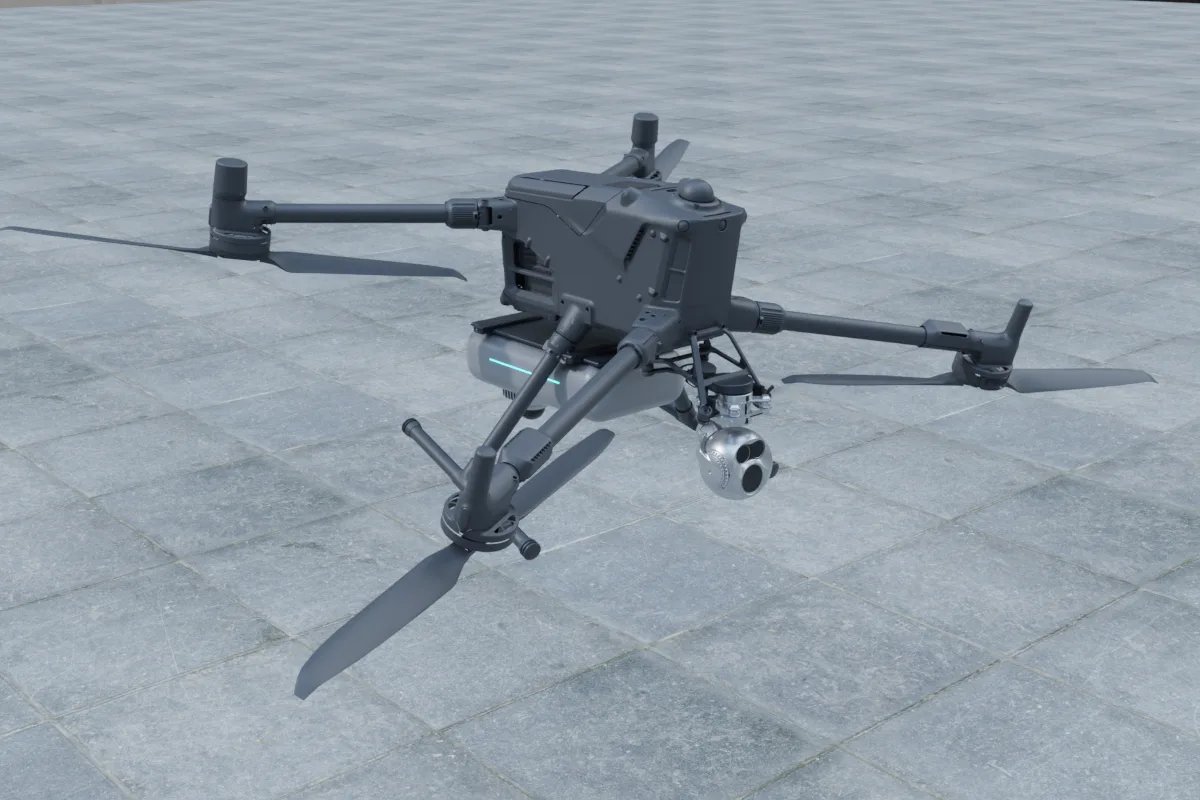
- You already own it. Aircraft, batteries, charging station and pilot training are sunk cost. A pod of up to roughly 1.5 kg all-in does not justify a new airframe.
- The payload replaces the Zenmuse instead of joining it. A mapping pod with its own camera, a gas-sensing pod or a compact LiDAR with onboard computer can each fly alone.
- Transport and site access. At 810 x 670 x 430 mm and about 6.47 kg the 350 RTK is noticeably easier to carry to a tower base or into a plant than a 9.74 kg aircraft of roughly one metre span.
- Wet sites. The 350 RTK is listed with IP55. Remember that the rating covers the aircraft, not your pod; a custom enclosure needs its own sealing design, as explained in our guide on IP ratings for robot payloads.
When to go straight to the Matrice 400
- Camera plus measurement in one flight. Pilot view on a Zenmuse H30T while a LiDAR, gas pod or multi-sensor box records underneath.
- Onboard AI with a large computer. Carrier board, heatsink, fan and enclosure for an Orin-class computer are a real mass, and the 400 absorbs it.
- An independent data link. Mesh or 5G radios with their antennas and ground plane need space away from the aircraft's own antennas.
- Payloads still growing. Research and pilot projects almost always add a sensor in the second phase. Starting with 6 kg of headroom avoids a second integration.
A five-question decision check
- What is the all-in weight: sensor, bracket, enclosure, computer, cables, and any Zenmuse that stays on?
- What is the peak power of the custom load, and does the chosen port supply it?
- Does the pilot need a Zenmuse view during the same flight?
- What endurance do you need with the payload fitted, measured rather than listed?
- Will another sensor be added within a year?
If the answer to question 1 is under about 1.5 kg and questions 3 and 5 are "no", the Matrice 350 RTK is sufficient. Otherwise the Matrice 400 is the safer base, and our guide to custom payloads for the Matrice 400 lists what is commonly integrated on it.
Next step
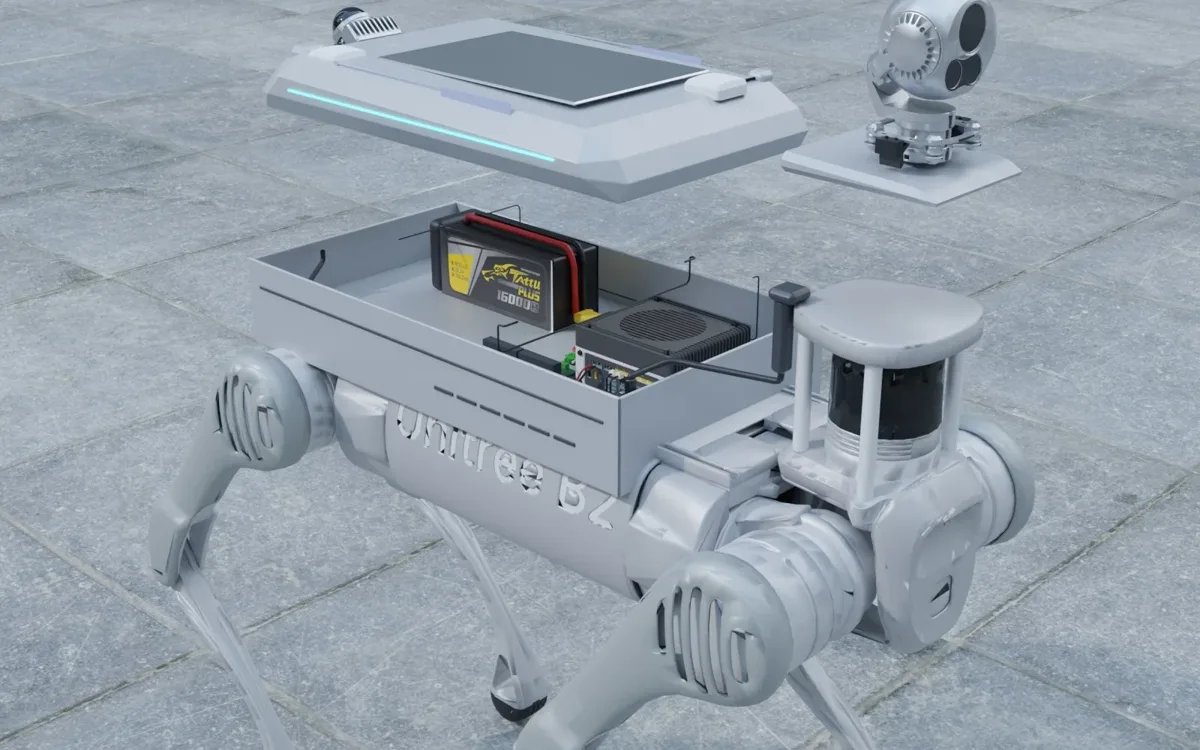
You can compare both aircraft with real component weights in our online payload configurator: select the DJI Matrice 350 RTK or the DJI Matrice 400, add sensors and compute, and read the total weight and peak power. YUANZHI ROBOTICS designs and builds custom drone payloads for both, including the bracket, power and data harness, onboard software and the ground-station display. Send us the sensor list and the mission, and we will tell you which airframe it fits and what the budget looks like.
FAQ
Which is better for a custom payload, the Matrice 350 RTK or the Matrice 400?
The Matrice 400 is better for heavy or combined payloads because it is listed with about 6 kg of payload against about 2.7 kg for the Matrice 350 RTK. The 350 RTK is enough for a single light pod such as a compact LiDAR with a small computer, and it is a smaller aircraft to carry and store.
Can a payload built for the Matrice 350 RTK be moved to a Matrice 400?
Usually the sensor, computer and software carry over, but the bracket, the cable to the aircraft and the centre-of-gravity check must be redone for the new airframe. Plan it as a short re-integration job rather than a plug-in swap, and confirm the interface details against DJI's current Payload SDK documentation.
How much third-party payload can a Matrice 350 RTK carry next to a Zenmuse H30T?
The Zenmuse H30T weighs about 920 g, so on a rated payload of about 2.7 kg roughly 1.7 kg remains for everything else: sensor, bracket, enclosure, computer, cables and fasteners. In practice that means one compact sensor pod, not two.
Does a heavier payload shorten flight time on both aircraft?
Yes. The listed figures of 55 minutes for the Matrice 350 RTK and 59 minutes for the Matrice 400 are without payload. Every added gram and every watt drawn from the aircraft reduces endurance, so measure hover time with the real payload before planning missions.
Who can integrate a non-DJI sensor on a Matrice 350 RTK or Matrice 400?
A payload integrator that designs the bracket, power, data link and software together. YUANZHI ROBOTICS builds custom payloads for both aircraft, including onboard computing and ground-station software.