Clearpath Warthog payloads for agriculture and off-road field work
Updated 2026-11-11 · YUANZHI ROBOTICS engineering team
Short answer: the Clearpath Warthog is a large all-terrain UGV of about 280 kg with a rated payload of about 272 kg (OEM reference figures), so sensor weight is never the limit. A complete field navigation set of a 32-channel LiDAR, dual-antenna RTK GNSS, a stereo camera and a Jetson computer weighs under 2 kg of sensors. What decides a good agricultural payload on a Warthog is where the sensors sit, how they survive dust, mud and vibration, how the RTK antennas are spaced, and how much deck and power you leave free for the implement or sampling tool that does the actual work.
What the Warthog offers as a field platform
The figures we use in our configurator are 1520 × 1380 × 830 mm, about 280 kg vehicle weight and about 272 kg payload. Clearpath describes it as an amphibious all-terrain platform, and it can be fitted with tracks instead of tyres for soft ground. Speed, runtime, gradeability and the user power rails depend on the battery option and version, so take those from the current Clearpath documentation before sizing a mission.
Two consequences matter for farm work. First, the vehicle is 1.38 m wide, so it will not drive between narrow crop rows. It suits orchards and vineyards with wide alleys, pasture, field margins, forestry tracks, drainage channels and open plots. Measure your row spacing before choosing it over a smaller base. Second, with this much payload the deck can carry a tank, a sampling rig, a robot arm or towed equipment in addition to the sensor set, which is the main reason to choose a Warthog at all.
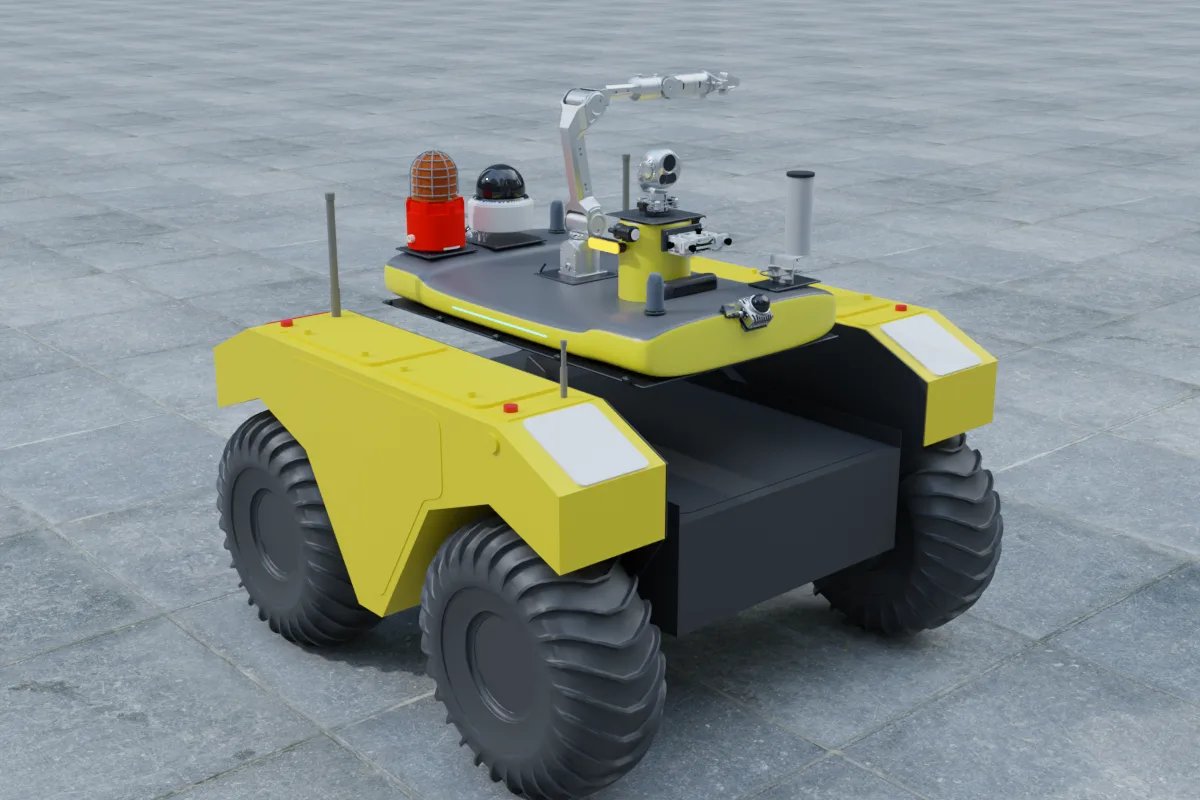
Typical payload sets by task
The table shows component weight and power only, taken from manufacturer datasheets. Brackets, mast, enclosure, DC-DC converters and cables are extra and usually weigh more than the sensors themselves on a vehicle of this size.
| Task | Typical components | Sensor weight | Sensor power |
|---|---|---|---|
| GNSS waypoint and row following | Unicore UM982 dual-antenna RTK receiver, two Harxon HX-CSX601A survey antennas | about 1.0 kg | under 1 W for the receiver |
| Obstacle detection and mapping | Hesai XT32M2X LiDAR (490 g, 10 W), Stereolabs ZED X stereo camera (239 g) | about 0.73 kg | about 11.5 W |
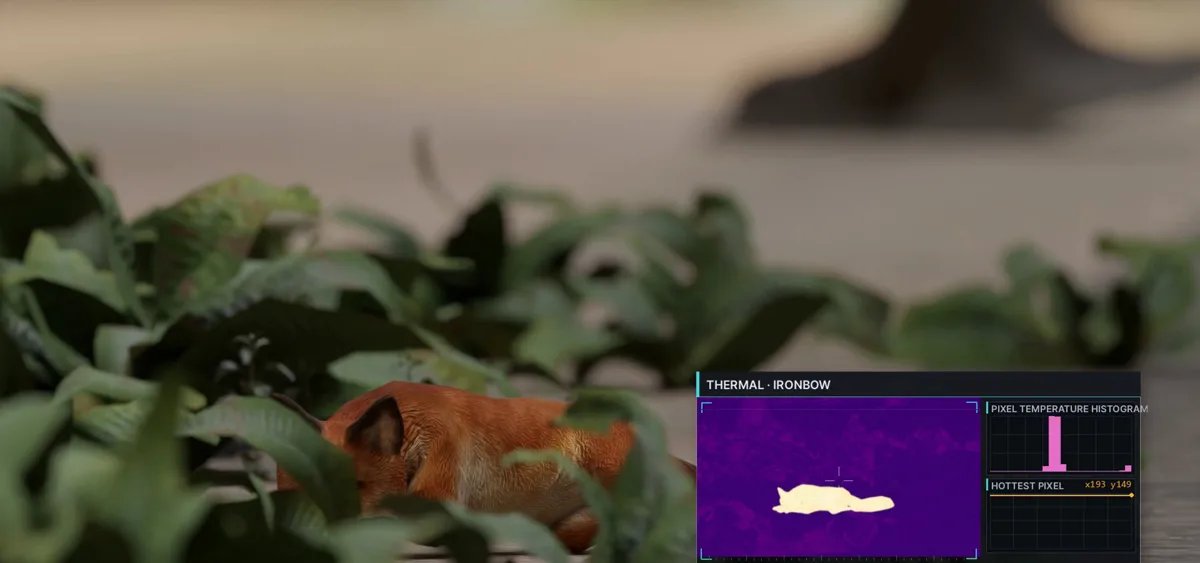
| Livestock, wildlife and night work | Hikvision HM-TD5737T dual-spectrum gimbal | 2.0 kg | 20 W |
| Sampling and manipulation | RealMan RM65-B arm, 5 kg rated payload, 610 mm reach | 7.2 kg | 150 W |
| Remote sites without cellular coverage | Starlink Mini terminal | 1.1 kg | 25 W |
Add all five rows together and the total is about 12 kg, less than 5% of the rated payload. A Jetson AGX Orin 64GB module for perception adds up to 60 W. The power budget for sensing and compute is therefore in the low hundreds of watts; the real power consumers on an agricultural build are pumps, actuators and tools, which need to be budgeted separately against the vehicle battery.
Navigation between rows: RTK first, LiDAR and vision second
In open fields there are few vertical features for LiDAR SLAM, and crops change shape week by week, so a map built in spring is of little use in summer. The dependable base layer is RTK GNSS. A dual-antenna receiver such as the UM982 gives heading even when the vehicle is stationary, which matters at headland turns and when starting a row. Heading quality improves with antenna separation, and a 1.52 m long chassis allows a baseline of a metre or more, far better than what fits on a robot dog. Mount the two antennas on the same rigid member, above the tallest payload item, with a clear sky view. Our dual-antenna RTK guide covers the receiver and correction link choices in more detail.
Under tree canopy, beside buildings and in valleys RTK drops out. That is where LiDAR and stereo vision take over: LiDAR for trunk and post detection in orchards and vineyards, vision for row detection and for telling crop from obstacle. A practical stack fuses RTK, IMU and wheel odometry for position, and uses LiDAR and camera for local obstacle avoidance and row centring. Plan for a correction source as well: an NTRIP service over cellular, or your own base station with a radio link where there is no coverage.
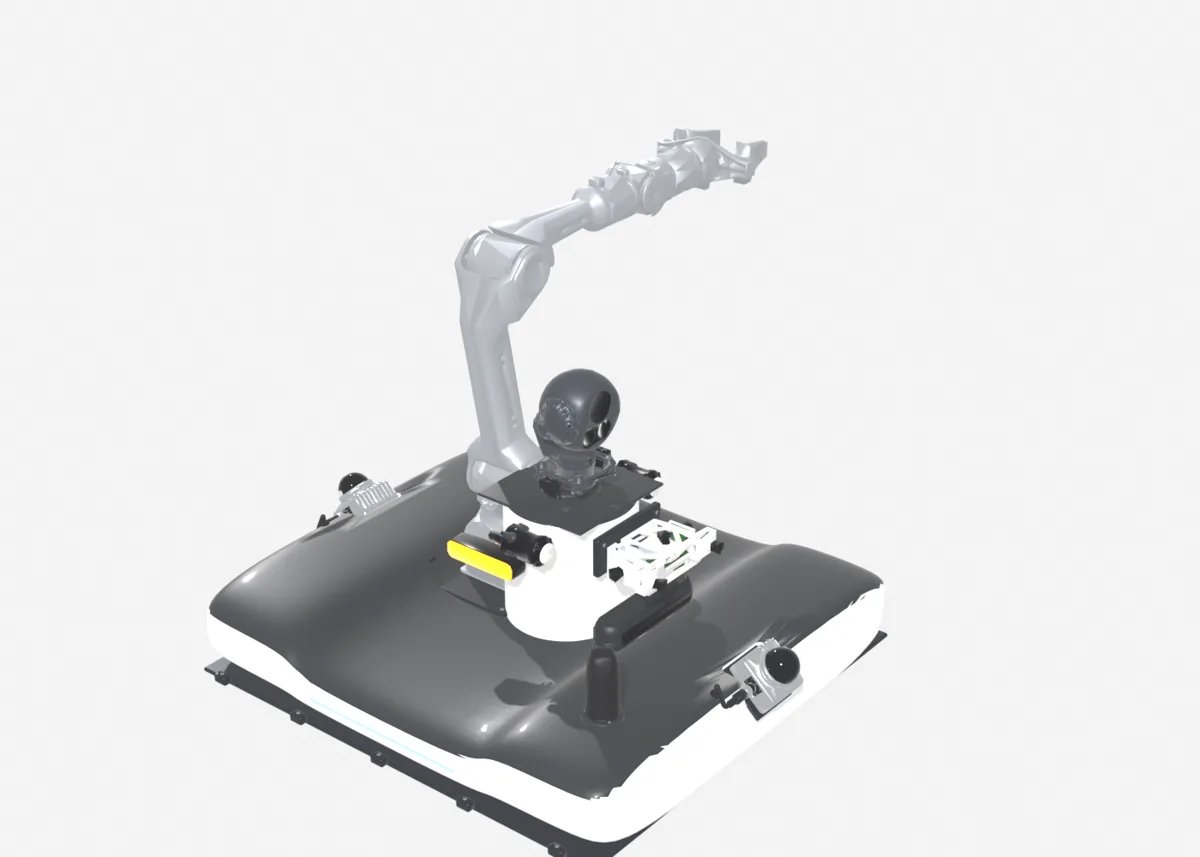
Mounting for dust, mud, water and vibration
- Height. Put the LiDAR and antennas on a mast above the crop and above any tank or tool, so the vehicle body and payload do not shadow them. Keep cameras high enough to stay clear of wheel spray.
- Stiffness. A tall mast on an off-road vehicle is a lever. Brace it, and mount LiDAR and IMU on the same rigid structure so their relative pose does not shift after a rough day.
- Sealing. The sealing of the assembled payload is decided by the enclosure, connectors and cable glands, not by the rating of each sensor. If the vehicle will wade, everything below the waterline needs to be designed for immersion, and the compute enclosure needs a cooling path that does not rely on open vents.
- Cleaning. Dust and dried mud on a LiDAR window or camera lens end a mission faster than any failure. Use recessed windows, leave room for a wipe or air-blast, and make lens cleaning part of the daily checklist.
- Chemicals. Fertiliser and spray residue are corrosive. Use stainless fasteners, sealed connectors and coated brackets on anything near a sprayer.
Warthog, Husky or a tracked base
Choose the Warthog when you need to carry a heavy tool or a large tank, cross ditches, mud or shallow water, or tow equipment. If the job is scouting and data collection with sensors only, a Clearpath Husky A200 at about 50 kg with about 75 kg payload is easier to transport and fits narrower alleys at 670 mm wide. For steep or soft slopes, a tracked base such as the AgileX Bunker Pro, at about 150 kg with about 120 kg payload, sits between the two.
Software work to plan for
Hardware is the smaller part of an agricultural robot. The usual software items are coverage and row path planning from field boundaries, headland turn behaviour, implement control tied to position, safe stopping for people and animals, geotagged data logging, and a remote operator interface that works over a weak link. Ask any integrator which of these they deliver and which you are expected to write.
Next step
You can sketch a Warthog sensor set and see its weight and power in our online payload configurator, then send it to us for review. Platform details are on the Clearpath Warthog, Husky A200 and AgileX Bunker Pro pages, and our scope of work is described under UGV payload integration and robot autonomy development.
FAQ
How much payload can a Clearpath Warthog carry?
The OEM reference figure is about 272 kg on a vehicle of about 280 kg. A navigation sensor set with a 32-channel LiDAR, dual-antenna RTK and a stereo camera weighs under 2 kg, so nearly all of the capacity is available for tanks, tools, arms or sampling equipment. Check the current Clearpath datasheet for your version and battery option.
Is the Clearpath Warthog suitable for row crops?
Only where the rows are wide enough. The Warthog is about 1.38 m wide, so it suits orchards, vineyards with wide alleys, pasture, field margins and open plots. For narrow rows a smaller base such as the Husky A200, about 670 mm wide, is a better fit.
What sensors does a UGV need to navigate in a field?
RTK GNSS is the base layer, ideally a dual-antenna receiver so the vehicle knows its heading while stationary. Add an IMU and wheel odometry for short RTK dropouts, and a LiDAR and stereo camera for obstacle detection and row centring under canopy where satellite signals are weak.
Should I choose a Warthog or a Husky for agricultural research?
Choose the Warthog when the robot must carry a heavy tool or tank, cross mud, ditches or shallow water, or tow equipment. Choose the Husky A200, about 50 kg with about 75 kg payload, when the job is sensor-based scouting and you want something easier to transport that fits narrower alleys.
Who can integrate a custom sensor payload on a Clearpath Warthog?
A UGV payload integrator designs the mast, sealed enclosure, power conversion and harness, and delivers drivers and navigation software. YUANZHI ROBOTICS does this for the Warthog and other UGVs, and you can sketch a configuration in its online payload configurator first.