Clearpath Dingo-D indoor payloads: what fits on a small low-profile base
Updated 2026-11-16 · YUANZHI ROBOTICS engineering team
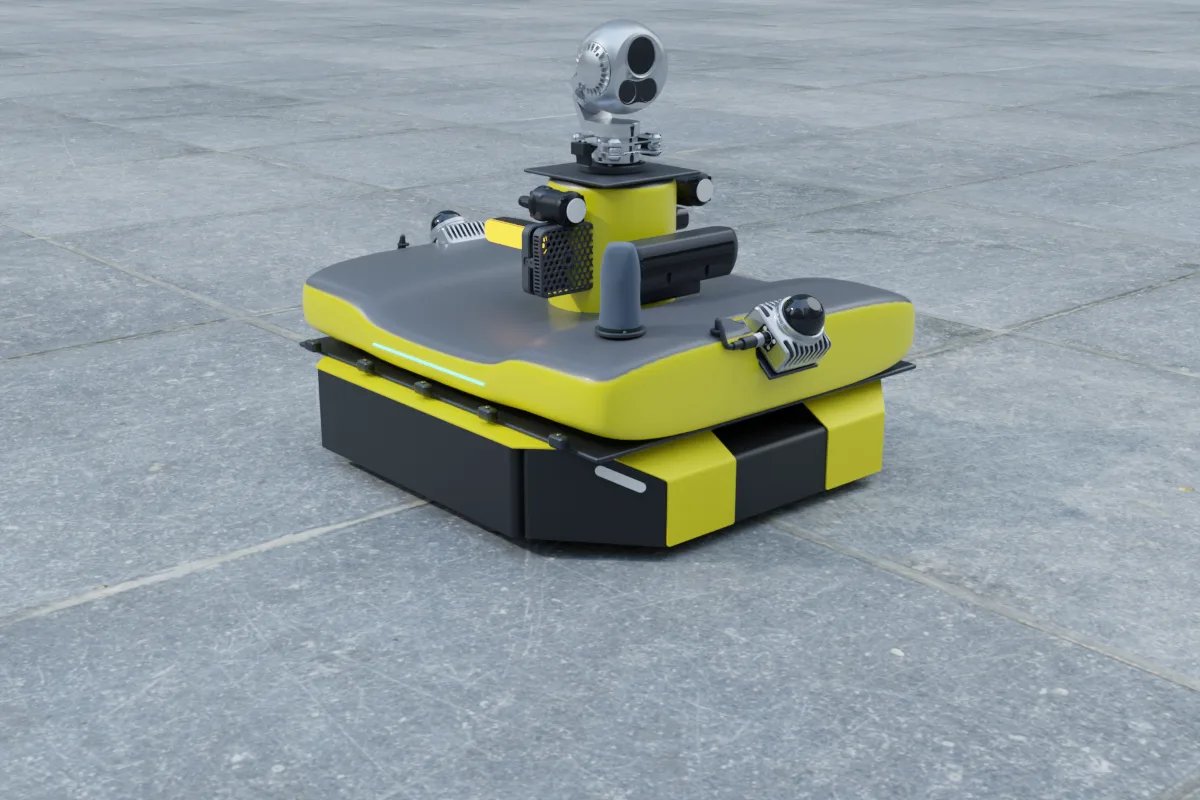
A Clearpath Dingo-D can carry a full indoor mapping and inspection payload with plenty of margin. In our platform catalog the Dingo-D measures 681 x 513 x 168 mm, weighs 13 kg and is rated for a 20 kg payload, while a typical indoor stack of a 360-degree LiDAR, one or two depth cameras, a Jetson compute module and a small thermal core weighs only a few kilograms. On this base the hard design questions are sensor height, runtime and mechanical stiffness, not mass.
Why the Dingo-D suits indoor payloads
The Dingo-D is a compact wheeled base meant for smooth indoor floors. Its deck sits only 168 mm off the ground, which keeps the centre of mass low and makes the robot hard to tip when it stops or turns. That same low profile is the main design constraint: a LiDAR bolted directly to the deck sees mostly table legs, cable trays and ankles. Almost every useful Dingo payload therefore has two layers: a flat mounting plate on the deck for compute, power and cabling, and a short mast or raised bracket that lifts the LiDAR and cameras into a clear line of sight.
A realistic indoor sensor stack, with real numbers
The table below lists components we commonly fit on small indoor UGVs. Weights and power figures come from our component catalog; where the catalog does not list a figure we leave it blank rather than guess.
| Role | Component | Size | Mass | Power |
|---|---|---|---|---|
| 3D LiDAR for SLAM | Livox Mid-360 | 65 x 65 x 60 mm | 265 g | 6.5 W |
| Wide-view 3D LiDAR (alternative) | Ouster OS0 | 87 mm dia. x 58 mm | 430 g | 20 W |
| Near-field depth | Intel RealSense D435i | 90 x 25 x 25 mm | 75 g | 2.5 W |
| Thermal core (radiometric) | FLIR Lepton 3.5 | 11.8 x 7.1 x 12.7 mm | 0.9 g | 0.14 W |
| Higher-resolution thermal core | FLIR Boson 640 | 21 x 11 x 21 mm | 7.5 g | 0.5 W |
| Onboard compute | Jetson Orin NX 16GB module | 69.6 x 45 mm | - | up to 40 W |
| Compute (boxed) | Seeed reComputer J4012 | 130 x 120 x 58.5 mm | - | 19 W |
| Mounting plate | Aluminium plate with dual rails | - | 0.65 kg | - |
Add these up and a LiDAR, two depth cameras, a thermal core, a boxed Orin NX and a mounting plate stay well under 2 kg before the mast and cabling. Even with an aluminium-extrusion frame (2.4 kg in our catalog) you remain a long way below the 20 kg rating. That margin is better spent on a stiffer mast than on more sensors.
Mast height and sensor placement
For indoor SLAM, the LiDAR should sit above anything the robot passes routinely: chair seats, desk edges, rack shelves at knee height. On the Dingo this usually means a mast that puts the LiDAR head somewhere between waist and chest height, with the exact figure set by the building. Three practical rules:
- Keep the LiDAR above the robot's own structure. A 360-degree sensor that sees its own mast or handle produces a permanent blind wedge and fake obstacles. Route the mast behind the sensor, or mount the sensor on top.
- Put depth cameras low and tilted down. The LiDAR on a mast cannot see a box or a cable on the floor right in front of the wheels. A D435i at deck height, angled slightly down, covers that gap.
- Stiffen the mast. A tall, thin mast on a low base will sway when the robot brakes, and that sway shows up as smearing in the map. Use a wide base flange, a short mast where possible, and avoid hanging heavy items at the top.
Power and runtime
Weight is easy on the Dingo; energy is not. Every watt the payload draws comes out of the same battery that drives the wheels. A Mid-360 (6.5 W), two D435i (5 W total) and a reComputer J4012 (19 W) add roughly 30 W of continuous load before the thermal core, network radio and DC-DC losses. If you choose an Orin NX module in a high power mode, or an Ouster OS0 instead of the Mid-360, the payload can approach or exceed 60 W. For long patrols, budget the payload power first, then check the remaining runtime against the inspection route. Our payload weight and power budget guide walks through the arithmetic.
Use a regulated DC-DC stage between the robot battery and the payload, fuse each branch, and give the compute a clean shutdown path. A small DC-UPS board such as the mini-box OpenUPS lets the computer save logs and close files when the main supply drops.
Software integration on ROS 2
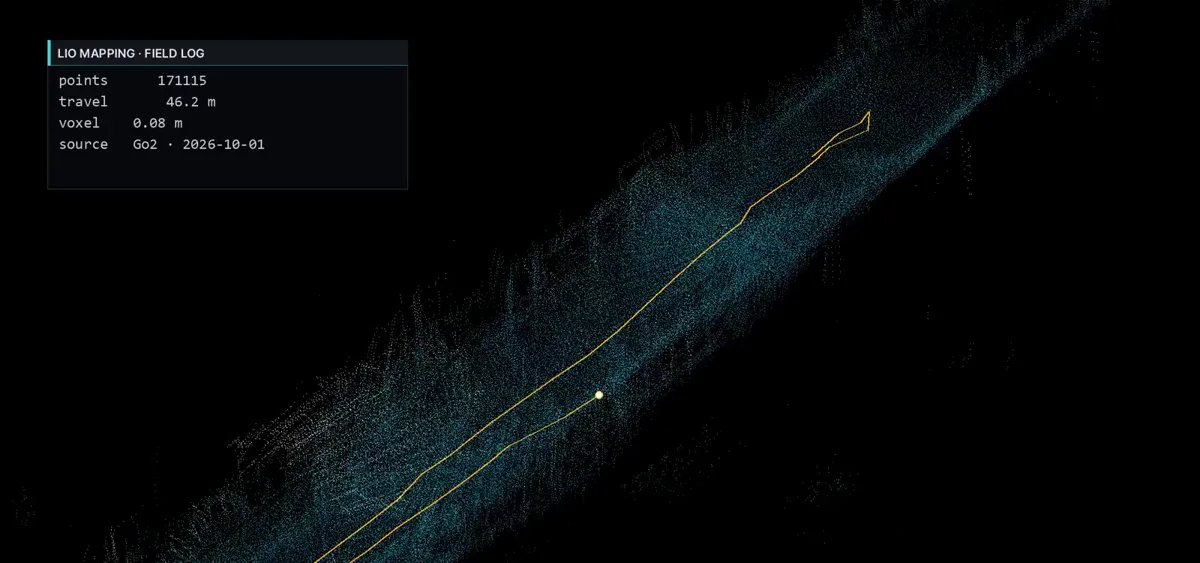
The Dingo runs on ROS, so most of the payload work is software plumbing rather than new code: adding the sensors to the URDF, publishing correct TF frames from the mast geometry, running the LiDAR and camera drivers on the payload computer, and feeding a SLAM or localization node that the robot's navigation stack can use. Time synchronisation matters more than people expect; if the LiDAR, IMU and cameras are stamped on different clocks, maps blur and obstacle positions jump. Our ROS 2 driver checklist lists the usual checks.
When a different base is a better choice
| Need | Better fit | Why |
|---|---|---|
| Indoor floors only, compact and stable | Clearpath Dingo-D | Low deck, light base, ample payload rating for sensors |
| Ramps, loading docks, outdoor yards | Clearpath Jackal | Built for outdoor and mixed terrain (17 kg, 20 kg payload in our catalog) |
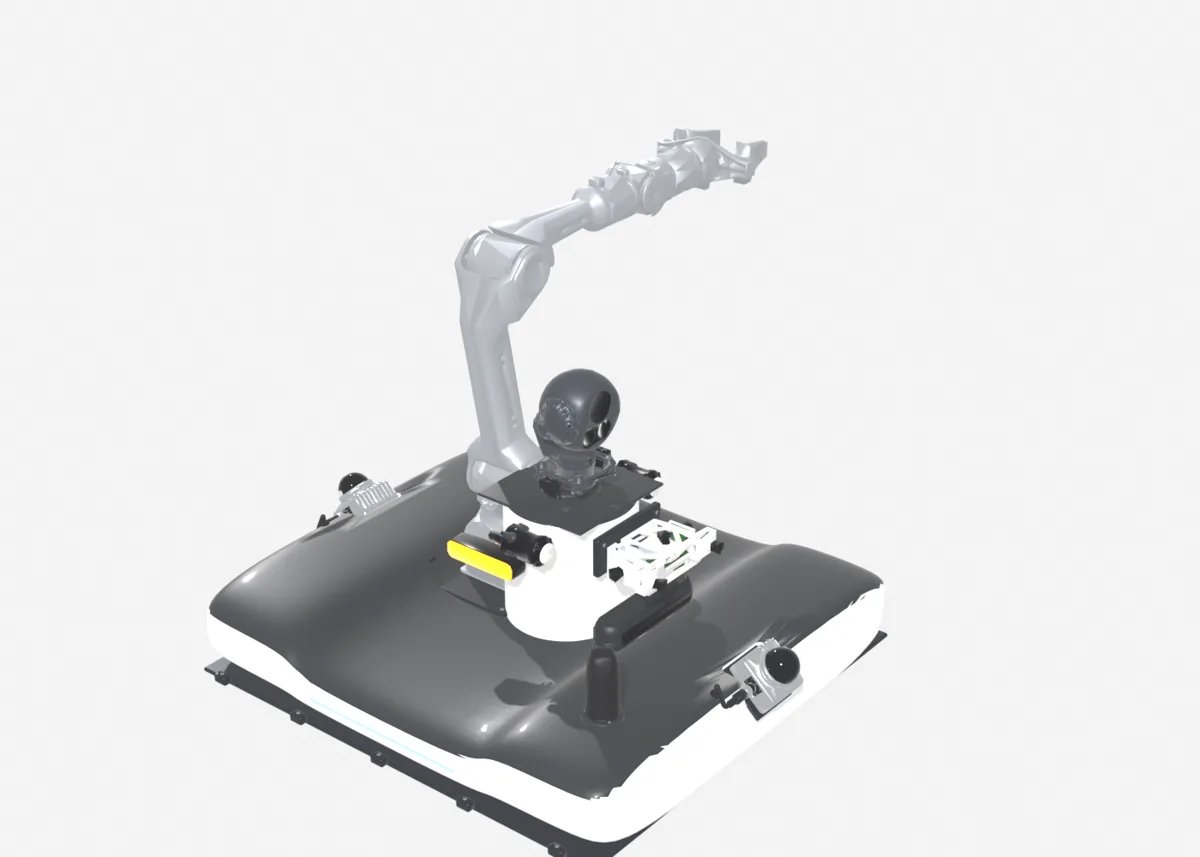
| Robot arm or heavy manipulation | Clearpath Ridgeback | Omnidirectional base rated for 100 kg in our catalog |
| Stairs or multi-level sites | A robot dog | Wheeled bases cannot climb stairs |
Next steps
You can try different sensor combinations on the Dingo and see the total mass and power in our online payload configurator, or read the Clearpath Dingo-D platform page for the base itself. If you need a complete build, see our UGV payload integration service, and for navigation and custom inspection software on top of the hardware, our robot autonomy service.
FAQ
What payload can a Clearpath Dingo carry?
Our catalog lists the Dingo-D at 13 kg with a 20 kg rated payload. A complete indoor sensor payload with LiDAR, depth cameras, compute and a mounting plate is usually only a few kilograms, so weight is rarely the limit. Check Clearpath's current documentation for your exact build and keep the centre of mass low and central.
Is the Clearpath Dingo good for indoor mapping?
Yes, for smooth indoor floors such as offices, labs, data halls and warehouse aisles. Its low body makes it stable, but you will normally raise the LiDAR on a short mast so the scan clears furniture and people's legs. It is not intended for rough outdoor terrain; for that a Jackal or Husky is a better base.
Which LiDAR should I put on a Dingo?
A compact 360-degree LiDAR such as the Livox Mid-360 (265 g, about 6.5 W) is a common choice for indoor SLAM. An Ouster OS0 (430 g, about 20 W) gives a wider vertical view for close-range 3D coverage but costs more power. Mount it high enough to clear the robot's own structure.
Can a Dingo run ROS 2 navigation with an added payload?
Yes. The Dingo is a ROS-based platform, and an added payload typically provides LiDAR, camera and IMU topics to the robot's ROS 2 stack. The integration work is in the URDF, TF frames, driver configuration and Nav2 tuning for your building.
Dingo-D vs Jackal: which one for indoor inspection?
The Dingo-D is lower and lighter and is designed for indoor floors. The Jackal (508 x 430 x 250 mm, 17 kg, 20 kg payload in our catalog) is built for outdoor and mixed terrain. If the robot never leaves the building, the Dingo is usually the simpler choice.