Best UGV for outdoor perimeter security patrol: Husky, Hunter 2.0, Bunker or Warthog
Updated 2026-11-15 · YUANZHI ROBOTICS engineering team
For most outdoor perimeter patrols that carry a PTZ camera, a thermal camera, LiDAR and GNSS, the AgileX Hunter 2.0 is the practical default. Its listed payload is 150 kg at about 65 kg of vehicle weight, which leaves room for a tall camera mast and extra batteries. Clearpath Husky A200 is the better pick when software maturity matters more than payload. AgileX Bunker suits soft or steep ground, and Warthog is only worth its size on large, rough sites.
Start from the route, not the brochure
Three questions decide most UGV choices for perimeter patrol. First, what is the ground: paved yard, compacted gravel, mud, grass or slopes? Second, how long is one patrol loop and how many loops per night? Third, what does the payload weigh once the camera mast, thermal camera, LiDAR, GNSS antennas, compute box, radio and batteries are added up? Write those three answers down before you compare platforms.
Platform comparison
| Platform | Vehicle weight | Listed payload | Size (L x W x H) | Best fit |
|---|---|---|---|---|
| AgileX Hunter 2.0 | 65 kg | 150 kg | 980 x 745 x 380 mm | Default for yards, parks and fence lines |
| Clearpath Husky A200 | 50 kg | 75 kg | 990 x 670 x 390 mm | Light payloads and the strongest ROS base |
| AgileX Bunker | 145 kg | 70 kg | 1023 x 778 x 400 mm | Tracked base for soft ground and slopes |
| Clearpath Warthog | 280 kg | 272 kg | 1520 x 1380 x 830 mm | Heavy payloads on large, rough sites |
Figures are the weight, payload and size values in our platform catalog. Check the current datasheet before you order, because payload limits depend on the battery and the mounting height of the centre of gravity.
Hunter 2.0: the default for most sites
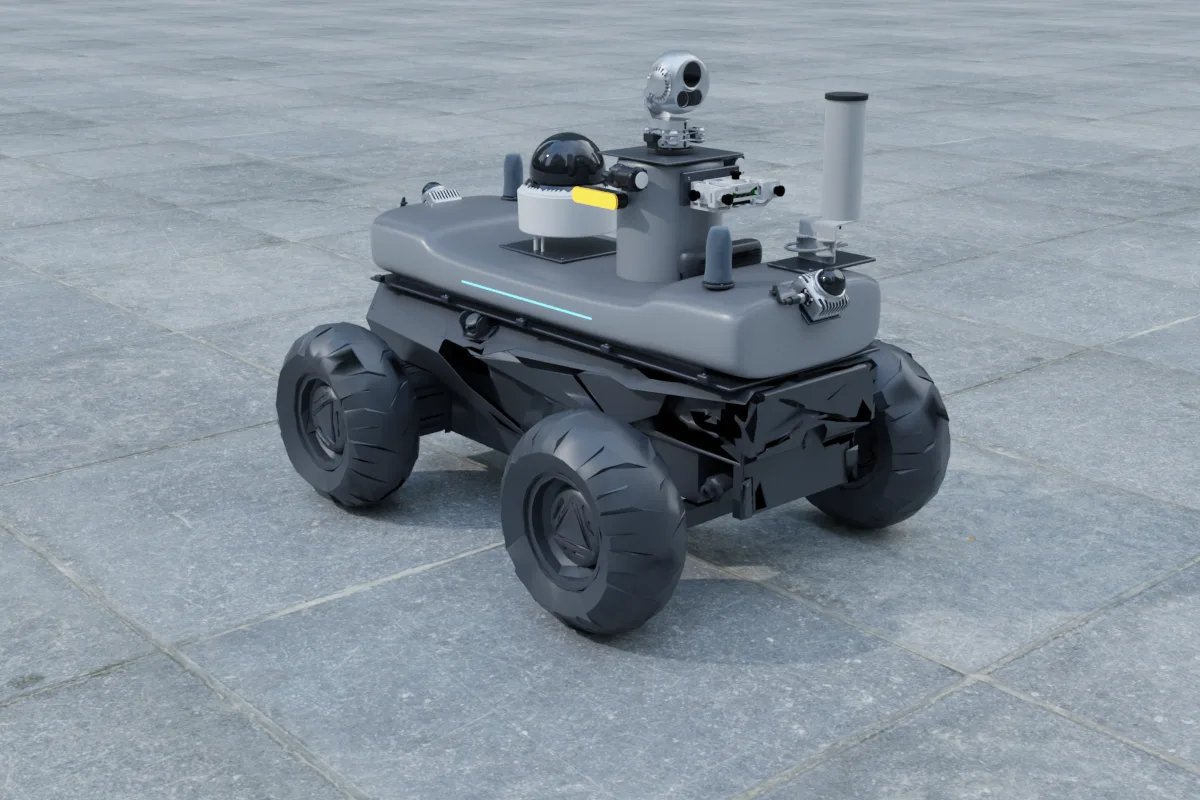
A patrol route usually means long straight runs, gentle turns and a few kerbs or drains. A four-wheel-drive base with a high payload limit handles that without a heavy frame. The large payload margin matters because a camera mast raises the centre of gravity, and a thermal camera plus a second battery can add several kilograms quickly.
Husky A200: when software comes first
The Husky A200 is a lighter platform with a larger body of published ROS documentation. If your team already runs Nav2 and needs a standard base for a research or inspection programme alongside the patrol, the time saved on integration can outweigh its lower payload. Its smaller payload limit means you must keep the mast short and the battery count low.
Bunker: tracks for soft ground
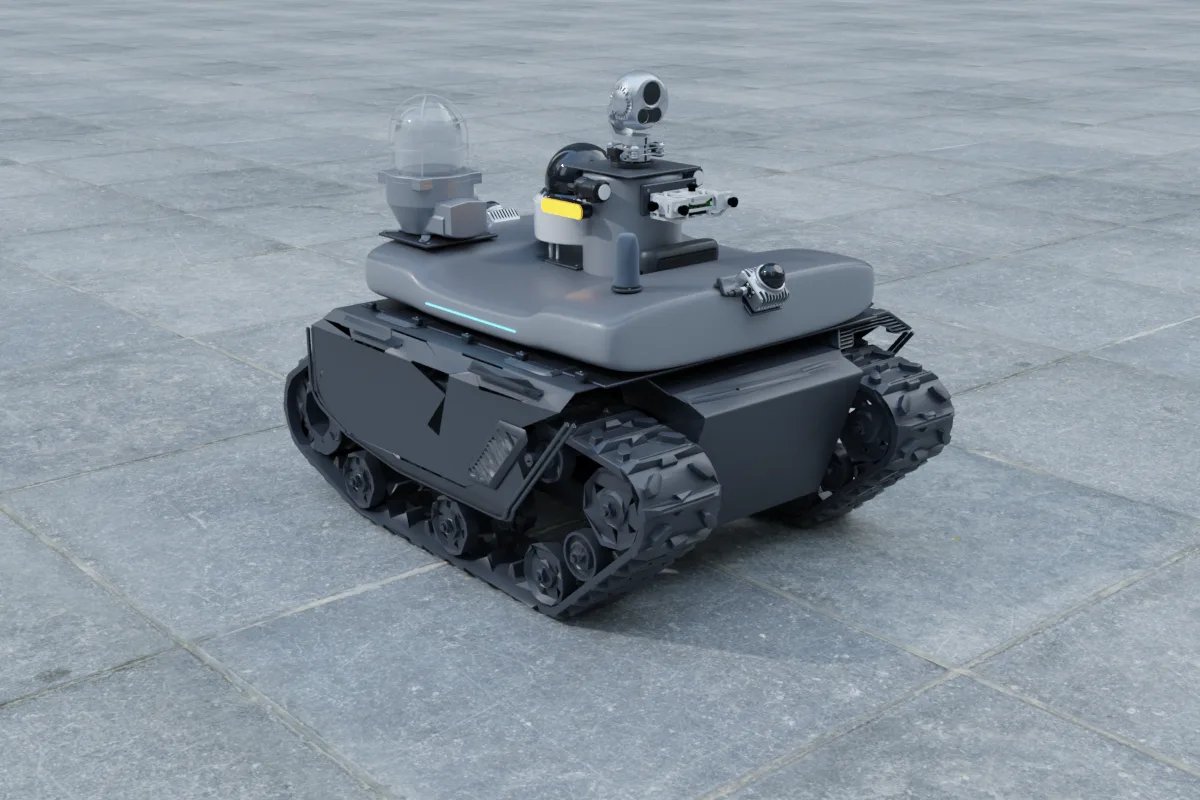
Tracks spread the weight over a wider footprint, so the Bunker is more stable on sand, mud, wet grass and slopes that would stop a wheeled base. AgileX lists IP67 for the Bunker, which matters for rain and dust, and the 70 kg payload is enough for a standard camera mast and LiDAR. The trade-off is weight and running cost. Choose it only when the ground demands it, and check the turning behaviour on your actual surface, because tracked turns scrub the ground.
Warthog: only for large, heavy jobs
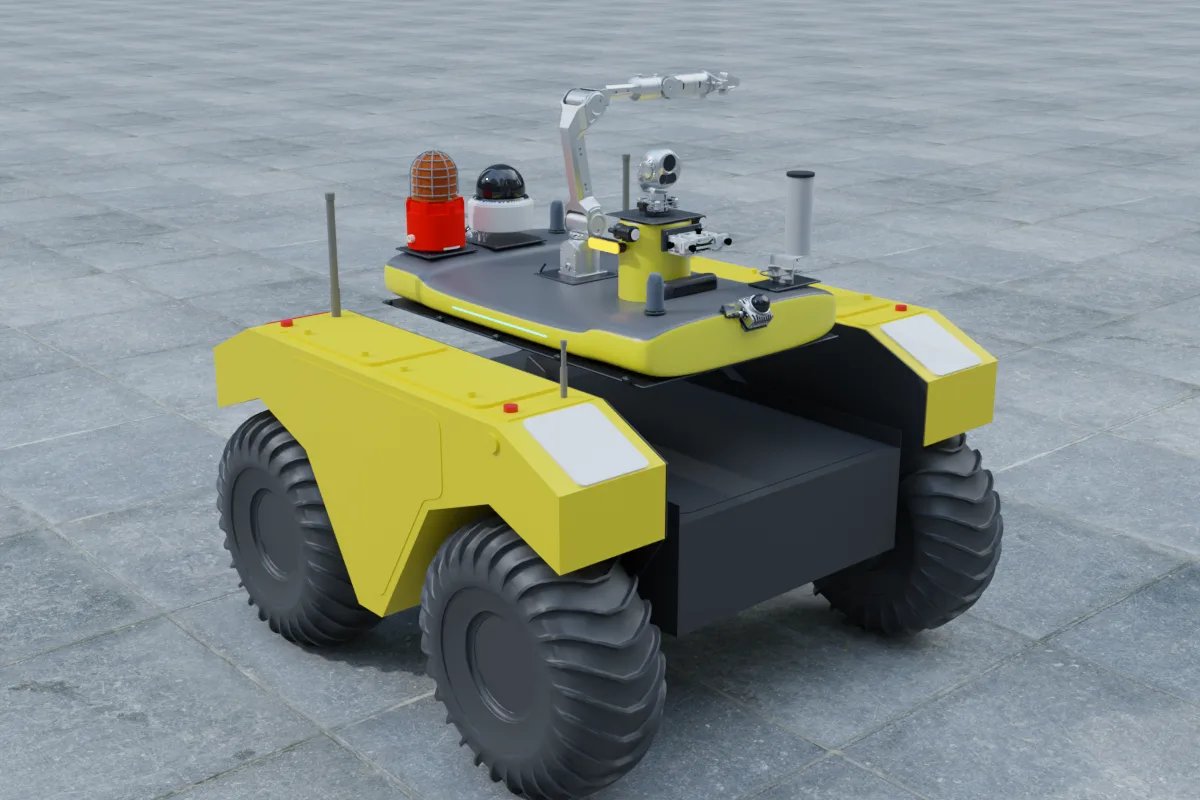
At 280 kg, the Warthog is a different class. Its payload of about 272 kg suits heavy sensor towers and multi-sensor rigs, and sites where a small vehicle cannot carry the mission. For a perimeter fence line or a car park it is oversized: it needs a trailer or a crane to move, a larger charging setup and more care around people.
Sensors every patrol payload needs
Whatever base you choose, the patrol payload has the same core: a PTZ camera for identification, a thermal camera for night detection, LiDAR for mapping the fence line and detecting obstacles, and RTK GNSS so waypoints stay georeferenced. Mount the camera high enough to see over the vehicle body, keep the LiDAR clear of the camera mast, and route cables so the mast can be lowered for transport. The camera choice is covered in choosing a PTZ zoom camera for a robot dog, the thermal gimbal choice in choosing a thermal gimbal, and outdoor heading in adding RTK GNSS.
Questions to answer before you pick
Ask each supplier four things: the payload that is confirmed with the battery you need, the mounting plan for the mast and centre of gravity, the ROS version and navigation stack they support, and who supports the integrated payload after delivery. A low-cost base with no integration support often costs more in the first month than a higher-tier base with a clear handover.
If you have a site and a patrol route, we can check the payload weight and mounting against the platform you are considering in our payload configurator. For the vehicle itself, see the AgileX Hunter 2.0, Clearpath Husky A200, AgileX Bunker and Clearpath Warthog platform pages, and our UGV payload service for integration.
FAQ
Which UGV is best for outdoor security patrol?
For a typical fence-line or yard patrol with a camera mast, thermal camera and LiDAR, AgileX Hunter 2.0 is the usual starting point. It is light enough to move on a trailer and lists a 150 kg payload. Choose Bunker if the ground is soft, muddy or steeply sloped.
Is Clearpath Husky A200 better than Hunter 2.0 for patrol?
Husky A200 has the larger ROS ecosystem and documentation, which saves time on navigation and integration. Its listed payload is about 75 kg against 150 kg for Hunter 2.0, so a heavy sensor mast or a second battery usually points to Hunter 2.0.
Do I need a tracked UGV for a security patrol?
Not for paved or compacted sites. Tracks help on loose gravel, soft ground, snow and steep banks. Wheeled bases are lighter, cheaper to run and easier to repair, so use tracks only when the terrain demands them.
How much payload does a patrol UGV need?
Add up the PTZ camera, thermal camera, LiDAR, GNSS antennas, compute box, radio and batteries, then keep a margin for mounting hardware and cable. A patrol payload with a camera mast and LiDAR is often a few kilograms to about 10 kg, but the exact figure depends on the sensors you pick.