Choosing a PTZ zoom camera for a robot dog: security dome, drone gimbal or fixed camera
Updated 2026-11-04 · YUANZHI ROBOTICS engineering team
Almost every inspection payload has a pan-tilt-zoom camera on it, and the choice of that camera decides a surprising amount of the rest of the payload: the mass budget, the height of the structure, the power supply, and what the software can do with the images. This guide covers the three camera families that actually get used on quadrupeds, what zoom and resolution you need for the common inspection tasks, how weight and mounting orientation narrow the choice, and the interfaces that matter if you plan to train detection models on the recorded images.
The three camera families
- Security speed domes from Hikvision, Dahua and their thermal brands (HIKMICRO, Dahua Thermal). A 1/2.8" 4 MP visible sensor behind a 25 to 40x optical zoom lens, often paired with a 256 by 192 or 384 by 288 thermal core in the same head. Pan 360° continuous, tilt from about -5° to +90°, IP66, heated for cold climates, powered from 24 VAC, 36 or 48 VDC or Hi-PoE at up to about 30 W. Streams RTSP and ONVIF, has a vendor SDK, and reads temperatures in the thermal channel. Weight 3 to 6 kg depending on the size class.
- Drone gimbals from SIYI, Gremsy, Viewpro and the DJI payload line. Three-axis stabilized, a 1/2.8" or 1/1.8" 4K sensor with digital zoom or a modest optical zoom (10 to 30x on the larger units), sometimes a 640 by 512 thermal core alongside. Weight from about 200 g to 1 kg. Controlled over UART, S.Bus or Ethernet with a published protocol; video over Ethernet or HDMI. Not usually rated for rain; designed for a gimbal mount under an airframe.
- Fixed camera on a pan-tilt unit: an industrial GigE or USB camera, or a 4 MP network camera, on a two-axis servo or stepper pan-tilt. No optical zoom unless a motorized zoom lens is added. Under 1 kg, inexpensive, fully open for software, and the camera can be whatever the vision task needs (global shutter, specific lens, high frame rate).
What zoom and resolution you need
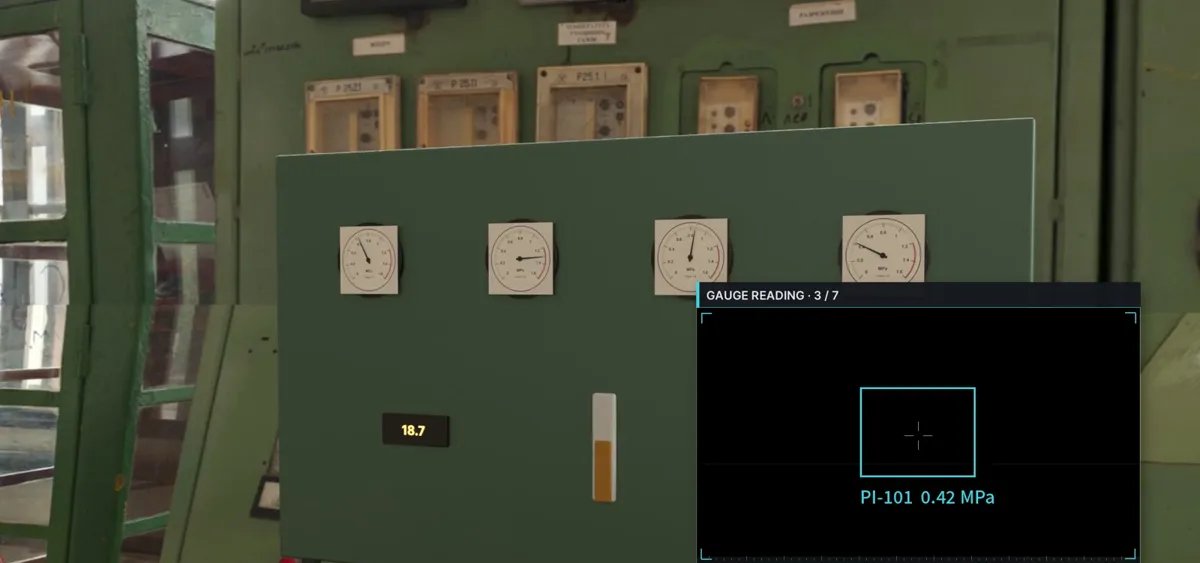
The question is what the camera has to read and from how far. A pressure gauge with a 100 mm dial read from the walkway 4 to 6 m away needs the dial to fill at least 200 to 300 pixels for the needle angle to be measured reliably. On a 4 MP sensor with a 60° wide-angle view, the dial is about 40 pixels across at 5 m; at 10x it is about 400 pixels, which is enough. Reading a nameplate or a small LCD display wants more, which is where 25 to 40x earns its place, and where the robot can stand further from hot or energized equipment. For general visual coverage of a room, for detecting people and objects, and for building training datasets, a 4K sensor with no optical zoom is sufficient, and the digital crop at 4K gives a usable 2x to 3x.
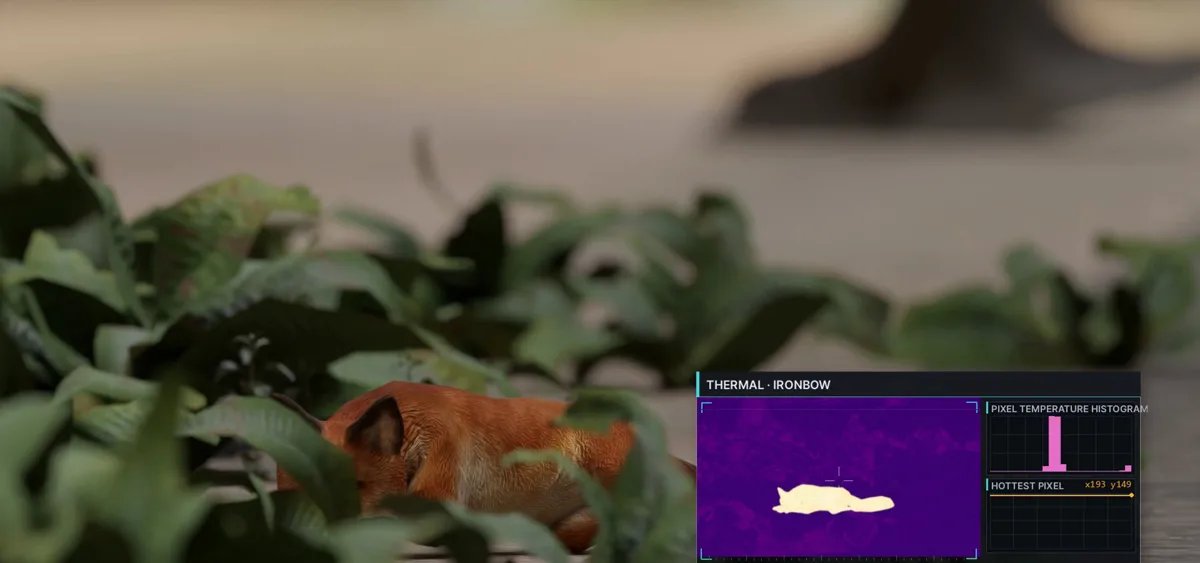
Thermal resolution follows the same logic: a 256 by 192 core with a 10 mm lens resolves a hot connector at 10 to 15 m; a 384 by 288 core with a longer lens about twice that; a 640 by 512 core is for reading small components from a distance or for pattern-based diagnosis. Most robot dog rounds at a substation or a plant are satisfied by 256 by 192 for spotting hot spots and 384 by 288 where the thermal image itself is the inspection record.
Weight and mounting decide more than features
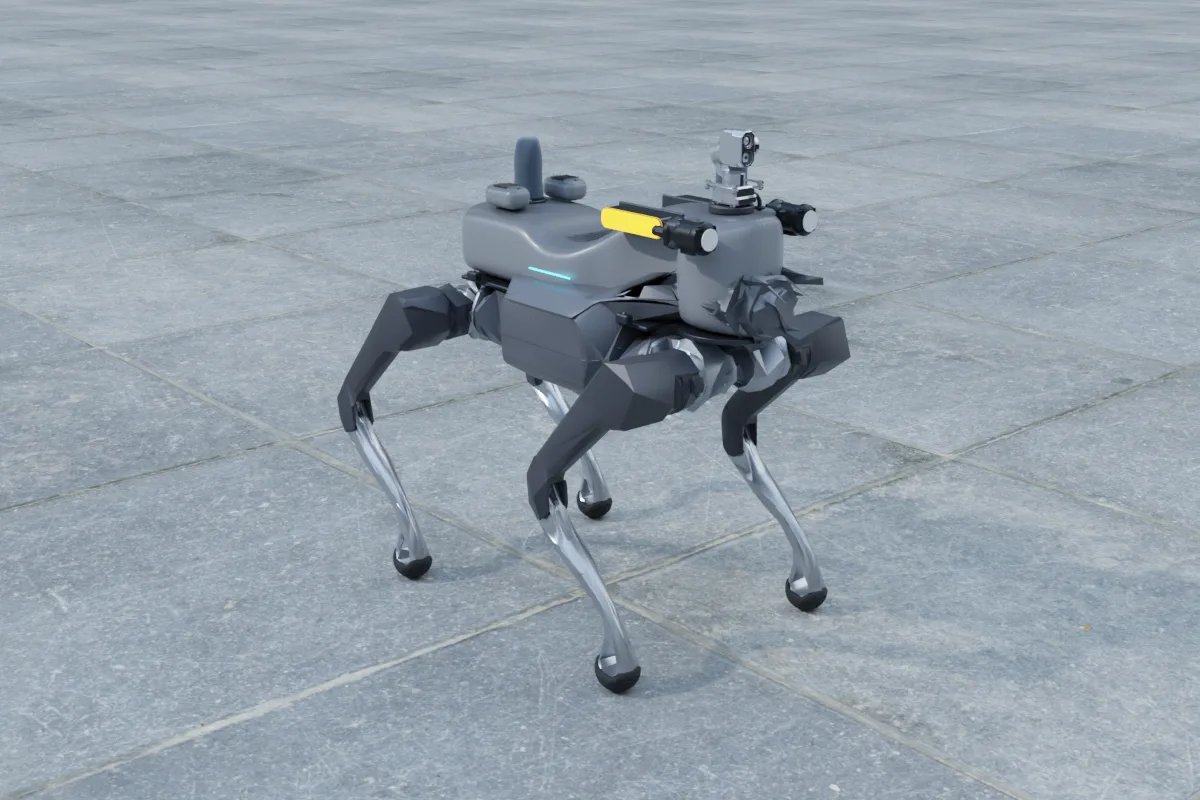
A 5-inch dome at about 4 kg plus its bracket is a quarter of a B2's or X30's useful payload, and it sits high. On those robots it is the standard choice and works well. On a Go2, Lite3 or AS2 class robot with a few kilograms of payload, a dome is out, and the drone gimbal or the fixed camera is the only option; the whole payload then stays under 2.5 kg.
Orientation matters as much as mass. A security dome is built to hang: its tilt range covers the horizon down to straight below, and the heater, the drain and the sunshield assume the dome points down. Put it on the robot's back dome-up and it looks at the ceiling. The usual solution is an inverted-U bracket at the rear of the payload shell that hangs the dome with its base about 20 to 25 cm above the back plate, which places the lens at roughly the height of a standing person's chest on a B2 and keeps the robot's own body out of the lower part of the field of view. The bracket, its vibration isolation and a cable gland add about 0.5 kg. A drone gimbal is designed to hang too, but it is light enough to hang from a short arm at the front of the shell, where it also sees the ground ahead.
Stabilization is the other practical difference. A dome has none; the robot stands still at each checkpoint, takes the readings, and walks to the next one, which is how an inspection round works anyway. A three-axis gimbal holds a steady picture while the robot walks, which matters for live video to a control room and for following a person or a vehicle.
Interfaces for recording and training
If the images will be used to train detection or reading models, the camera has to give the payload computer a stream and a state. Security domes are the easiest: an RTSP main stream at 2688 by 1520, ONVIF for pan-tilt-zoom control and presets, and a vendor SDK (Hikvision's ISAPI, Dahua's) for the thermal data and the temperature readings. The payload software records each frame together with the pan, tilt and zoom values and the robot's pose from SLAM, so that a frame can later be reprojected to a checkpoint. Drone gimbals give RTSP over Ethernet and a control protocol over UART or UDP, documented by the manufacturer; the state has to be requested rather than embedded. A fixed camera is the most open of all; a GigE camera with a global shutter is what we use when a customer's vision team specifies the sensor.
Avoid cameras that stream only to a phone app, cameras whose zoom and focus cannot be set from software, and cameras whose SDK is Windows-only when the payload computer is a Jetson running Linux. Check that the RTSP stream keeps running when the camera's web interface is also open, and that the pan-tilt-zoom position can be read back, not only commanded.
Power and cabling
A dome draws 10 to 15 W while idle and up to 30 W with the heater on, from 24 VAC, 36 or 48 VDC, or Hi-PoE. On the robot it is fed from the payload's 48 V bus or a dedicated DC-DC converter, through a single jacketed cable with Ethernet and power that enters the dome's base through its own gland. Drone gimbals run from 12 V at a few watts. A fixed camera on a pan-tilt unit needs power for the servos, which can draw more than the camera when they move.
Our recommendations by platform
- Unitree B2, DEEP Robotics X30, large UGVs: a dual-spectrum security dome (4 MP, 25 to 40x, 256 by 192 or 384 by 288 thermal) hung from the rear of the payload. The complete inspection head for substations, plants and tunnels.
- Unitree Go2, DEEP Robotics Lite3, AS2 class, small UGVs: a drone gimbal with a 4K sensor and, where thermal is needed, a small thermal core, hung from the front of the shell; or a fixed 4 MP camera on a two-axis pan-tilt for research and dataset work.
- Any platform where the vision team specifies the sensor: a GigE industrial camera on a pan-tilt unit, with the lens chosen for the task.
If you tell us the robot, what the camera has to read and from how far, and whether the images are for operators, for records or for training, we will tell you which camera we would put on it and what it does to the mass and power budget.
FAQ
Do I need optical zoom on a robot dog camera?
For reading gauges, labels and switch positions from the walkway, yes: a gauge 5 m away needs about 10x to fill the frame, and 25x or more lets the robot read from a safe standoff. For general visual coverage and dataset collection a 4K sensor with digital crop is enough.
Why do security domes have to be mounted upside down?
A speed dome's tilt range runs from a few degrees above the horizon down to straight below, because it is designed to hang from a ceiling or a wall bracket. Mounted dome-up on a robot's back it can only see from the horizon upward. On a robot it is hung from an inverted-U bracket at the rear of the payload, which adds height and about 0.5 kg of structure.
How much does a PTZ camera weigh?
A 5-inch security dome is about 4 kg; a 7-inch dual-spectrum dome with a 384 by 288 thermal core is heavier still. A drone gimbal with a 4K sensor and a small thermal core is a few hundred grams. A fixed 4 MP camera on a two-axis pan-tilt unit is under 1 kg. The robot decides: B2 and X30 carry a dome, Go2 and Lite3 do not.
Can I record training data from the camera?
Yes, as long as the camera gives a standard stream. Security domes provide RTSP and ONVIF plus a vendor SDK, so the payload computer records frames with the pan, tilt and zoom state and the robot pose for each frame. Drone gimbals give an RTSP stream and a control protocol over UART or Ethernet. Avoid cameras that only stream to a phone app.
Is a stabilized gimbal necessary on a quadruped?
A walking quadruped moves the camera about 20 to 40 mm vertically at each step, which at high zoom is visible as a bounce. Security domes have no stabilization, so the robot stands still for each reading, which is how inspection rounds work anyway. A three-axis drone gimbal holds the image steady while walking, which matters for video streaming and for following a moving target.