Who can integrate a third-party payload on a DJI Matrice 350 RTK?
Updated 2026-11-15 · YUANZHI ROBOTICS engineering team
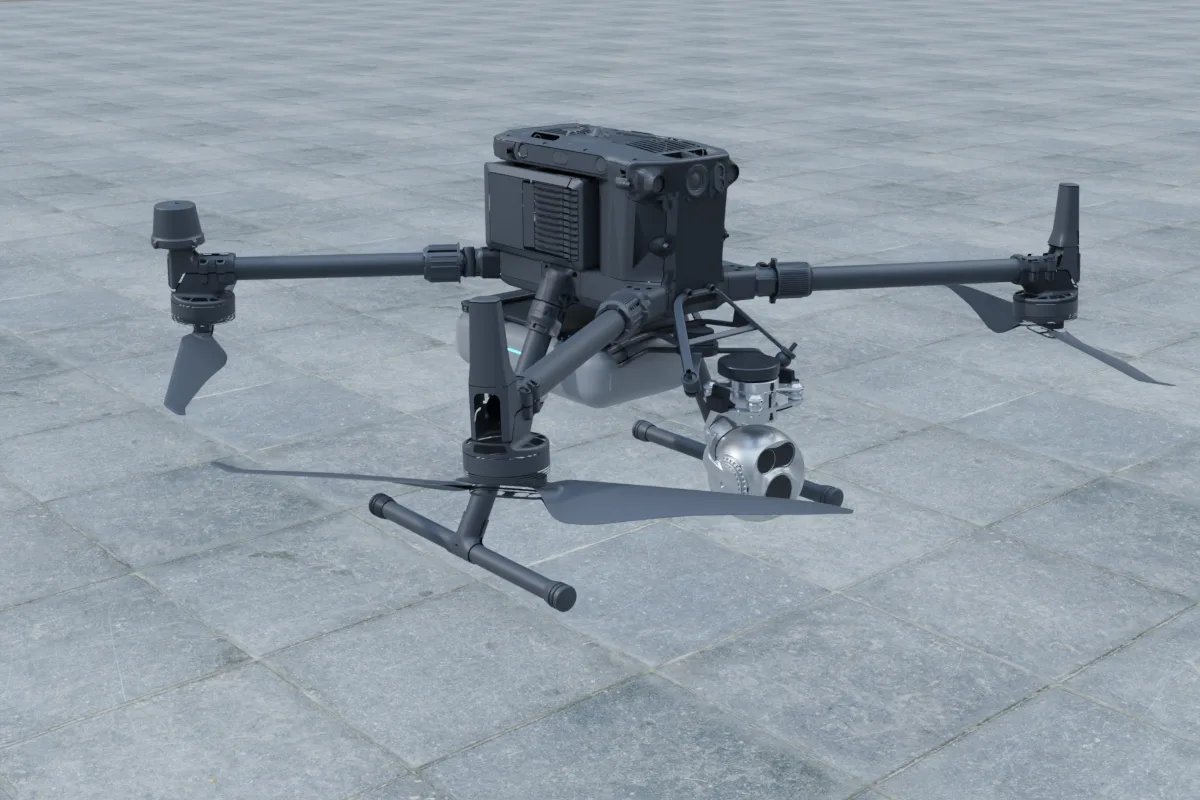
Short answer: an authorized DJI channel, a reseller, or an independent payload integrator. For a custom sensor stack on a Matrice 350 RTK, the integrator's real work is not the bracket. It is the weight and centre-of-gravity budget, power and data over the aircraft's payload interfaces, the onboard software, and flight testing that proves the aircraft still flies safely with the payload fitted. This guide explains what each option covers and what to ask for before you sign.
Three types of provider
Three kinds of teams work on payloads for DJI aircraft:
- The manufacturer and its authorized channel. DJI sells standard gimbals and pods and runs a developer program for software integration. A custom mechanical or electronic integration of a third-party sensor is usually outside its standard catalogue, so expect a referral to a partner.
- A reseller or systems integrator. Well suited to standard pods, a ground station and training. Less suited to a custom sensor stack from several brands.
- An independent payload integrator. Designs the structure, power and electronics for sensors from different manufacturers, then delivers the software, documentation and flight-test data. This is the usual route for a custom payload.
What the Matrice 350 RTK limits
The platform reference for the Matrice 350 RTK lists a weight of about 6.47 kg, a rated payload of about 2.7 kg (an OEM reference; check the latest official specification), dimensions of 810 × 670 × 430 mm, and an IP55 rating for the aircraft itself. Those numbers set the budget for everything you add. Our typical integration sets show how quickly the budget fills up:
| Typical set | Main sensors | Sensor weight* | Share of rated payload |
|---|---|---|---|
| Inspection standard | Zenmuse H30T, Livox Mid-360, Quectel RM520N-GL 5G; Jetson Orin NX 16GB | about 1.19 kg | about 44% |
| 3D surveying | Zenmuse L2, Unicore UM982; Jetson AGX Orin 64GB | about 0.91 kg | about 34% |
| Security broadcast | Zenmuse H30T, V1 and S1; Jetson Orin NX 8GB | about 2.37 kg | about 88% |
| Gas detection | Gas, PID, mmWave and thermal sensors, Mid-360, 5G module; Jetson Orin Nano 8GB | about 0.36 kg | about 13% |
*Sensor weight excludes the compute box, brackets and cables, so a fitted payload is heavier than the figure shown. The security set uses almost the whole rated payload. An integrator who quotes a configuration that close to the limit should show you the weighed total, the centre of gravity and the expected flight time that justify it.
What the work covers
- Mechanics: a form-fitting structure and sensor brackets, vibration isolation, and cable routing that clears the propellers and landing gear.
- Power: a DC-DC converter sized for peak load and protected by fuses, fed from the aircraft's payload power output. Confirm the output limits in DJI's current documentation before you design.
- Data: the aircraft's payload interfaces, a compute module such as the Jetson Orin NX, and Ethernet or USB links to each sensor.
- Software: ROS 2 or SDK-based drivers, time synchronization between sensors, and a logging format your mapping or inspection software can read.
- Testing: bench tests, a weighed and balanced configuration record, and flight tests that record hover time and RTK positioning with the payload fitted.
Regulatory and flight-safety items to ask about
A custom payload changes the aircraft's mass, balance and airflow. Before it flies commercially, ask who signs off on the weight and centre-of-gravity record, the flight-manual limits for the configuration, the operating approval for the new setup under the rules in your country (in the EU, for example, the approval depends on the category of operation), and the insurance terms. Ask whether the integrator has done this on the same aircraft model before.
Questions to ask before you choose
- Which payload interfaces will you use on the Matrice 350 RTK, and what power and data limits apply?
- Show the weighed total, the centre of gravity and the flight time with the payload fitted.
- Which sensors are already compatible, and which need a custom bracket or driver?
- Do you deliver the drivers, the source code, the ground-station integration and the documentation?
- What exactly is in the flight test, and who flies it?
- What is the lead time for a prototype, and what does a second batch cost?
To try sensor combinations first, use the payload configurator, which shows sensors, compute and weights for the Matrice 350 RTK. For the platform details see the Matrice 350 RTK integration page and the drone payload service. For a comparison with the next model up, read Matrice 350 RTK vs Matrice 400 for custom payloads.
FAQ
Can DJI install a third-party sensor on a Matrice 350 RTK?
DJI sells standard gimbals and pods and runs a developer program. A custom mechanical or electronic integration of a third-party sensor is usually handled by a partner or an independent integrator, so ask DJI's channel for a referral.
How much payload can a DJI Matrice 350 RTK carry?
The platform reference is a rated payload of about 2.7 kg, with the aircraft weighing about 6.47 kg. Check the latest official specification, and budget for brackets, harness, compute box and cables on top of the sensors.
What should a Matrice 350 RTK payload integration include?
A form-fitting structure and brackets, a DC-DC supply sized for peak load, data links to each sensor, ROS 2 or SDK drivers with logging, a weighed and balanced configuration record, and flight tests with the payload fitted.
Does a custom payload need extra approval to fly?
Often yes. A changed mass, centre of gravity or aerodynamic profile affects the operating approval in most countries. Ask the integrator to document the configuration and check the rules for your category of operation before commercial flights.