Unitree B2-W wheeled quadruped payloads: when wheels-on-legs beat a UGV
Updated 2026-11-09 · YUANZHI ROBOTICS engineering team
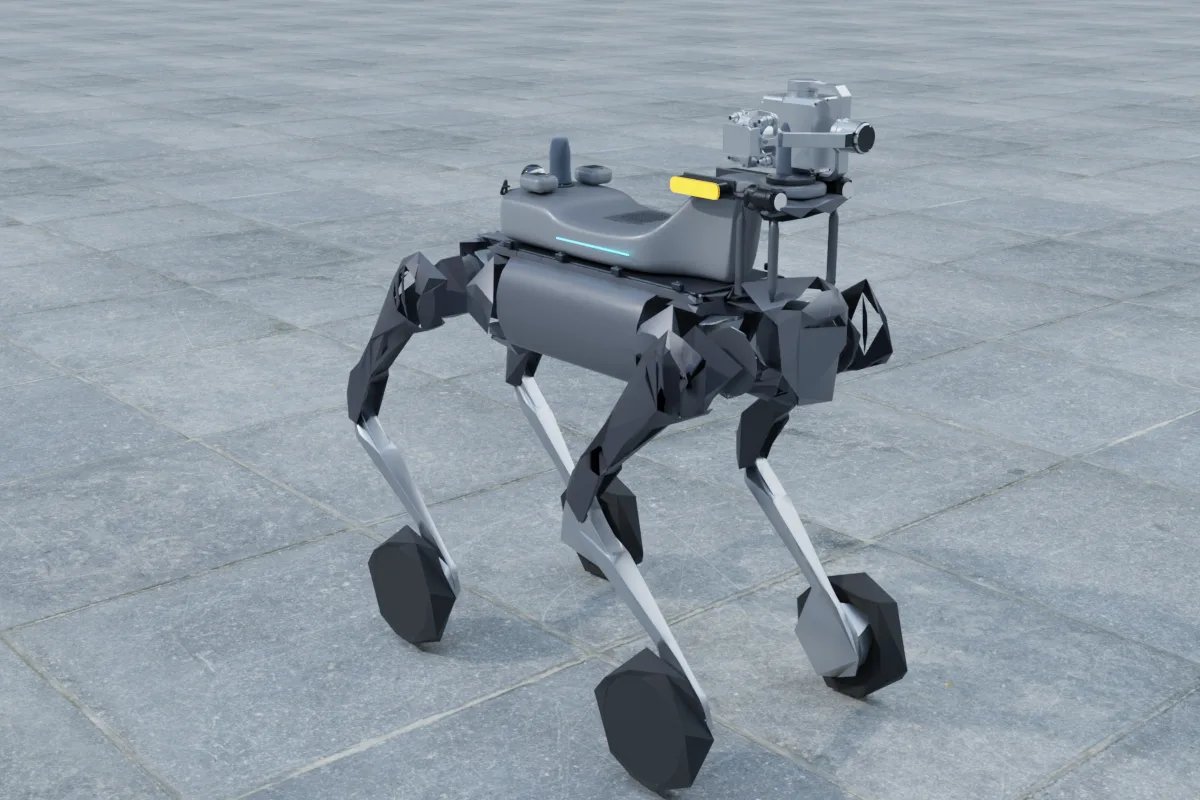
A wheel-legged robot is not a compromise between a dog and a car; it is a dog that can stop walking when walking is wasteful. The Unitree B2-W puts powered wheels where the B2 has feet. On a plant road, a warehouse floor or a corridor it rolls, fast and smooth; at a staircase, a kerb or a pile of debris it stands up on its legs and climbs. For a sensor payload this changes less about the mounting and more about the mission you should design for. This guide covers what is the same as the B2, what is different, where the B2-W beats a UGV and where it does not, and which payloads suit it.
Same as the B2: interface, power, software
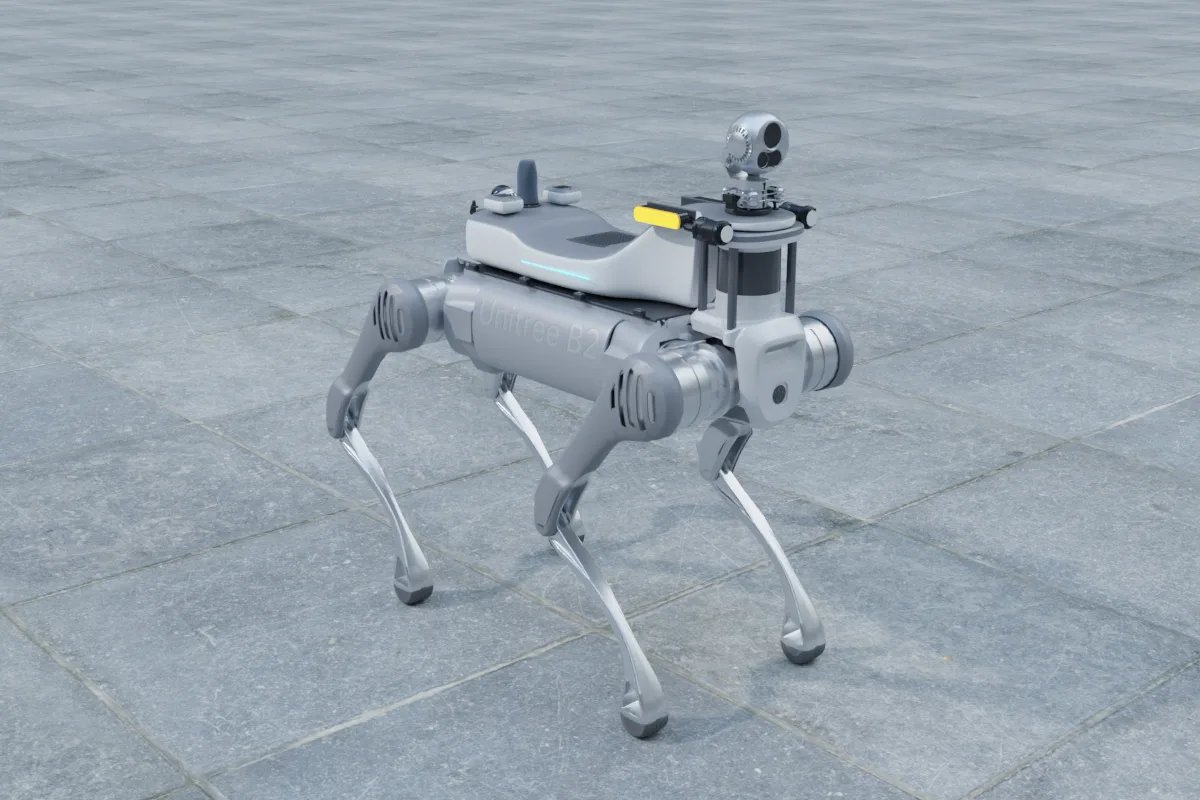
The B2-W shares the B2 body, battery system, back payload rail, payload connector and SDK. A payload designed for the B2 bolts on without a new base plate, the power budget is the same, and the navigation and inspection software talks to the same motion interface with additional wheel and hybrid modes. If you already run a B2 payload, the B2-W is a drop-in platform; if you are choosing between the two, the choice is about terrain and distance, not about integration effort.
Different: speed, energy, vibration, stairs
| B2 (walking) | B2-W (rolling, walking when needed) | Tracked or wheeled UGV | |
|---|---|---|---|
| Cruise on hard floor | Walking pace, higher energy per km | Rolling, several times faster, far lower energy per km | Rolling, similar or faster |
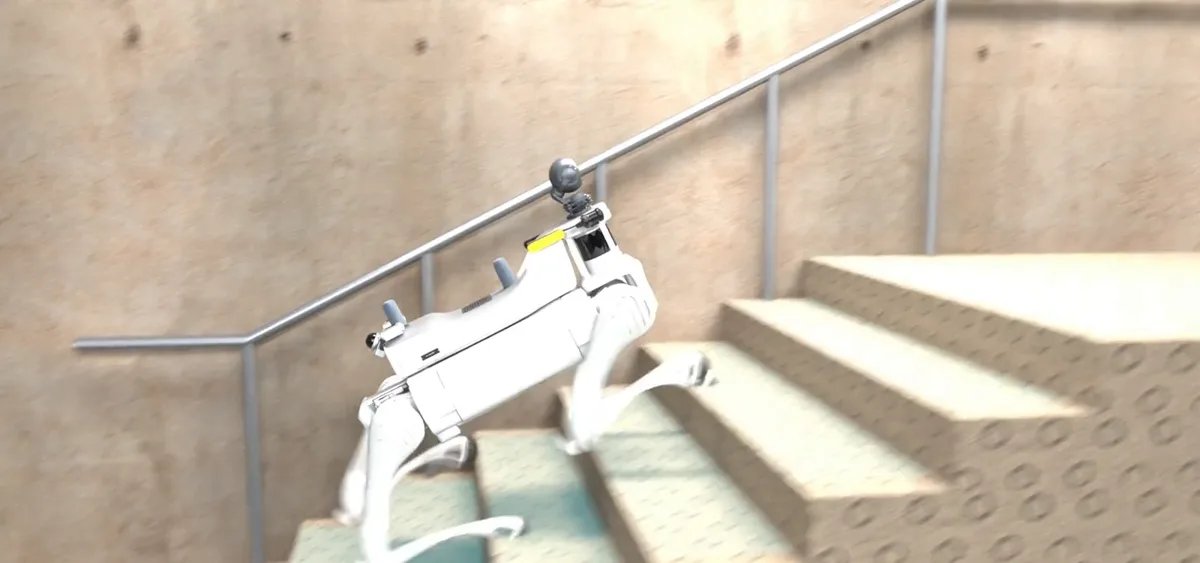
| Stairs and kerbs | Yes | Yes, by switching to legs | No (kerbs sometimes) |
| Vibration into payload | Gait-induced, periodic | Low when rolling; gait vibration only on legs | Low on floor, high on tracks over rubble |
| Route length per charge | Shortest | Long on hard surface | Long |
| Payload mass class | Tens of kg | Same as B2 | Tens to hundreds of kg |
| Price class | Industrial quadruped | Above B2 | Wide range, often lower |
Two consequences matter for payload design. First, rolling on a smooth floor is quieter mechanically than any gait, so LiDAR scans and gimbal video are cleaner and localization drift per kilometre is lower; you can afford a lighter gimbal stabiliser than on a walking dog. Second, the robot spends less of its battery on moving, so a long inspection route that would need two B2 charges may fit in one B2-W charge. Both push the design towards longer routes with more inspection points rather than towards more sensors.
When the B2-W beats a UGV
- Mixed sites: a plant with roads between buildings and stairs inside them. A UGV covers the roads and stops at the first staircase; a walking dog does everything slowly; the B2-W rolls the roads and climbs the stairs.
- Thresholds and small obstacles: door sills, cable trays, hoses, a kerb at the loading bay. These end a UGV round or need ramps; the B2-W steps over them.
- Long patrol loops with a few hard segments, such as a perimeter road with a gravel bank or a drainage channel to cross.
- Delivery inside a campus: speed on the paths, stairs at the destination, and a smooth ride for the box.
When a UGV is the better buy
- The site is flat and the robot never needs to leave one level. A Scout, Hunter, Husky or Bunker is cheaper, carries more and is simpler to maintain.
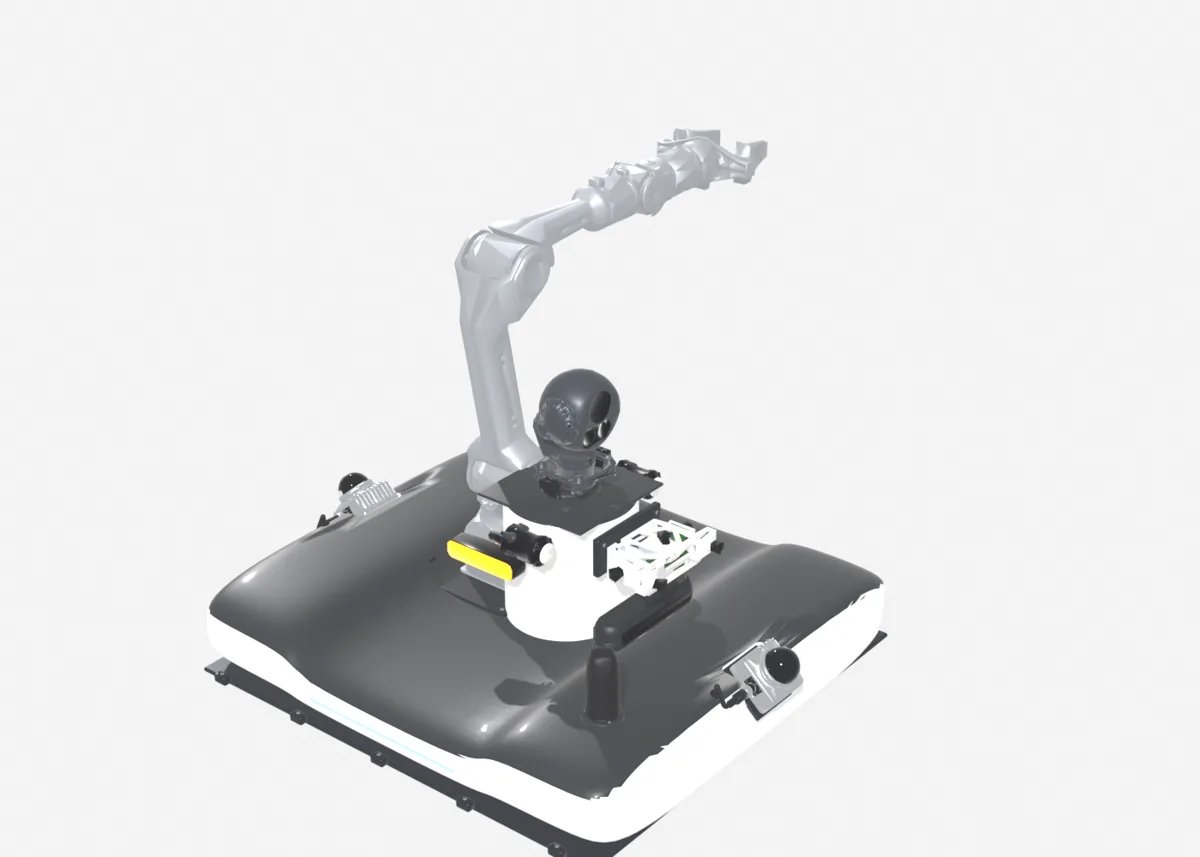
- The payload is heavy or needs a stable base for manipulation, such as a robot arm or a large sampling system.
- The environment is deep mud, snow or loose sand where tracks win over both wheels and legs.
Payloads that suit the B2-W
- Long-route inspection kit: dual-spectrum PTZ gimbal, Mid-360 LiDAR for mapping and localization, gas module, lights, 4G or 5G router with an external antenna, payload computer, and a dock at the start of the loop. This is our standard B2 kit; on the B2-W we usually add a longer-range LiDAR option for faster mapping of outdoor roads.
- Mapping payload: a Mid-360 or a longer-range sensor plus RTK, taking advantage of the smooth rolling motion for cleaner point clouds over large areas.
- Delivery box: a locked compartment with door sensors and a tablet, where the smooth ride and speed are the point.
- Security patrol: lights, speaker, thermal camera and a long loop per charge.
Design notes specific to wheels
- Ground clearance and splash: rolling throws more water and dust at the underside than walking. Keep connectors on the top of the payload and route cables away from the wheel arcs.
- Speed and camera exposure: at rolling speed a gimbal needs faster shutter settings for gauge reading; set the inspection points to be reached at walking speed or stopped, and let the robot roll between them.
- Antenna height: the same rules as on the B2, with RTK antennas at least 30 cm apart and clear of the gimbal; the wheels do not change the geometry.
- Mode switching in software: the navigation stack has to decide where to roll and where to walk. We mark walking zones (stairs, thresholds, rough patches) on the map so the switch is deterministic rather than reactive.
What we deliver
We build and fit payloads for the B2 and B2-W on the same interface, install our mapping, navigation and inspection software, mark the roll and walk zones on your site map, and commission the first rounds with your operator. If you are deciding between a B2, a B2-W and a UGV, send us a floor plan or a site photo set with the route you have in mind; the decision is usually obvious once the stairs, thresholds and distances are on one drawing.
FAQ
Is the B2-W payload interface the same as the B2?
Yes. Same back rail pattern, same payload power and data connector, same SDK and the same motion API with wheel modes added. A payload built for the B2 fits the B2-W; only the mounting height above the ground differs slightly because of the wheels.
When should I choose a B2-W over a tracked or wheeled UGV?
When most of the route is hard surface where a UGV would be fine, but part of it is not: stairs between levels, a kerb, a door threshold, a gravel bank, a pipe on the floor. A UGV stops at the first of those; the B2-W walks over it and rolls on. If the whole site is flat and indoors, a UGV is cheaper and carries more.
Does rolling hurt sensor data quality?
It improves it. Rolling on a smooth floor produces far less vibration than walking, so LiDAR scans, gimbal video and long-exposure thermal frames are cleaner, and SLAM drift per kilometre is lower. The exception is high-speed rolling over broken ground; there you slow down or switch to walking.
How much payload can it carry?
Plan for the same class as the B2: tens of kilograms of continuous payload with the manufacturer's exact figure depending on mode and terrain. Our standard inspection payloads for the B2 family are 6 to 12 kg, well inside the limit, and the reserve is better spent on endurance than on more sensors.
What payloads make the most sense on it?
Long-route inspection: dual-spectrum gimbal, Mid-360 or longer-range LiDAR for mapping, gas sensors, lights, 4G or 5G with an external antenna, and a dock. Delivery boxes also suit it because of the speed and smooth ride. Heavy manipulation is better on a UGV with a fixed base.